



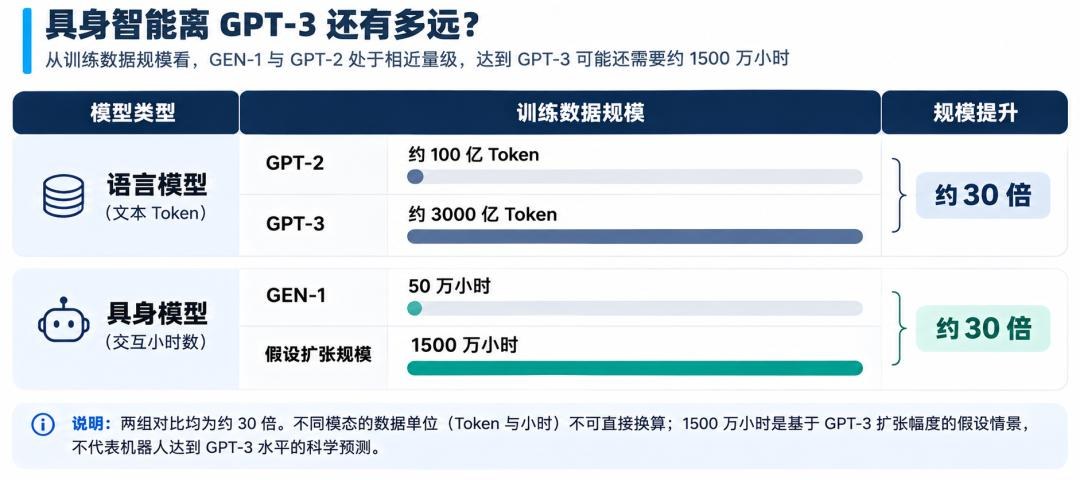
Dealroom says embodied-AI startups raised about $11B in 2026 VC—more than 2× all of 2025—yet IDC put 2025 humanoid shipments above 18,000, with >85% still in entertainment, education, data collection, and guides; few yet run real factory/logistics shifts. The story is shifting from flashy morphologies to data: how much real-world experience, from where, which traces matter, and who monetizes them. Roughly mirroring LLM growth from GPT-2 to GPT-3 (~30× tokens), if embodiment scales similarly from Generalist GEN-1’s ~500k pretrain hours, the next rung may need ~15M hours—plus denser useful signal and contact/force cues vision alone cannot capture.
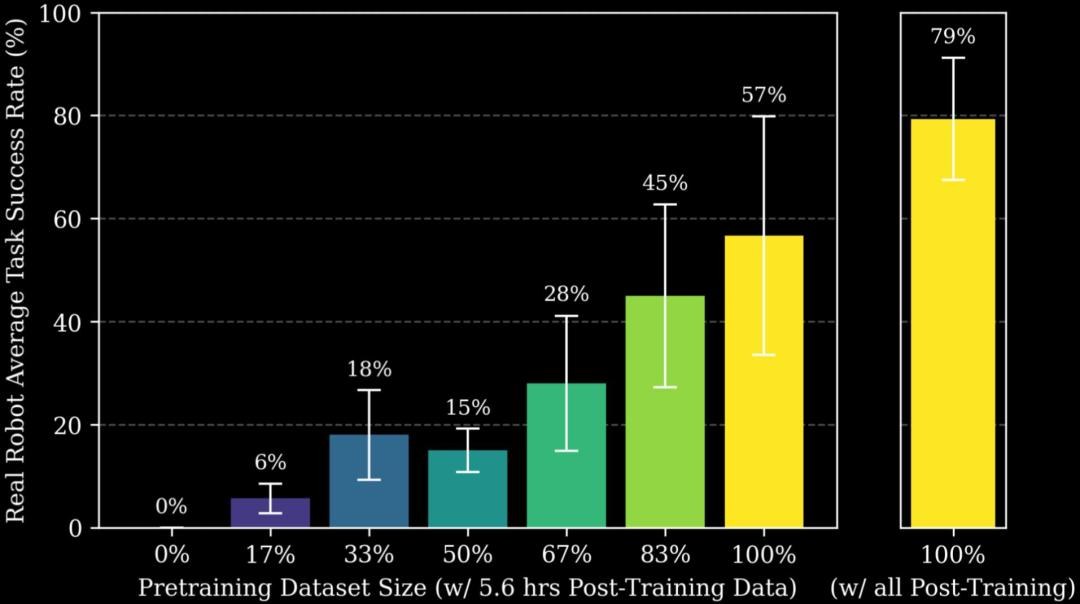
Scaling: 270k→500k hours, still GPT-2-ish in scale
In November 2025 Generalist’s GEN-0 used >270k hours of real physical interaction—nearly 50× the then-iconic Open X-Embodiment ~6,000 hours—and saw downstream gains as data/compute grew. GEN-1 later hit 500k hours, with reported success rising 64%→99% and ~3× speed, plus early cross-scene recovery; GEN-1.5 (August 2026) showed Physical Prompting—3–12s demos without weight updates. Against a human lifetime ~350k observation hours, 500k is ~1.43×—GPT-2 scale, not GPT-3 ability. In bottle-cap tasks, force, slip, and retries are brief but decisive; bottlenecks are cheap scale and information density. Eval/harness work is moving too—see our uni-robot-agent / OpenRUA and Astra on RoboDojo notes.
Three capture paths: robot, human ops, ego video
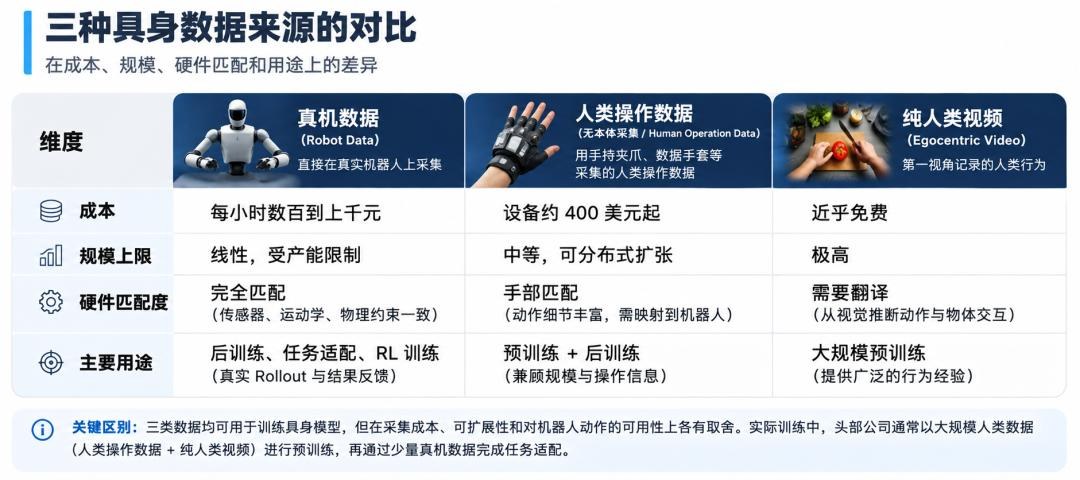
– Robot teleop: vision + joints + trajectories match the target body (Tesla, Figure, AgiBot, etc.) but are expensive to scale to millions of hours. – Human ops without the robot: handheld grippers/gloves (e.g. Stanford UMI); Sunday Robotics cites nearly 10M trajectories for Memo/ACT-1; Generalist’s 500k hours also lean on wearables. – Pure ego video: largest scale—NVIDIA EgoScale >20k hours; Dyna-2 pretrains >1M hours—but lacks executable action labels and needs inference + light real-robot adaptation.
Leaders increasingly pretrain on large human data then adapt with sparse robot data; recipes differ. Winning means cheaper conversion of heterogeneous sources into learnable actions.
New gap: contact forces; three money models
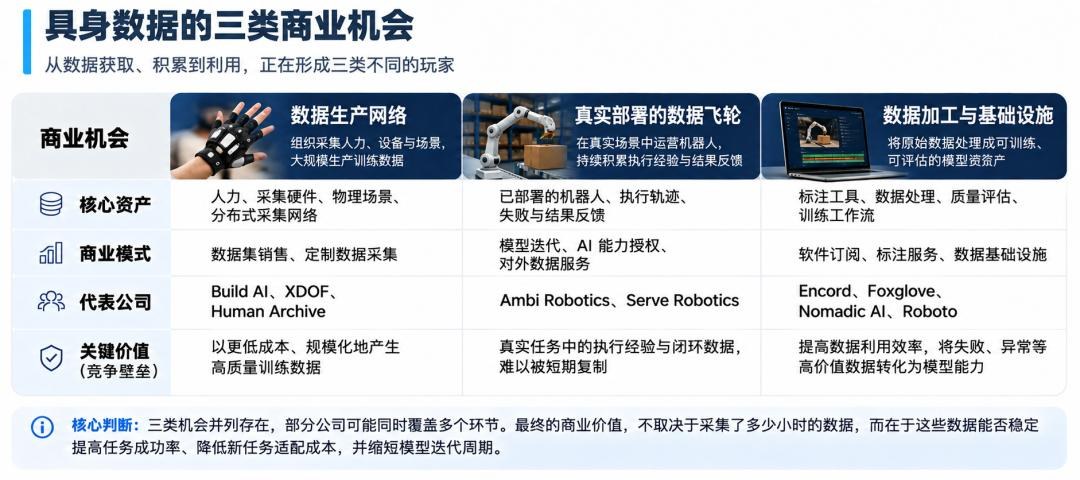
Panasonic’s T-Rex with Berkeley/NVIDIA put fingertip touch into action models: ~65% average success on 12 fine tasks vs ~42% without touch. YC F26 startups Axonnic, Hemlock, and Preload chase EMG sleeves/bracelets and vision–touch–EMG stacks. Business maps to: (1) data production networks (Build AI factories, XDOF’s ABC-130K ~130k trajectories / 3,500 hours, Human Archive, JD’s plan for up to 600k people / 10M hours in two years); (2) deployment flywheels (Ambi’s 150M+ packages / 250k production hours; Serve’s Physical AI Services on 2,000+ robots); (3) processing/eval infra (Encord, Foxglove, Nomadic AI, Roboto) that turns raw logs into trainable, failure-findable assets. The real test is not hours sold but higher success, cheaper task adaptation—and robots that finish a full shift alone.
FAQ
Q: Why “~30× data gap”? A: A rough analogy to LLM growth from GPT-2 to GPT-3 (~30× data); scaling embodiment from ~500k hours similarly could imply ~15M-hour order of magnitude.
Q: Is video enough? A: Easy to scale, weak on force and precise action labels; touch already lifts fine-manipulation success in cited tests.
Q: What do data businesses compete on? A: Verified lifts in success rate and iteration speed—not raw hour counts that collapse into commodity pricing.
相关文章