



Few internet categories fit “born fast, die fast” better than AI short dramas. In the first half of this year China’s Net Audiovisual Association published two *Micro Short Drama Creation Guides*: about 128,000 micro short dramas went live in Q1, of which 122,000 were AI—over 95%; by Q2 the total hit 239,000 while AI titles were 153,000, share down to 63.96%.
Comments like “blank expressions, no sense of reality” and “sometimes too human—yet not human” suggest AI short dramas are already struggling to keep viewers. Under the pitch of “a 3-person team, RMB 3,000 to start, RMB 300,000 a month,” waves of inexperienced creators flooded in; quality slid fast, and sameness plus low quality became the norm.
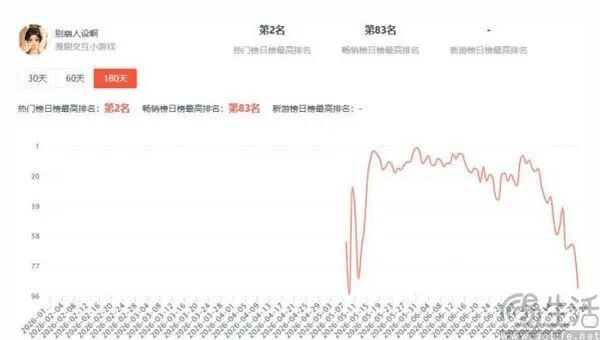
To find a new edge, some creators borrowed from live-action interactive film-games. A hybrid “game + comic drama” form—comic-drama mini-games—is quietly rising. Recently *Don’t Break Character* climbed to No. 2 on Douyin’s mini-game hot list. Built around “choices drive the plot,” players pick at key beats, steer the story, and get watch / guess / level-up in one package.
Why call comic-drama mini-games the next blue ocean? Because with AI video tools, AI short dramas hit overcapacity too fast. Seedance 2.0 and Kling 3.0 cracked multi-shot continuity, native A/V sync, and character consistency, freeing AI video from “gacha” lottery luck and giving AI short dramas a real footing.
Short dramas looked “garage band” from day one, but that roughness was only versus film and TV—costumes, sets, performance, and shooting can shrink, not vanish; actors, crew, and locations still matter. AI short dramas are the opposite “super-individual” model: two or three people can ship a series in a week.
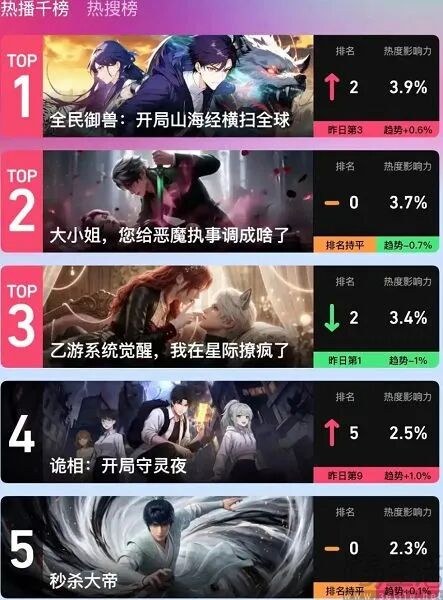
As tech barriers cliff-dived, major web-novel platforms opened IP libraries, and AI short-drama output went from flood irrigation to a mountain torrent. Output rose; quality did not keep pace—good work drowned in sameness. Open any short-drama app: assembly-line faces, templated character models, same-old arcs—of course audiences tire.
In a sense, early audience tolerance for AI short dramas helped the mudslide. And with everything chasing “爽感” (cathartic hits) via templates like “CEO falls for me,” “villain sidekick gets slapped,” and “dragon king returns,” the category’s breakout edge was cheap punchy fights, fantasy worlds, and eerie vibes—AI rendering of ideas live action can’t afford.

For xianxia, space war, or post-apocalypse, live shoots start in the tens of millions of yuan—budget short-drama crews barely touch them—while AI video generation may cost only a few thousand yuan in tokens. For wild, high-volume visuals, users once tolerated plot holes, stiff faces, and flat characters.
But ultra-low barriers drove structural overcapacity. Aesthetic fatigue was inevitable; viewers now demand sharper image quality, stronger character IDs, tighter logic, and smoother motion. AI can do “0 to 1”; “1 to good” still needs human creators—yet in a fever market most chase ship-fast, cash-fast, with no time, budget, or patience to polish.

Good AI short dramas exist; users just won’t dredge the ocean for them.
So why can AI-made comic-drama mini-games become a new gold vein? Wrap an AI comic drama in an interactive film-game skin and you get scarce interactivity and agency. Choices at key beats turn viewers from passive receivers into variables that reshape the narrative—different decisions, different endings.
Traditional interactive film-games sit between games and drama and cost far more than same-scale linear video. Their “narrative gamification” also lures creators into a game trap: over-index on interaction, under-index on depth, and form eats content.
AI short drama tooling fixes that pain: character, scenes, and storyboards lean on AI video tools, and the audience is less pedantic—as long as ideas are big, conflict is high, and twists land, they buy in.
Versus plain AI short dramas, interactive beats heighten decision responsibility and sunk-cost psychology—users push forward to uncover the ending.
Monetization is stronger too. As mini-game cousins, comic-drama mini-games fit IAA (in-app ads) naturally: fail a level or unlock extras and users watch ads; completion rates can clear the 60% “excellent” industry bar with ease.
In short, still low cost and short cycles—but strong interaction is the differentiator traditional AI short dramas lack. For audiences already bored of AI shorts, that freshness is the breakthrough weapon.
相关文章