



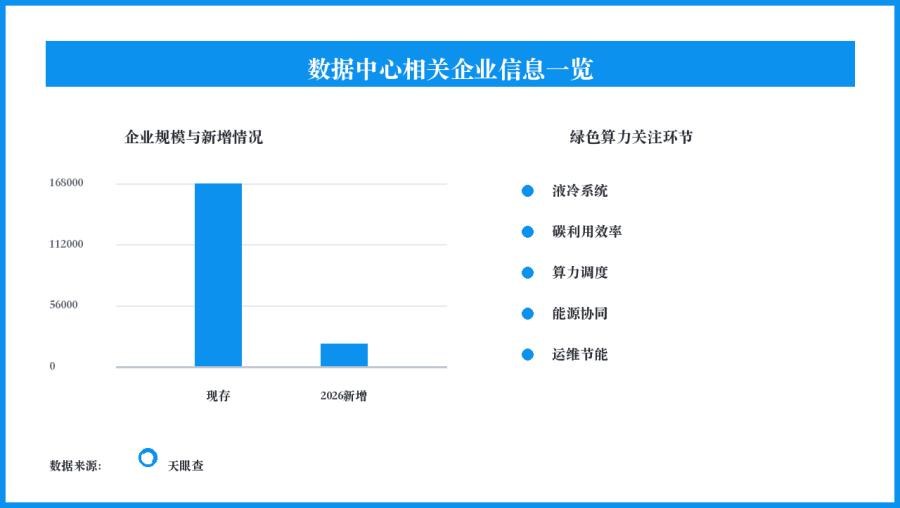
China’s national compute-hub plan anchors eight regions—Beijing-Tianjin-Hebei, the Yangtze River Delta, the Guangdong-Hong Kong-Macao Greater Bay Area, Chengdu-Chongqing, Inner Mongolia, Guizhou, Gansu and Ningxia—plus ten national data-center clusters. Tianyancha data cited in coverage put related data-center firms at about 168,000, with roughly 21,000 new registrations since the start of 2026. The race is no longer chips alone: power, cooling, networks and nearby industry demand decide whether racks become deliverable AI capacity.
Why a national map still matters
Places closest to model teams and customers are often not the cheapest for power; energy-rich west regions do not automatically host AI buyers. The hub design is meant to stitch innovation demand, manufacturing use cases and western green-power capacity into one grid. Workloads overlap across hubs, and “near Beijing” is not the same as “serving all of Beijing’s training jobs.”
For commercial context on how capacity is monetized, see our earlier note on AI data-center build efficiency and the AI Cloud directory.
Eastern hubs: demand meets industry
Beijing-Tianjin-Hebei bets on the innovation source—universities, labs, cloud vendors and enterprise buyers—while pushing scale racks to places like Zhangjiakou that offer land, climate and power, then stitching them back with networks for training, HPC and government/enterprise cloud.
Yangtze River Delta bets on industry itself as the application field: fintech, advanced manufacturing, autonomous-driving validation and simulation. National clusters include the eco-integration demonstration zone and Wuhu. Wuhu is better read as regional capacity planning (land, power, latency) than as “Shanghai’s overflow basement,” so compute can reach factories and enterprise IT.
Greater Bay Area bets on turning models into products—chips, sensors, devices and manufacturing across Shenzhen, Dongguan and Guangzhou. Shaoguan is a key hosting site and one of the ten national clusters for concentrated training and cloud inference; latency-sensitive control stays closer to the edge. The story runs from halls to robots, cars and plants.
Chengdu-Chongqing bets on western industrial depth plus interconnect. Chengdu’s software/digital base and Chongqing’s auto and equipment manufacturing need dense, efficient clusters and east-west links; Chongqing joined the national compute-interoperability regional-node list in August 2026, so cross-operator discovery and scheduling become part of the pitch.
Western hubs: green power and scale
Inner Mongolia sells compute-power synergy—wind/solar plus campuses around Helingeer and Ulanqab—where energy cost is a long-term variable for large training and batch jobs. The hard part is coordinating generation, grid, storage and load, not just siting a plant next door.
Ningxia, via Zhongwei, is positioned for national non-real-time workloads: parts of model training, offline analytics and backup. If networks and total cost clear the bar, jobs need not sit in the user’s city.
Guizhou extends a long big-data build-out in Guiyang/Gui’an into intelligent compute, scheduling and industry services (including widely reported facilities such as Huawei Cloud Gui’an), rather than starting from zero.
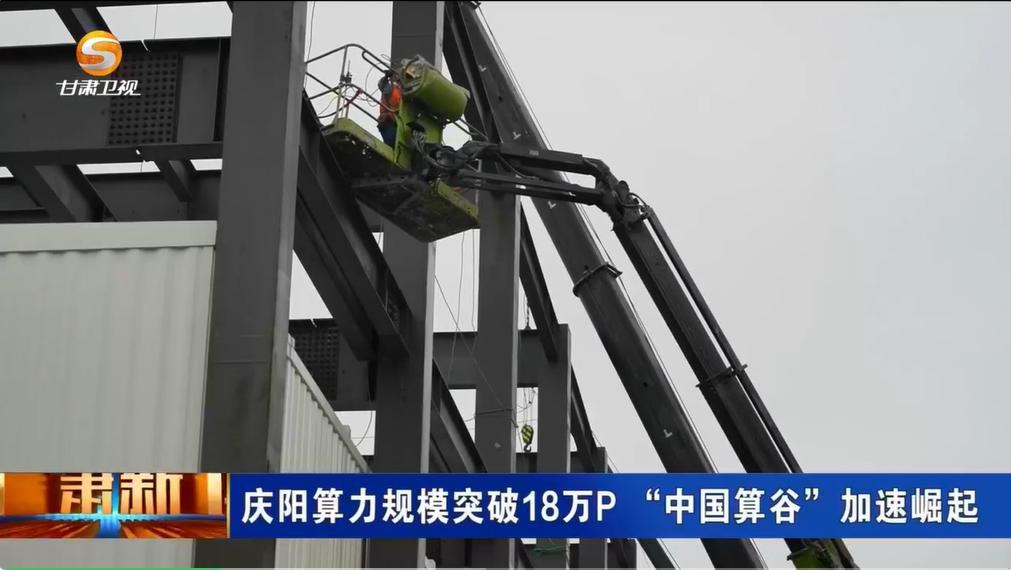
Gansu centers on Qingyang: climate and renewables for large intelligent-compute clusters, with an explicit mandate to absorb spillover demand from eastern hubs and act as a national backup base—while still managing renewable intermittency with grid and storage.
After the PFLOPS headline: scheduling
The National Data Administration reported that by end-July 2026, national intelligent compute reached about 2.45 million PFLOPS (FP16); the eight hubs plus three compute-power synergy zones accounted for over 85% of built capacity, with about 1.45 million PFLOPS already on the national monitoring/dispatch platform. A national integrated compute network is also flagged in 15th Five-Year Plan major-project language.
Scale is only the first layer. Industry value hinges on whether capacity across regions, architectures and vendors can be discovered, priced, connected and scheduled. Standards and commercial services are still catching up, but the direction—from regional clusters toward cross-region coordination—is clear. More compute-side coverage stays on our News channel.
FAQ
Q: Does each hub do only one job? A: No. Hubs can mix training, inference and industry cloud; national planning emphasizes complementary endowments and interconnect, not one city, one specialty forever.
Q: Why put large training in the west? A: Many training and offline jobs tolerate higher latency and care more about power, cooling and rack scale—so they can run where energy and land are stronger if networks and security hold.
Q: What should you watch beyond rack counts? A: Grid and compute-power synergy, cross-region direct links, share of capacity on national monitoring/dispatch, and whether facilities actually connect to research, manufacturing and cloud customers.
相关文章