



Andreessen Horowitz’s *Welcome to the B2A Economy* frames B2A (Business-to-Agent): companies must win AI agents’ traffic, tool calls, and orders—not only human shoppers. The essay says agents already drive much of web traffic, draft over half of new online writing, and author much production code; as they shift from answers to actions, they will increasingly decide what to buy and subscribe to. Hard numbers already show up in commerce and devops: Shopify 2026Q1 AI traffic ~8× YoY and AI-search orders nearly 13×; Supabase says >60% of new databases are created by AI tools; Vercel reports ~28× agent-triggered deploys in a year.
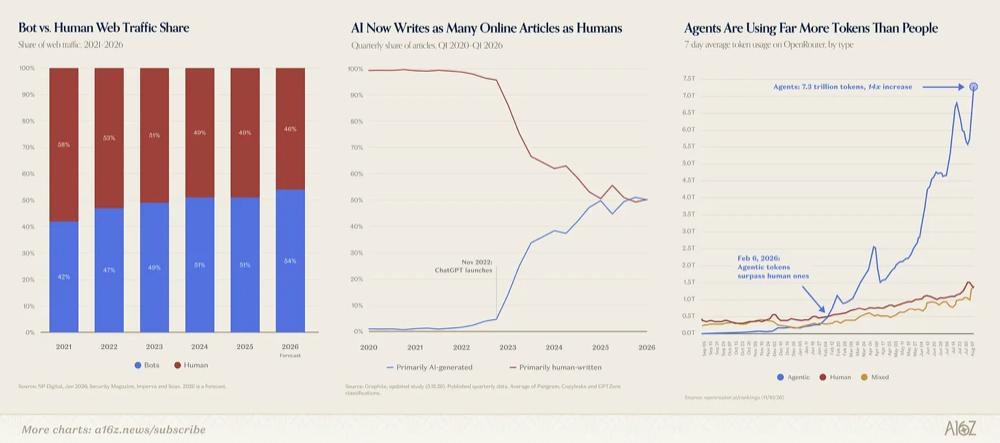
New distribution: from blocking bots to courting them
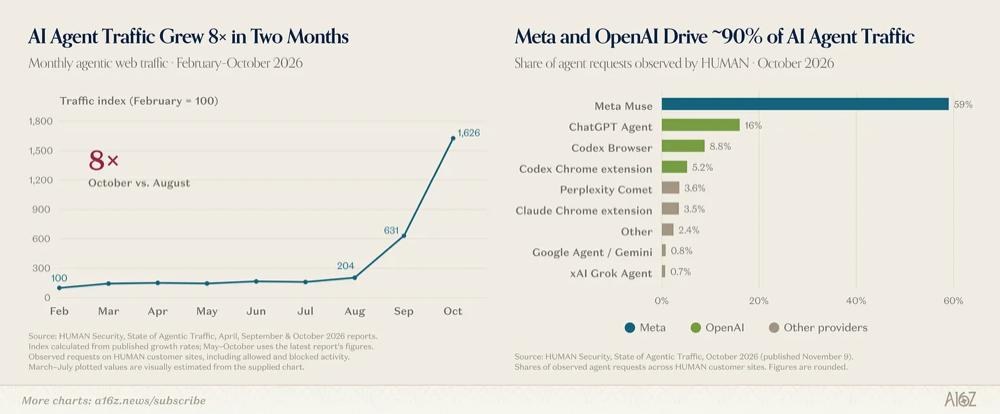
Human Security saw agent browser traffic rise ~8× from August–October, with Muse ~60% and OpenAI products ~30%. Roughly 11% of U.S. shopping journeys visit AI first, then the merchant. Connectors, plugins, and MCP let agents hit tools without only clicking the web; Sign in with ChatGPT, Businesses in ChatGPT, and org-wide Claude plugins turn identity, catalog data, and auth into platform features. Being discovered, chosen, and successfully transacted by agents starts to rival classic SEO—and goes beyond GEO into evaluation and checkout.
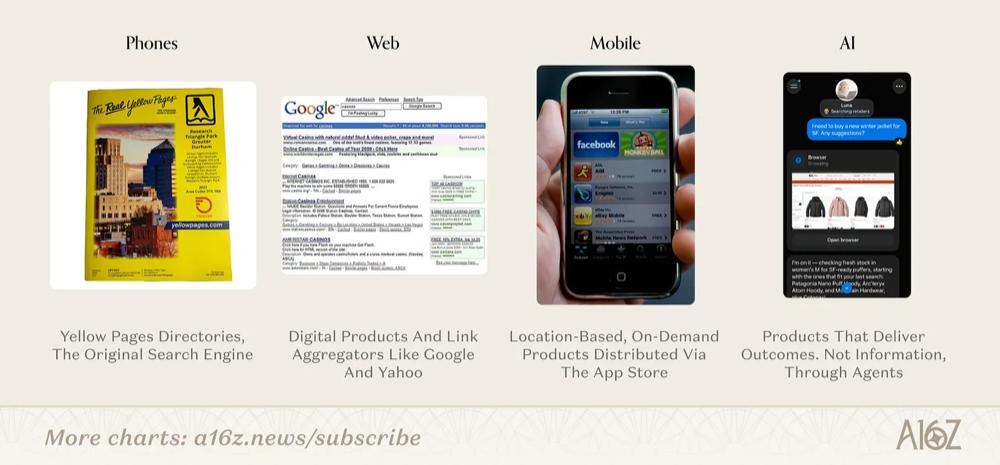
Four winner classes—and coding as the proof point
a16z groups upside into: (1) agent/LLM companies (Instinct, Muse, Wabi; ChatGPT’s ~1.2B WAU base); (2) agent-native products (agent-run SMBs, agent-mediated marketplaces, auto-optimizing ops); (3) incumbents optimizing for agents (from GEO discovery into compare / select / buy); (4) pay, identity, fraud, and comms infra—many enterprises still block agents over chargebacks, but quality demand may force a pivot from defense to service.
Coding is the earliest ledger: GitHub says by Sept 2026 >40% of PRs start from agent drafts (vs ~17% six months earlier); Neon once said agents drove ~80% of new DB deploys; Stripe says agents are ~40% of docs traffic and ~70% of API CLI requests. Software’s “user” is shifting from developers to agents acting for them—aligned with our notes on managing Coding Agents and Decision 1 peeling routing off generation.
Seven app lanes × seven infra lanes
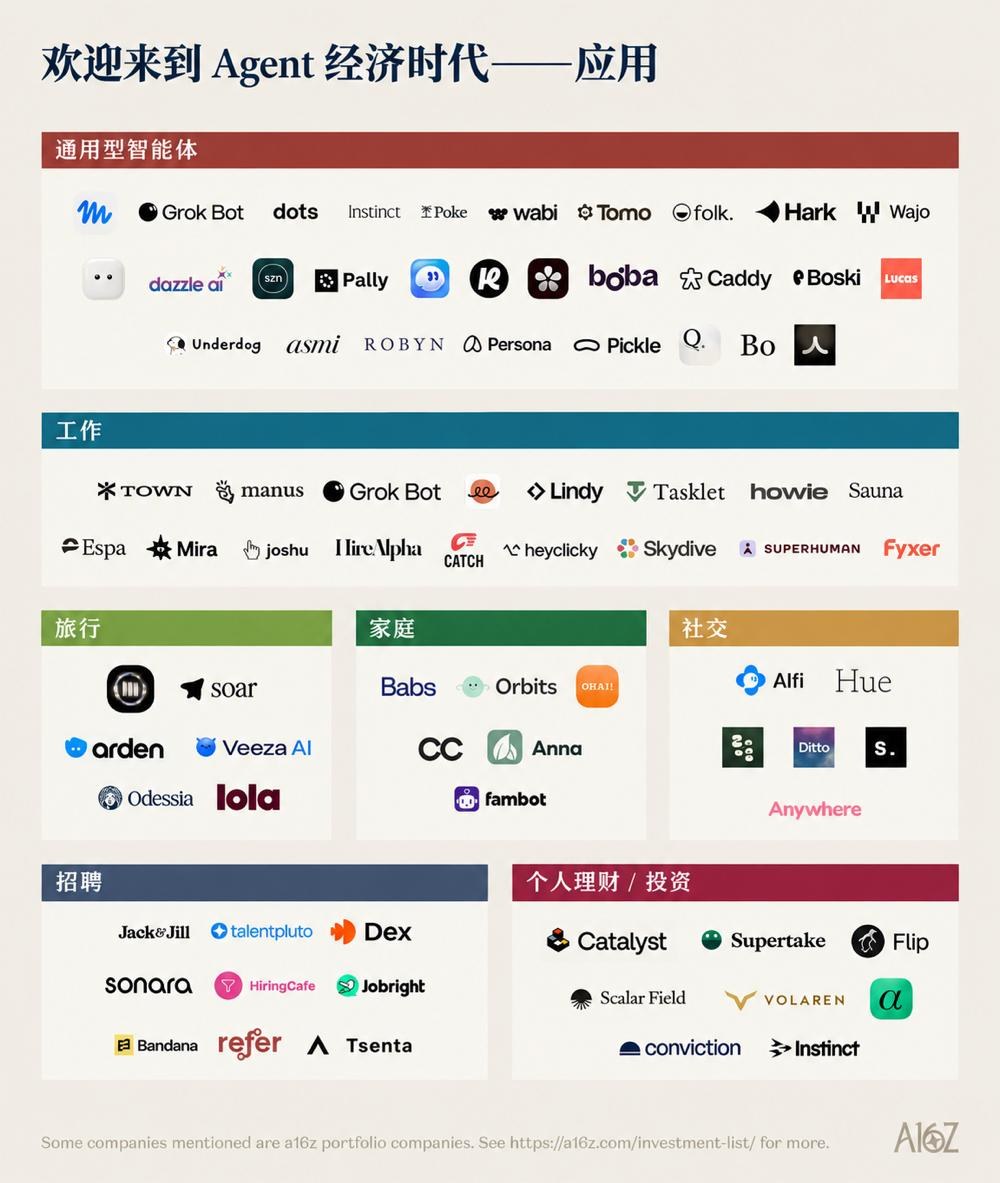
The app map spans general agents, work, travel, home, social, recruiting, and personal finance: Meta Muse / xAI Grok Bot / OpenAI Dots with cloud PCs and payments; Manus claims $100M ARR in eight months; plus Lola, Ohai.ai, Alfi, Jack & Jill, Sonara, Supertake, Volaren, and more.
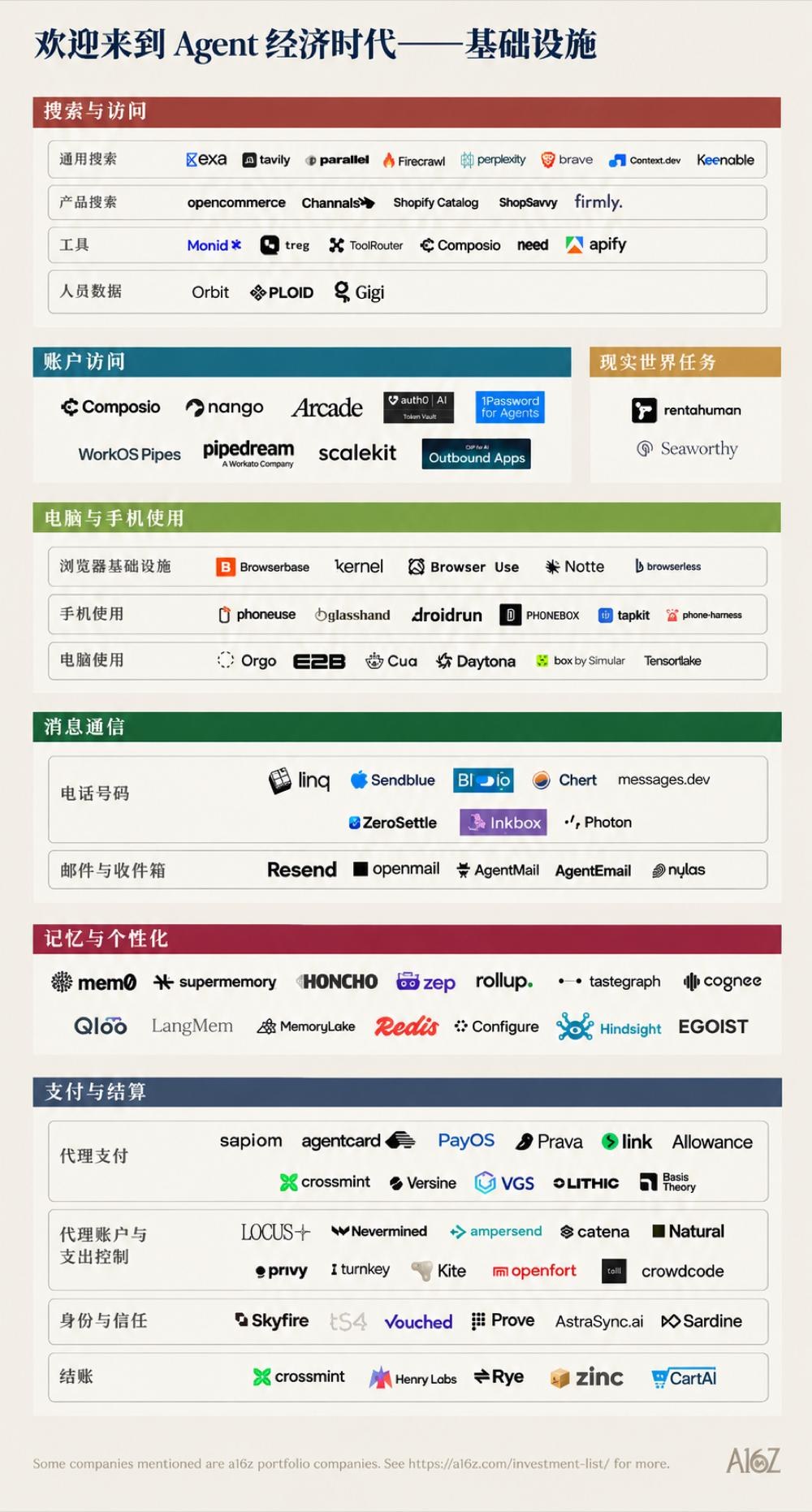
The infra map covers search/access, account access, real-world tasks, computer/phone use, messaging, memory/personalization, and payments: Exa’s monthly searches ~1B→2B with ~$100M ARR estimate; 1Password for Agents for passwordless fills; RentAHuman for agents hiring humans; Browserbase / E2B / Phone Use for runtimes; Linq, AgentMail, Mem0 for comms and memory; Crossmint, Nevermined, Prove, Rye for agent pay, spend limits, identity, and checkout. Embodiment needs the same reusable harness idea—see our uni-robot-agent / OpenRUA write-up.
FAQ
Q: How is B2A different from B2C/B2B? A: The buyer and traffic gate become AI agents; products must be found, compared, authorized, and paid for by agents—not only ranked for human eyes.
Q: Why is coding the leading indicator? A: Agents already create databases, trigger deploys, and hit docs/APIs at scale—software usage is shifting before consumer agents are ubiquitous.
Q: Why does infra matter? A: Agents still need browser sessions, safe login, mail/SMS, memory, and controllable payments; those API layers scale with agent workload.
相关文章