



Capital enthusiasm around humanoid and embodied robots is cooling. Reports say A-share and Hong Kong IPO windows have narrowed for most robotics names, while backdoor-listing paths look harder; with exit routes constrained, fundraising cadence slows and discounted secondary (old-share) transfers become a frequent signal.
Why exit routes are tightening at once
Foreign media reported that on November 3 China’s securities regulator told major brokers and banks in a closed-door meeting to slow IPO work: keep reviewing filings already in process, but pause new IPO applications for now. Market consensus in robotics is that “fast-track listing” plans are no longer realistic for many robot-related companies.
Hong Kong is not a free bypass. Onshore issuers still need CSRC overseas-listing filing plus HKEX review, so changing venues does not remove mainland oversight.
On backdoors, the piece cites AgiBot (智元机器人): after a restructuring that gave it control of a listed vehicle (上纬新材), the market once treated it as a capitalization template. In October 2025 the listed company disclosed that AgiBot had no backdoor-listing plan for the next three years. When a top player stalls on that path, exit expectations weaken further. See also our earlier note on AgiBot IPO controversies.
Discounted secondaries and a cooler fundraising tape
Securities Times reported frequent old-share transfers in embodied AI over the past two months, often priced at about 65%–80% of the prior round’s valuation. Once exit optimism fades, buyers for those secondaries also become scarce.
iiMedia data cited in the piece: in H1 2026, China embodied-AI financings totaled 172 deals and about RMB 109.174 billion, with several leaders valued above RMB 20 billion. PencilNews Pro data then show robot / embodied-AI fundraising heat sliding sharply from September—H1’s “raise fast, mark high” narrative does not simply extend into H2.
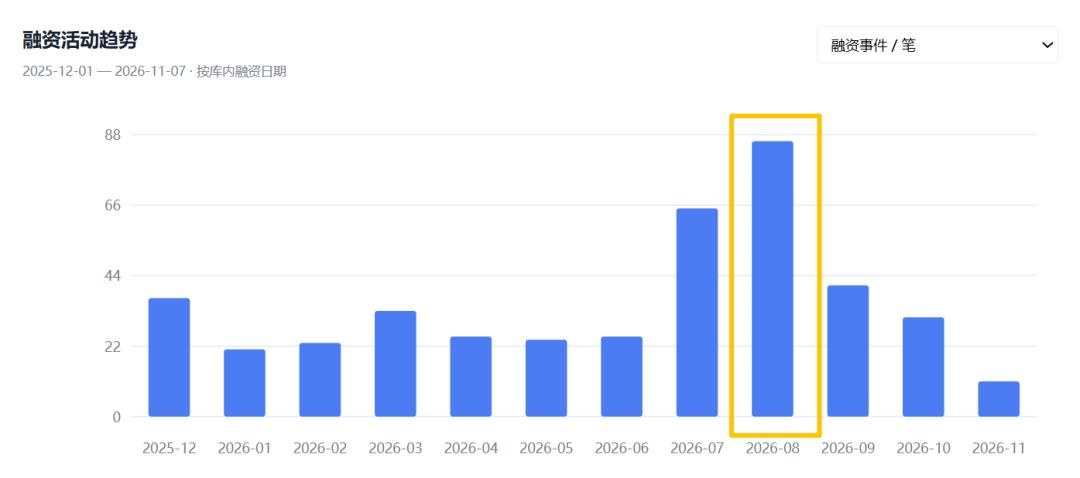
That lines up with what we track on AI Investment: capital is still selective, but the “everyone raises a billion-RMB round” window is closing.
Founder risk vs. “solid” operators
The article stresses that many robotics rounds carry repurchase / personal guarantee terms. At ~RMB 1 billion starting ticket sizes, founder contingent liability can be extreme. Teams that spent the boom on valuation storytelling and expensive PR rather than delivery face a harsher cash and commercialization test when the funding relay breaks.
By contrast, companies with roughly RMB 100–200 million revenue and more restrained valuations looked “underfunded” in the boom; after the air comes out, lower burn and lower expectations can be survival advantages.
Long-term industry value can still be debated—but an industry future is not a company future. The next phase rewards using dry powder for R&D, delivery, and commercialization rather than assuming the next round will keep marking marks higher. More coverage: AI News.
FAQ
Q: Can robotics companies still IPO soon? A: Reports say new IPO intake is more cautious; robot-linked names are widely seen as hard to “rush.” Hong Kong still requires filing plus dual review—not a simple alternate door.
Q: What do secondary discounts mean? A: Recent embodied-AI old shares often clear around 65%–80% of prior marks, signaling weaker exit expectations—and weaker bids to take those shares.
Q: Who is likelier to survive after the froth? A: The piece’s view: operators with real revenue and restrained valuations are more resilient than teams that depend on the next mark-up round.
相关文章