



Anthropic paid $2,000 per kilowatt, $3.4 billion in total, for 1.7 gigawatts of gas-fired generation. OnePWR Solutions had reserved the order with Caterpillar in 2024. The US Energy Information Administration’s budget estimate at the time was $1,606 per kilowatt. The report says the takeover price added about $700 million. At 1.7 gigawatts, the capacity is above the 1.4-gigawatt average load the article uses as a comparison for Haikou.
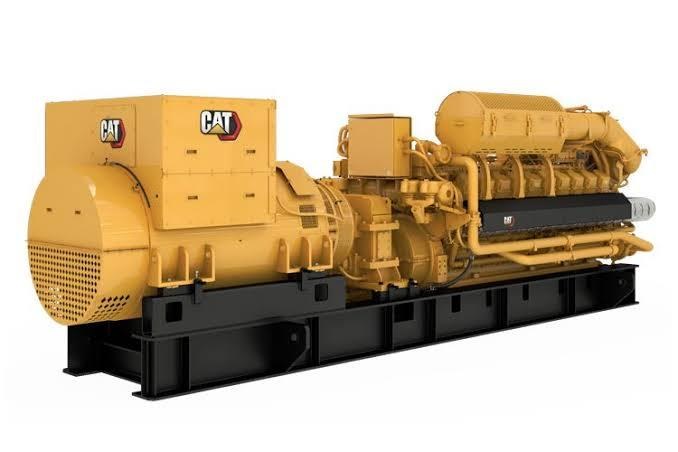
The generators are a way around the queue
In training, large banks of GPUs ramp together, then drop close to idle while they communicate. A single data center can hold hundreds of thousands of chips accelerating and braking at once. Grids were built for homes and factories that do not move together, and they do not absorb that swing. The report says US electricity use grew about 0.5% a year for a long stretch, transmission was not rebuilt at scale for about 20 years, and states control distribution approvals, so new generation still cannot be delivered. Large labs are buying generators instead of waiting. Another way to put compute next to power is the undersea data center.
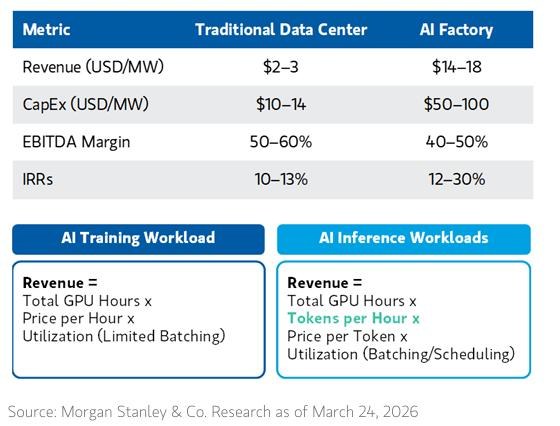
Power is also on the income statement. Morgan Stanley’s note this year, AI Data Centers: The Heart of the Ecosystem, puts annualized revenue at $14 million to $18 million per megawatt of AI data-center power. In the S-1/A Anthropic filed on 2 November 2026, the company said it spent $5 billion on short-term compute in the third quarter of 2026, which pulled down revenue per dollar of compute that quarter. A hall and its GPUs that cannot be switched on do not turn into revenue. Taking over someone else’s reservation will not stay available.
Gas, batteries, and nuclear are all queued
Gas turbines cover the near term, storage covers dispatch, and nuclear is the long bet. All three have orders, and all three have a delivery limit.
GE Vernova is one of the main gas-turbine suppliers. After a weak stretch in the 2010s it was spun out of General Electric. Customers now pay a non-refundable reservation fee to lock slots for 2029 and 2030. As of the third quarter of 2026 it had about 58 gigawatts of slot reservations, against about 64 gigawatts of formal backlog. The report says Siemens Energy’s gas turbines are scheduled out to 2029, and GE Vernova’s to 2031. The constraint is not only caution about adding plants. Few suppliers can make single-crystal blades and heavy castings, and defense and aviation already take that capacity.
Tesla’s Megapack has been bought by Meta, Google, Microsoft, and others for data-center storage. The report puts the queue at two to three years. Cells are not a science problem. They are a US capacity and cost problem. The report says tariffs on imported cells are high and subsidies for Chinese-owned plants were removed, so foreign cells do not pay and domestic cells slip to the second half of 2027.
Nuclear is slower. Oklo said it has locked capacity for 27 small modular reactors, for delivery from 2030 to 2035. The stock rose 23% that day. Power-purchase agreements usually pay on energy or availability, so the buyer pays little before the plant runs, and the nuclear company carries five to ten years of cash need. Licensing is long. The report says X-energy and other firms that also signed AI deals saw their shares fall this year. Power after 2030 does not train a model now.
Training moves, and parts are not the same as a finished turbine
When the three domestic lines cannot carry the load, the report cites two moves outward. Microsoft invested $1.5 billion in G42 in the UAE, including an expansion of 200 megawatts of data-center capacity. Nvidia-backed Starcloud trained nano-GPT on an H100 in orbit, a first for that setup.
On the China side the report is not describing a full turbine replacing GE. It is hot-section parts, and markets the big three can no longer serve on time. Yingliu, Wanze, Parker New Materials, and Hangyu supply high-temperature blades and forgings to GE Vernova and Siemens Energy. In storage, CATL’s work with Ford is described as manufacturing know-how and consulting fees, not cells sold straight into US data centers. Finished Chinese gas turbines have long struggled even to get an overseas inquiry. The report’s estimate for 2026 to 2030 is global gas-turbine demand of about 90 to 100 gigawatts, against 55 to 60 gigawatts a year from the major makers, a gap of 30 to 40 gigawatts.
China’s own power gap is being handled differently. At East-Data-West-Compute nodes such as Ulanqab, Gui’an, Zhongwei, and Qingyang, substations and lines are planned before the halls. Natural gas is scarce, so gas turbines were never the domestic fix. The 2026 Gas Turbine Industry White Paper treats the surplus as an export opening. Shanghai Electric aimed at Malaysia, a mature gas-turbine market where the big three’s slots have been taken by AI orders and buyers want a faster delivery. The report says Shanghai Electric won a bid there. No contract value is given. The point of the order is a running record in a mature market, not an immediate contract with a US data center.
FAQ
Q: Did the $3.4 billion buy a power plant or generators? A: It bought 1.7 gigawatts of gas-fired generation. OnePWR Solutions reserved the Caterpillar order in 2024. Anthropic took it over at $2,000 per kilowatt, above the Energy Information Administration’s earlier budget estimate of $1,606 per kilowatt.
Q: Why not just connect to the grid? A: The report says training loads swing between full power and near idle, US electricity growth stayed near 0.5% a year, and transmission and interconnection approvals do not keep up. Buying generators skips that queue. It does not mean the grid already has the power.
Q: Can nuclear cover this gap? A: Oklo’s 27 small reactors are planned for delivery from 2030 to 2035. The power contract pays little before the plant runs, so this is later supply, not power for training now.
相关文章