



On 12 November, Anthropic put Claude Meetings into test. A team can pull Claude into Google Meet and have it write documents and draw whiteboards while the discussion is still going. It answers in text by default and does not unmute. The test is opening first to Team and Enterprise. Notes are included in the plan; calls to connected tools count against usage.
A draft can land before the call ends
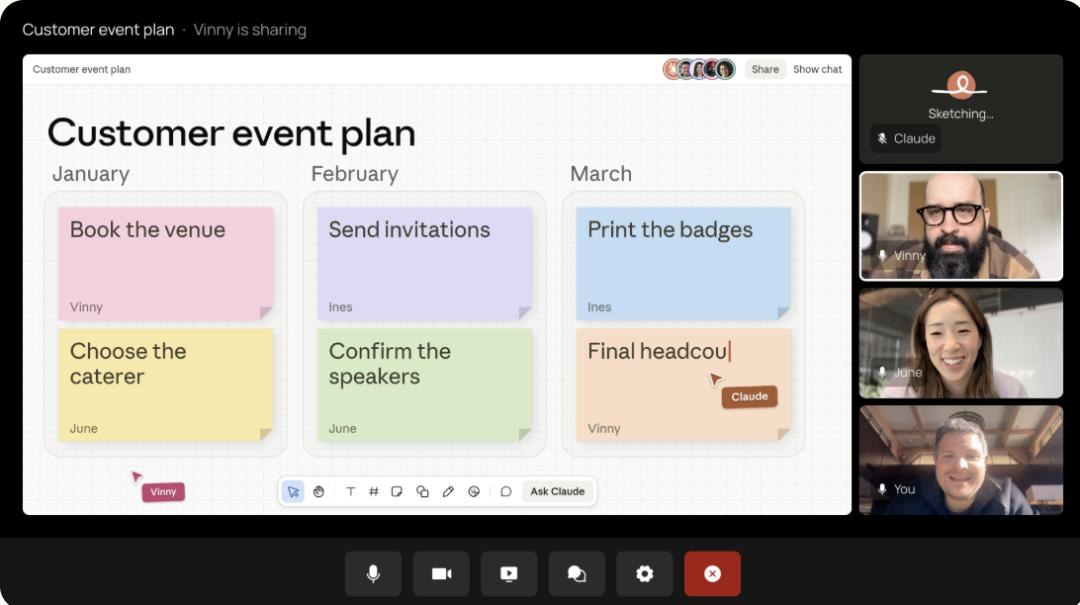
The official demo is a meeting to plan a customer event. Once the outline is clear, someone asks Claude to turn the first half of the talk into a structured plan, and the room keeps editing it. When the group stalls on what last year’s event cost, Claude, after permission, looks the spend up in a connected tool, posts it in chat, and sets it next to this year’s plan. A schedule can be drawn on a whiteboard in the same call.
People can speak to Claude or type in chat. Invitees inside the same organization can edit the draft it produces. A spoken “next week” has to become a day, an owner, and a definition of done once it is on the schedule. Budget and timing can be settled while the other teams are still in the room. An earlier note on Claude checking proofs is in Claude and the Gödel notebooks.
The demo is smooth. A real meeting can cut a budget in half after it was agreed, or swap the owner. Claude has to tell which version counts and which line was only a passing idea. Writing an unconfirmed proposal into the team decision is worse than missing two sentences.
What happens when outsiders are on the call
Looking something up in a connected tool needs the user’s permission first. When people from outside the company are invited, the plans differ. Team allows Claude to join by default, and an admin can turn that off. Enterprise stays off until an admin turns it on. Without that permission, Claude will not join a meeting that includes outsiders. If an outsider joins midway, Claude leaves.
Once it is allowed in, Claude posts a notice in the meeting chat and does not reply there. What outsiders say still goes into the notes and the transcript. They cannot open the internal Claude page that holds the record and the documents.
What is left after the call
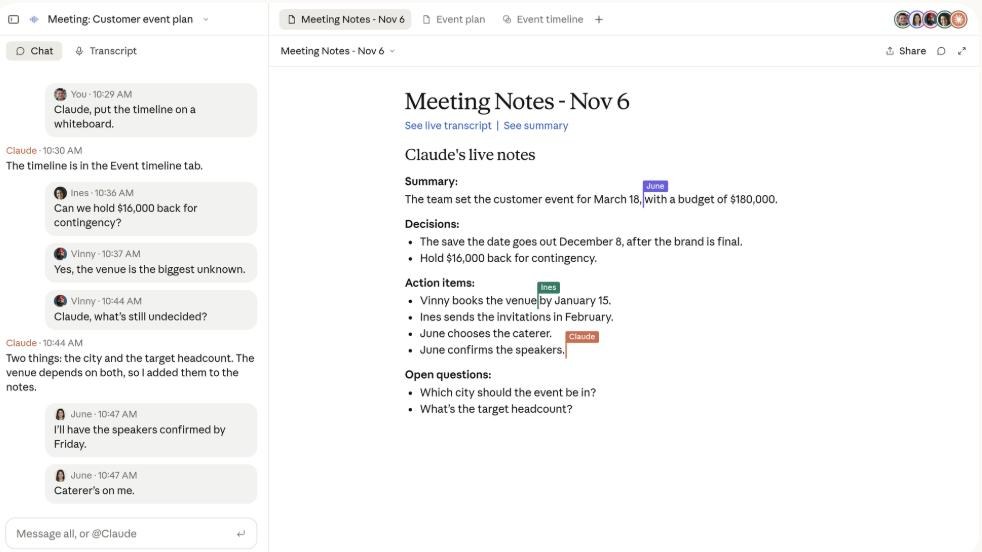
Notes, a to-do list, the transcript, and the documents and whiteboards made during the call stay on Claude’s meeting page. People with access can ask follow-up questions in chat instead of searching the thread. Microsoft Teams’ Facilitator also takes instructions during a call and can turn the discussion, chat, and shared files into a Word document. Both products are moving from “transcribe after” to “produce during.”
Claude Meetings is rolling out to Team and Enterprise, with Google Meet first. During the test, notes, transcripts, and answers that do not call a connected tool are included in the plan. A call to a connected tool uses the account’s normal allowance and can add cost for the organization.
FAQ
Q: Who can use Claude Meetings now? A: It is opening gradually to Team and Enterprise, starting with Google Meet. Claude replies in text and does not unmute.
Q: Does Claude join if someone from outside the company is there? A: Team allows it by default and an admin can disable it. Enterprise requires an admin to enable it first. If it is off, Claude stays out of meetings with outsiders and leaves if one joins midway. Their speech is still transcribed, but they cannot open the internal meeting page.
Q: Is there an extra charge during the test? A: Notes, transcripts, and answers that do not call connected tools are included in Team and Enterprise. Using a connected tool counts against normal usage and may add cost for the organization.
相关文章