



Anyone who has taken aging parents to the doctor knows that helpless feeling: queuing at dawn for specialist slots, bouncing between departments, and dreading the line “we can’t handle this—go to a big city.”
China has more than 300 million older adults. They need doctors most—and are often farthest from good ones.
In recent years Doubao, Qwen, and Kimi have gotten ordinary people used to “ask AI when you need something.” But what can really help with care—and what people dare to trust for care—is not these do-a-bit-of-everything general products. It is another cohort of medical-specialized large models.
In 2026 this track suddenly hit the accelerator: financing doubled, giants entered on the same day, and insurance began to pay. All of those shifts land on one question—how people seek care is being rewritten.
PART 01
$100M round, a 10-billion-yuan-valuation company
Watch how fast this company raises money.
In early August, Shanghai SenseTime ShanCui Medical Technology Co., Ltd. (“SenseTime Medical”) closed a Series B of more than $100 million—only months after Series A.
Investors this round include Lianchuang Capital, a China Electronics digital-finance fund, Lianmei Group, and several large insurers, brokerages’ principal-investment arms, and asset managers. Proceeds will strengthen medical world-model R&D and productization, accelerate global expansion, and open new directions such as medical embodied intelligence.
More critical is what comes next: market reports say SenseTime Medical will become the first medical world-model company valued above RMB 10 billion, entering Pre-IPO and preparing a final pre-listing round.
Why them?
In 2022 SenseTime Medical spun out of SenseTime to do two things: medical large models and an agent OS. Its “medical world model” is best understood as a “command center”: the in-house “Dayi” model sits at the hub, orchestrating specialist models—imaging, pathology, endoscopy—each with a role; add medical knowledge bases, toolkits, and clinical rules, and you get a full medical AI platform.
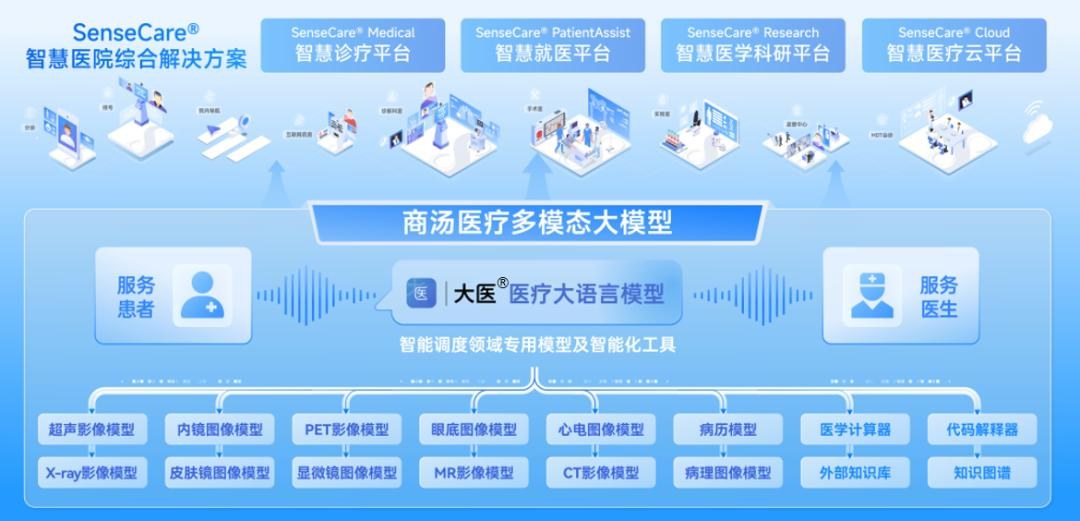
Source: SenseTime Medical
Tech alone is not enough; hospital buy-in is the real test.
SenseTime Medical’s five scenarios with top tertiary hospitals such as Xinhua, Ruijin, and Shanghai Pulmonary Hospital were named among Shanghai’s core AI-in-health achievements—replicable templates.
The stack already reaches hundreds of hospitals nationwide, including West China and Tsinghua Changgung, and has gone abroad—deployed at Gleneagles Hospital Singapore under IHH, with cumulative services over 10 million visits.
From tertiary templates to national replication to Singapore, SenseTime Medical closed a commercialization loop most medical AI firms never finish.
Its fundraising pace has been a near-jog: early 2025, first post-spinout round above RMB 100 million; that November, a Pre-A+ of several hundred million yuan; April 2026, Series A above RMB 500 million with valuation past $1 billion; after July’s Series B, post-money valuation stood at RMB 10 billion. On disclosed amounts, SenseTime Medical has raised more than RMB 1 billion in a year and a half.
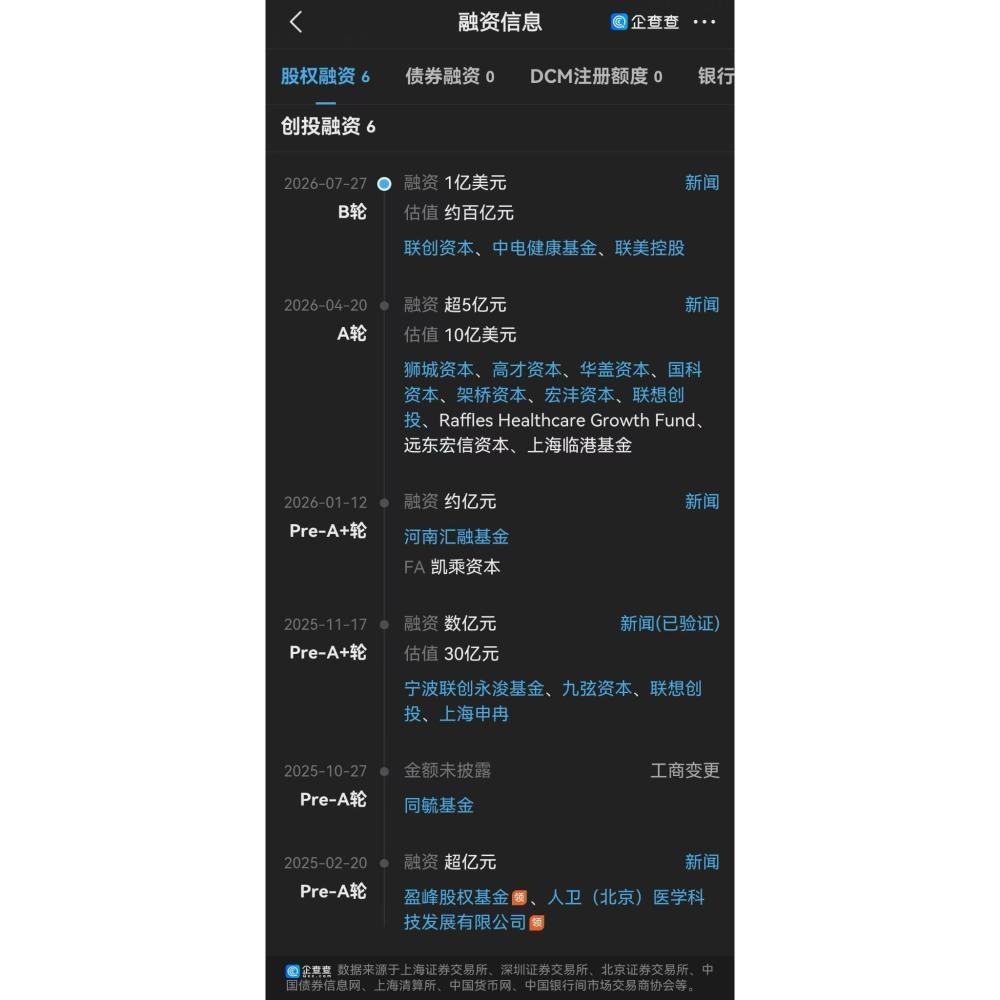
Source: Phoenix Weekly
Tech foundation, deployment proof, capital fuel—three strands twisted together explain the 10-billion valuation.
PART 02
Twin giants resonate: China’s AI-doctor speed
SenseTime Medical is not alone; the whole track is heating up.
Industry stats show AI healthcare financing stuck around RMB 3.7 billion for two years, then jumping to RMB 13.9 billion in 2026; in H1 alone, domestic healthcare investment and financing hit RMB 72.56 billion, up 41.7% year on year.
Overseas is hot too: Rock Health says U.S. digital-health startups raised $4 billion in Q1 2026—the strongest post-pandemic open.
Corporate numbers are clearer: as of January, more than 108,000 medical-AI-related firms; as of June, 134 Class III AI medical-imaging CAD softwares approved.
Recently two internet giants poured more fuel on the fire.
On August 12, Ant Group renamed “Haodf Doctor Edition” to “Ant Afu Doctor Edition,” launched AI medical and AI avatar assistants, connected both doctor and patient sides, opened internet-hospital onboarding, and struck strategic deals with Wolters Kluwer and DP Technology.
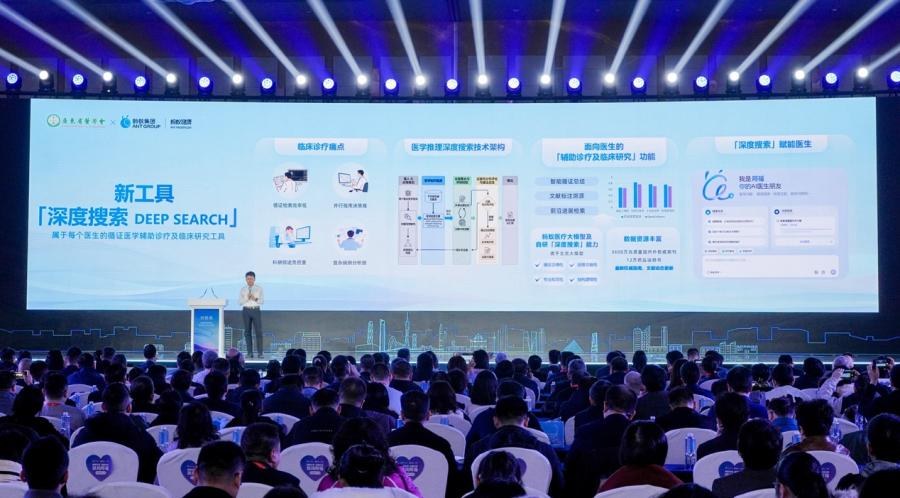
Source: Guangzhou Daily
Ant’s hand is strong: Haodf has more than 300,000 verified doctors; consumer-side Ant Afu has over 30 million MAU and more than 10 million daily health consultations. Through this AI workstation, doctors can build agents that answer around the clock, search literature and guidelines, pull records for smart analysis, and leave pre-consult to AI while they handle the critical steps.
The same day, as if answering a challenge, JD announced its own AI healthcare move.
On August 12, JD Health said its AI doctor assistant “JD Zhiyi,” after half a year in operation, would fully connect to Yunque Medical’s grassroots APP, open its assistive tools and pharma supply chain, and together build an integrated “AI assist + grassroots doctors + medicine supply” model.
Since January launch, JD Zhiyi has served over a million doctors and assisted more than 20 million clinical decisions. Yunque covers 31 provincial and nearly 2,795 county-level regions, reaching over 800 million residents. A new deep-thinking mode targets multi-morbidity, polypharmacy, and tough consults that frustrate grassroots doctors most; 200+ medical calculators and research helpers ship with it.
One deepens upward—serving existing doctors and opening consumer consults; one extends downward—putting AI in grassroots clinicians’ pockets. Paths differ, consensus does not: this track demands heavy bets.
They are not alone. iFlytek Spark Medical’s outpatient diagnostic accuracy hits 93.1%, with specialist AI reaching director-level hospital physician performance for the first time, aiming to cover 90% of grassroots institutions in three years; Tencent Health, built on DeepSeek and Hunyuan, serves over 1,000 hospitals and has landed in more than 10,000 medical institutions overall; United Imaging Intelligence’s “Yuanzhi” medical model keeps leading industry benchmarks, raised RMB 1 billion Series A in 2025, and this year passed 20 Class III certificates…
More important than giants entering is that payers showed up.
From April 1, 2026, 12 AI-assisted diagnostic services entered China’s national Class B insurance catalog—hospital AI diagnosis can be reimbursed, insured patients’ co-pay falls to 15%–30%, and 837 hospitals already deployed. It is the first major national move worldwide to fold AI diagnosis into insurance at scale. In May, Deshi Bio’s AI AutoVision karyotyping CAD software won the world’s first Class III device registration for a large-model product.
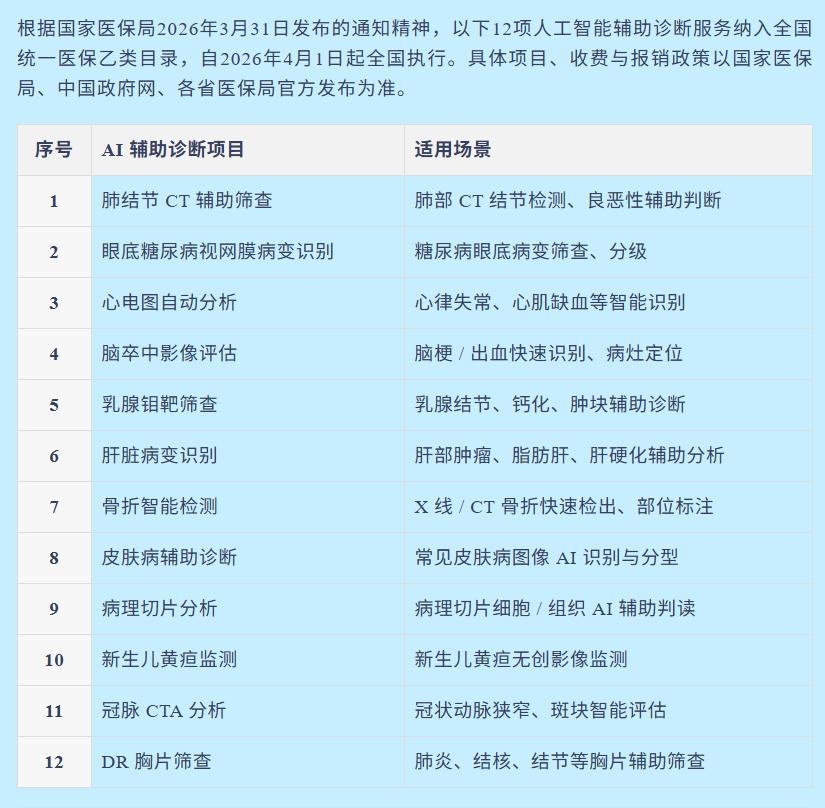
Source: Huiying AI
Once the payment gate opens, medical AI crosses from “tech demo” to “real money.” CITIC Securities’ view: in 2026 AI healthcare payers are clearer and stronger—likely the year with the highest commercialization certainty. IDC warns the widest gap is no longer model skill but whether hospital systems can “take it”—competition shifts from tech races to deployment races.
Frost & Sullivan forecasts China’s AI healthcare market from RMB 8.8 billion in 2023 to RMB 315.7 billion in 2033, a 43.1% CAGR—nearly 36× in a decade.
PART 03
From Wuhan to the nation: scenarios already live
Grand numbers have to become small things beside older people.
In July Wuhan released “AI + healthcare” innovation results: 116 typical application scenarios—32 more than the National Health Commission’s 84 reference guides—plus 31 large models and agents, 29 smart terminals, and 33 high-quality datasets. This joint list from the municipal economy & IT bureau and health commission is one of the best samples of city-scale medical AI landing.
Flip through it and geriatric disease is the absolute lead.
Stroke rehab is center stage. Wuhan Central Hospital built an AI rehab ward for post-stroke hemiplegia based on brain–computer interfaces, with AI dynamically customizing plans and exoskeletons for precise training; Tongji Hospital uses AI to rebuild neural circuits after stroke with quantifiable targets; Hankou Hospital put AI into minimally invasive ICH surgery systems.
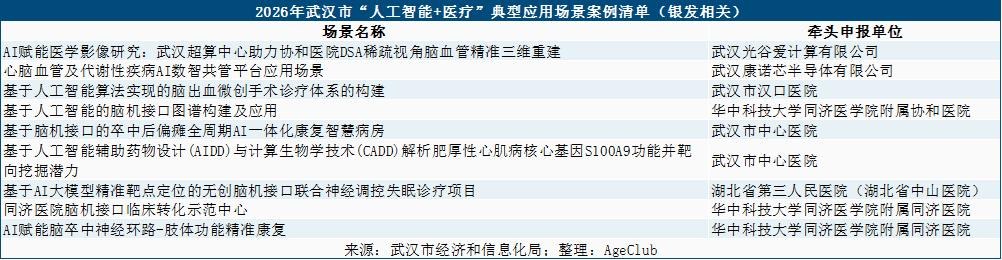
Chronic-disease management is elders’ main battlefield. Liyuan Hospital built a full “screen–grade–follow-up” platform for diabetic foot, tackling amputation risk; Hubei Integrated Traditional Chinese and Western Medicine Hospital manages diabetes with a “311 care” AI model; Union Hospital launched a chronic-disease health agent; Wuhan University of Science and Technology Affiliated Geriatric Hospital—the only geriatric hospital among the 116 scenarios—uses AI vision-plus-touch hand diagnosis to bring TCM palpation to the grassroots.
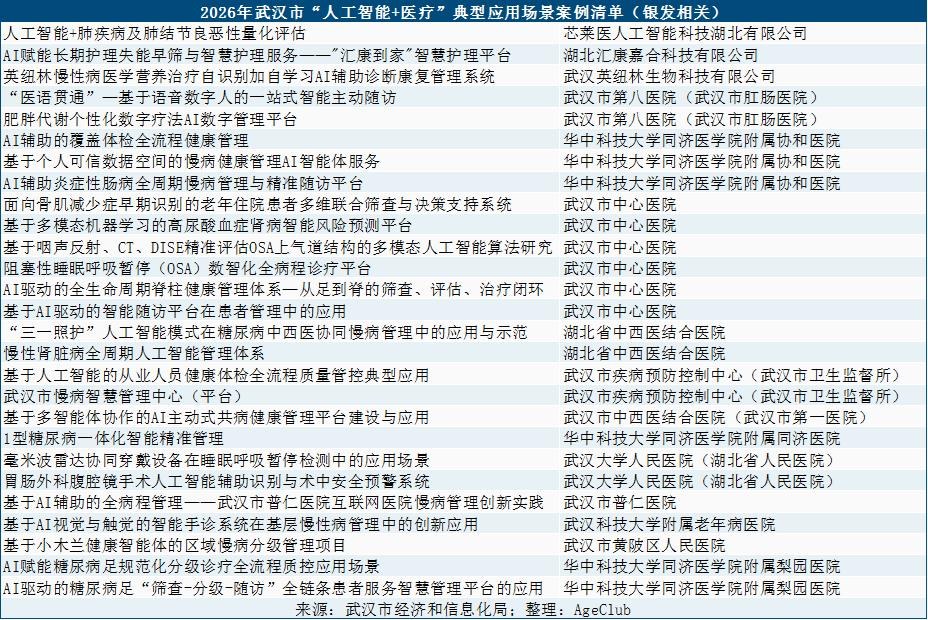
Supporting datasets are accumulating too: Tongji’s real-world cardio-cerebrovascular multimorbidity set, Hankou’s multimodal BCI set for dysphagia, provincial TCM hospital’s chronic atrophic gastritis set. Scenarios create data; data feeds models—the flywheel is turning.
Wuhan is not an exception.
Shenzhen health authorities count nearly 450 AI products landed across institutions, 404 clinical. In the ICU at Peking University Shenzhen Hospital, doctors use Mindray’s Qiyuan model to retroactively integrate clinical data in 5 seconds and generate structured notes in a minute.
Peking Union Medical College Hospital’s agent matrix covers rare disease, cardiopulmonary imaging, oncology radiotherapy and more—110+ agents—descending to counties and townships in 30+ provinces. Its “Xiehe Taichu” rare-disease agent hits 99% genetic-variant analysis accuracy, lifts collaboration efficiency 33% versus manual work, and has reached 419 hospitals. In community clinics in Beijing’s Xicheng District, with Peking University First Hospital’s CKD digital doctor assistant, community doctors’ mastery of kidney screening and diagnosis reached 100%.
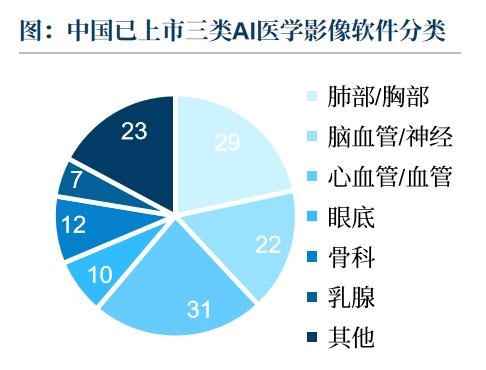
Source: LeadLeo Research
Closing
Stroke, diabetic retinopathy, osteoarthritis—the diseases most common in older adults are exactly where AI diagnosis is landing fastest. That is not coincidence; demand is pointing the way.
For China’s 300 million elders, the best news is not how smart AI is, but that good doctors’ capability can finally be “copied” to counties, communities, and homes: county CT reads get AI help, community doctors screen early kidney disease with AI, township doctors pull tertiary oncology guidelines on a phone, and rehab-ward robotic hands move on patients’ intent.
When AI brings tertiary diagnostic capacity to elders’ doorsteps, those who need quality care most benefit first.
AI doctors will not replace doctors. But they are making good doctors more numerous.
相关文章