



At Meta Connect 2026, the metaverse went quiet—and personal superintelligence took center stage.
On September 23 local time in the U.S., Meta held its annual Connect developer conference in Menlo Park, California. “We believe the highest calling of superintelligence is to create and invent,” CEO Mark Zuckerberg said in his opening. He also called Muse the “core” of Meta’s future AI vision, with Reality Labs shifting focus toward devices that deliver personal superintelligence.
Glasses were another headline. Meta drew clearer lines across product families: the $349 Ray-Ban Meta Audio has no camera and focuses on music, calls, and voice interaction with up to 12 hours of battery—meant for all-day wear; the third-generation Ray-Ban Meta starting at $449 keeps the camera and upgrades capture, noise reduction, and battery life. Existing Ray-Ban Display glasses add navigation and expand into more markets.
Meta is also adding frames and collabs, aiming for more than 100 eyewear options by year-end.
Higher-end Meta VR Glasses are a separate line: compute and battery move into an external pack, bringing the glasses themselves down to about 100 grams for movies, immersive sports, and multi-screen work. Price: $1,299.99, planned for spring 2027.
Muse will eventually plug into these AI glasses so users can assign tasks by voice and what they see.
It is the story every consumer-hardware company wants to tell in this era: a powerful agent of your own that enters phones and PCs—and extends to everything you can wear.
For Meta, glasses are the critical device that lets Muse keep sensing context and helping when needed, and a chance to own a compute entry point. The challenges: will people wear them long enough, trust them with what they see and private data, and will Muse be useful enough that glasses become a daily device?
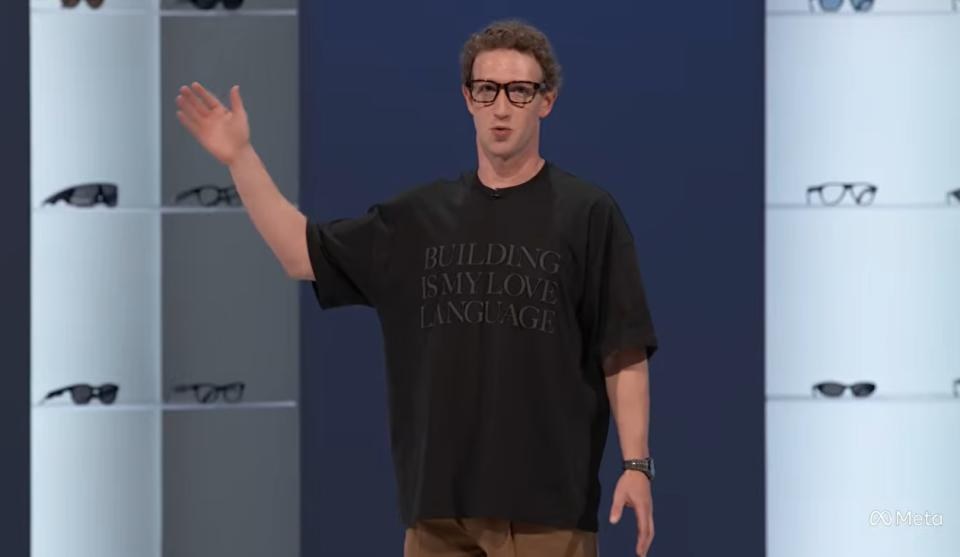
01 Personal superintelligence: Muse
Only weeks after launch, Zuckerberg set a high bar: in the years ahead, Muse will grow into personal superintelligence that helps billions of people worldwide reach goals and improve their lives.
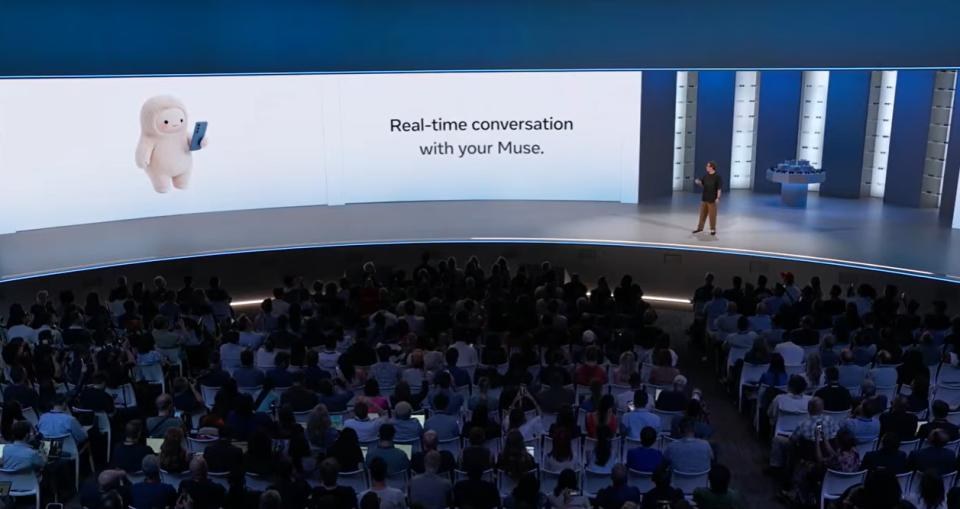
Muse already serves millions of people, just launched in Canada, and will enter more countries.
Architecturally, each Muse has its own private secure compute environment—Meta calls it the Muse Secure Virtual Machine. The underlying model is Muse Spark, trained specifically for personal agents.
Unlike traditional chatbots, Muse stresses continuous task execution. Users set goals; Muse proactively surfaces information, builds personalized feeds, and supports role and personality customization—the default character is named Jolly.
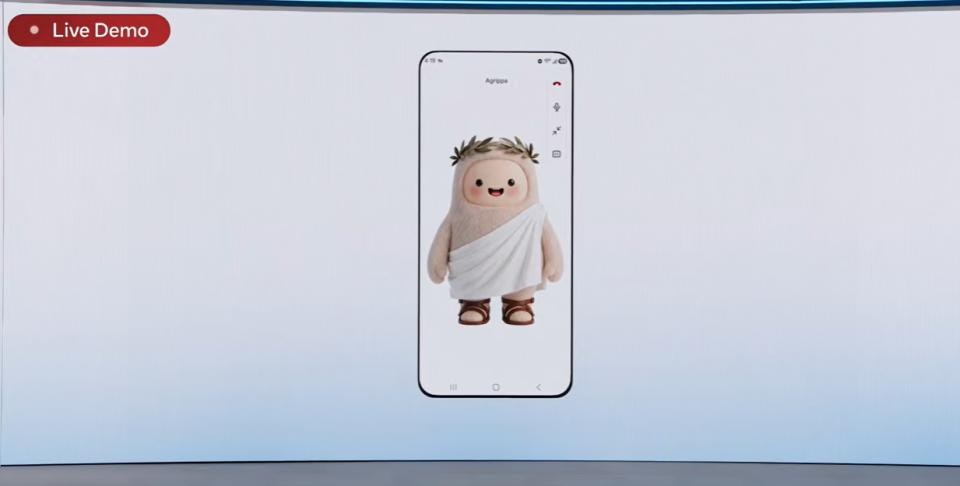
The business model differs too. Meta’s idea is not to charge users heavily for tokens; within a generous usage allowance it stays free, letting Muse create value by helping users save money, make money, and complete transactions—then taking a small cut of related commerce.
It is a familiar internet advertising playbook, but whether it works depends on whether Muse truly enters daily decisions and transactions, and how large its active base grows. Cases Meta has shared already cover shopping, travel, bills, and insurance. Muse has helped find a matching set of broken china, and helped someone negotiate with a cable company to cut $85 a month.
Zuckerberg worked hard to convince the audience that Meta has lived through products entering hypergrowth—and that Muse is in that phase now.
At Connect, Muse announced several new capabilities.
First: computer use on Mac. With permission, Muse can operate Mac apps to run a small business or handle work. After you leave the machine, it can keep executing tasks you set. The Muse Mac app launched last week with new dictation.
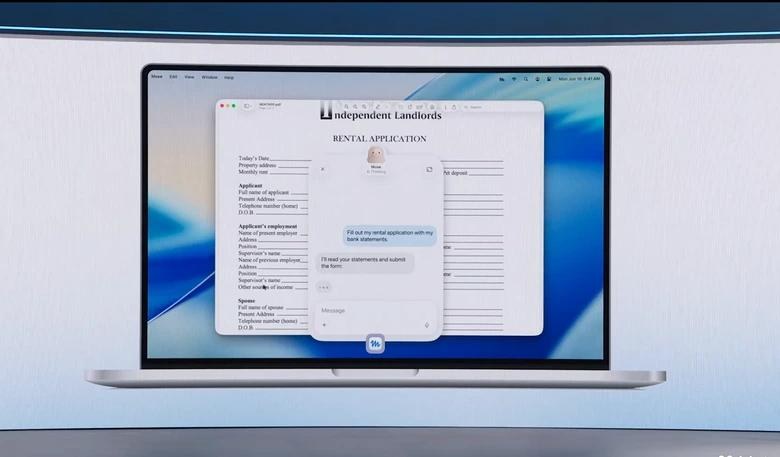
Email is also in development. Users can add Muse to a thread or forward mail for it to handle.
Connectors are a key foundation for expanding Muse. It already linked Spotify, OpenTable, Plaid, Ticketmaster, and more; this time Meta adds retailers such as Walmart, Best Buy, Gap, Sephora, and Wayfair, travel via Expedia, and grocery delivery via Instacart.
For work, new connectors include Box, GitHub, Granola, and Notion. Meta is also partnering with Stripe and Shopify so Muse can browse Shopify catalogs and complete web checkout via Link and Shop Pay, with PayPal support expanding.
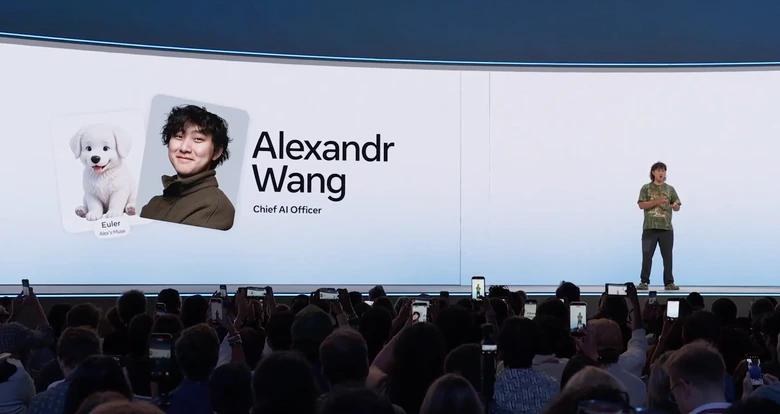
More importantly, Meta is opening a Muse connector platform. Chief AI Officer Alexandr Wang described it as the kind of opportunity that appears when a new platform forms. He also said Meta Superintelligence Labs (MSL) is building personal-agent models from scratch, optimizing preference memory, personalized action, long-horizon continuity, tool selection, and cross-app operation.
Meta also said it will soon release its strongest model yet and use it to lift the whole model family.
02 A sprawling glasses lineup
At this Connect, Meta essentially reorganized its glasses portfolio.
Zuckerberg argued that about 2 billion people worldwide wear glasses, and a large share will upgrade to AI glasses. Unlike phones, glasses can continuously see what you see and hear what you hear—and become Muse’s doorway to the physical world.
Meta first introduced a new audio-glasses category. Without a camera, designs can stay more conventional, thinner and lighter, with all-day battery. In that category Meta launched its thinnest Ray-Ban Meta yet and added classic Ray-Ban Clubmaster styles.
Ray-Ban Meta Gen 3 further narrows frames and temples, adds adjustable temple tips, upgrades battery and camera, expands to six mics, and supports Dolby Atmos spatial audio capture.
Meta-branded glasses grew from dozens of combinations in June to 51 styles, starting at $249, with new Adventurer, Capri, and Nova designs.
Collabs keep expanding. After Kylie, Meta announced a Lisa collaboration: star motifs at the temple tips, charms inspired by her pets, custom cases, plus Lisa World designs and virtual try-on in the app.

Ray-Ban Display glasses are also expanding sales. They were Meta’s first glasses with a full-color high-resolution display and the first paired with the Meta neural band. After a year of shortages, supply returns via Meta.com and international markets.
By year-end Meta expects more than 100 styles across audio glasses, display glasses, Ray-Ban, and Oakley lines.
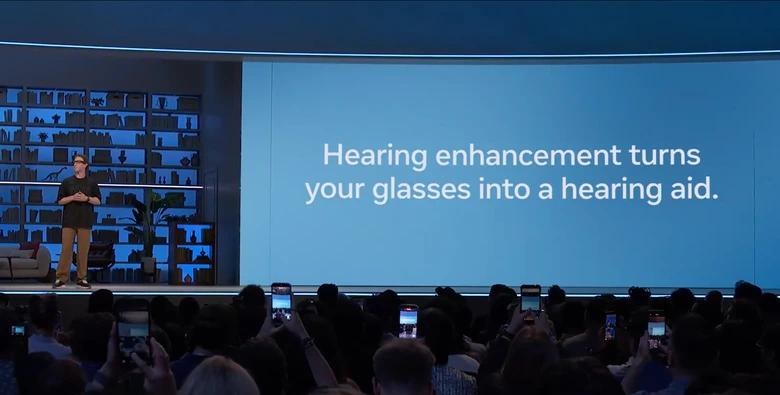
Hearing enhancement is another major update. Meta glasses will offer hearing boost and aim to ship as FDA-cleared OTC hearing devices for mild to moderate loss. Users can complete a hearing assessment in the app and tune amplification. Meta notes about one in six U.S. adults has some hearing loss, while price and bulk have limited traditional hearing-aid adoption.
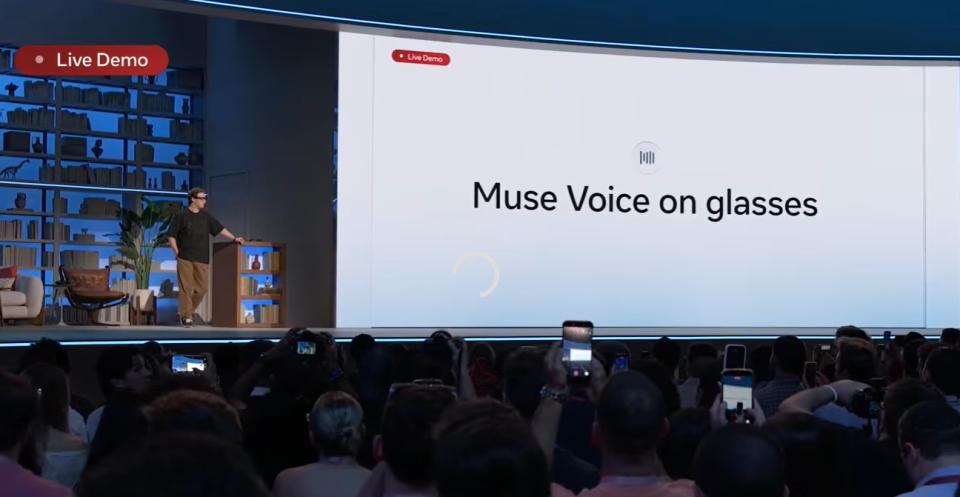
AI calling will upgrade too. In the coming weeks users can call Muse directly; it keeps full conversation context, keeps working in the background, and supports custom voice, speed, and accent.
03 100 grams, $1,299—Meta VR glasses ship in spring
The heaviest hardware news at Connect was Meta VR Glasses.
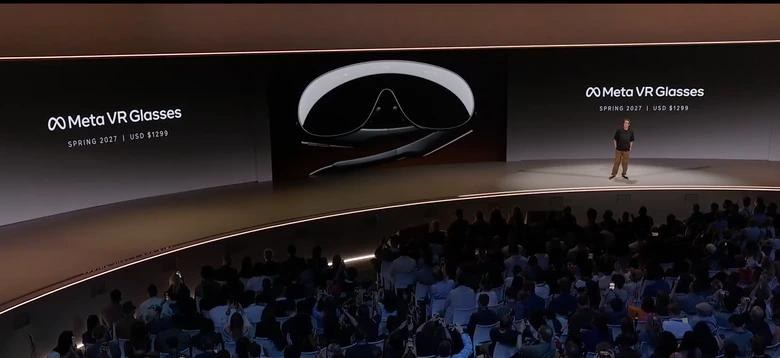
Zuckerberg said Reality Labs is putting more attention on Muse and AI glasses; traditional VR ships new products only on clear breakthroughs. This device is one of those. It is glasses-shaped rather than a classic headset, about 100 grams on the face—less than one-fifth of Quest 3—with a split architecture and Meta’s most advanced display system yet.
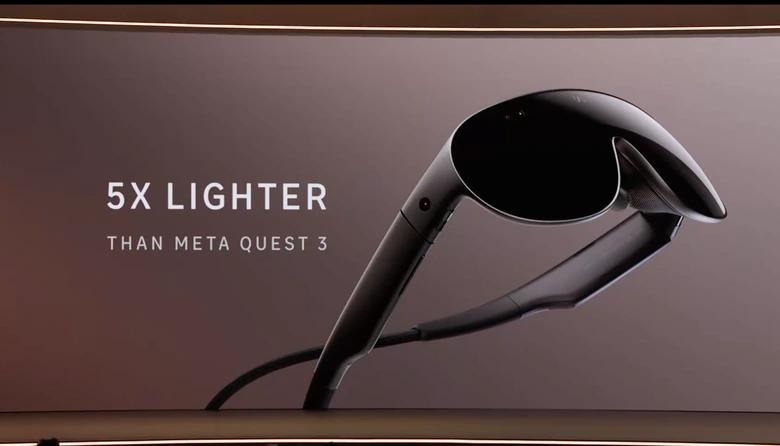
AI is another core capability. Meta for the first time integrates an AI agent into the OS; users operate via voice, eyes, and gestures, and can turn a flat desk into a virtual keyboard and trackpad.
The product targets private cinema, multi-monitor PC, and console-style play.
For media, it is the first VR device with IMAX Enhanced certification, supporting Dolby Atmos and Dolby Vision. Disney, Peacock, Paramount, HBO Max, and others will offer new 3D or VR content; YouTube, Prime Video, and Crunchyroll provide 2D streaming.
For sports, Meta plans more than 100 immersive live events a year and is partnering with ESPN to offer front-row 180° views for some college football games starting this fall.
For games, launch supports 75 gesture-only titles, the Quest library, and hundreds of Xbox cloud games.
In work scenarios the AI assistant can handle drawing updates, hardware revision merges, material rendering, calendar management, and more. The device also supports DisplayPort sources over USB-C.
Meta also showed mixed-reality agents and holographic calling; holographic calls will later extend to Ray-Ban Display glasses.
Meta VR Glasses are priced at $1,299, with spring shipping next year.
04 Meta’s One More Thing
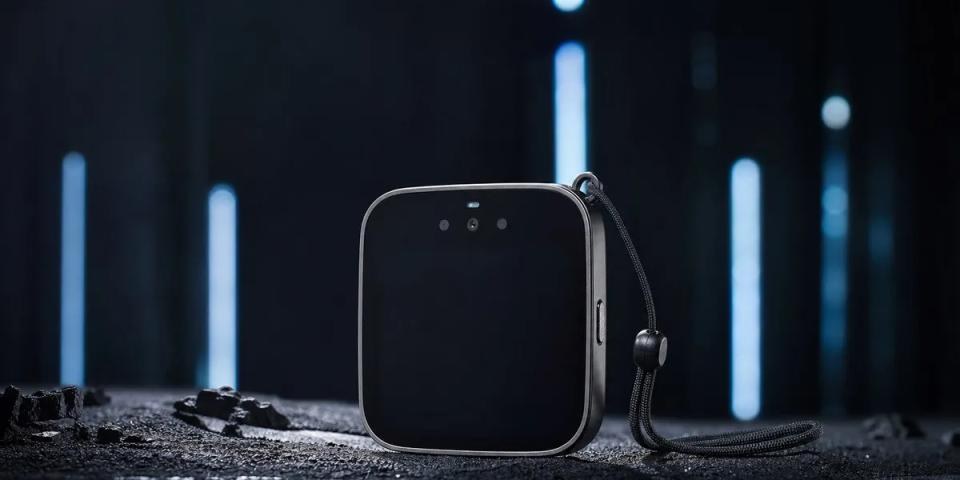
Finally, Meta unveiled Muse Charm, a small AI gadget for a pocket or keychain. For people who do not wear glasses, Charm is a standalone way to summon Muse—and helps Muse sense the surroundings.

Charm is still a prototype; Meta is still choosing materials and internal layout, aiming to ship before the December holidays. Reports say the project was slated for 2027 until Zuckerberg pushed for this holiday season. For Meta, Charm is a playful bet: turn a task-capable agent into a companion you can pick up and talk to anytime.
Its roughly 2-inch OLED touchscreen hosts a customizable Muse avatar and voice; a fingerprint sensor on the corner starts a conversation. Led in part by former Apple interface head Alan Dye and designer Billy Sorrentino, a translucent shell shows circuitry on the back and sides; 5G plus front and rear cameras keep Muse responsive off Wi‑Fi and aware of what is in front of you.
From this Connect lineup, personal superintelligence is the clear spine: Muse supplies AI, glasses are the main entry, VR glasses cover higher-end compute and entertainment, and Muse Charm fills the no-glasses gap. The map is largely drawn—hopefully personal superintelligence is not the next metaverse.
相关文章