



In the 18th Double 11, AI finally runs through browse–ask–buy: digital-human livestreams, AI service desks, generative product images, and smart ads. Taobao wired in Qwen, JD pushed the “Dongdong” shopping assistant, Douyin embedded Doubao into commerce. Merchant post-mortems rhyme: efficiency rose, growth often did not—AI is strong at routinized supply-side work, weak at inventing new reasons to purchase.
3× efficiency, toothpaste growth
Egg-goods operator “Liu Pei” (alias) estimates AI roughly tripled his personal throughput; Tmall sales still rose ~15–20% in the Oct 20–26 window—solid, but nowhere near “3×.” A sharper sample: Three Squirrels says it privately deployed DeepSeek and built the “Squirrel Tianlong” agent into SKU ops; 2025 revenue was about RMB 10.189B (−4.08% YoY) with net profit down ~60%, while national online retail grew ~8.6% that year—maxing out AI did not beat the market.
The gap often sits in three places: saved hours refill chores; everyone uses the same toolkit so speed stops differentiating; platforms still have not rebuilt a decisive consumer entry with AI. Cost also migrates: plans generate in seconds, scarce “business + AI” talent gets pricier—spend shifts from execution seats to hybrid decision roles.
What AI actually takes over
Liu still owns assortment, inventory, and pricing. AI eats repetitive post-launch ops: store diagnostics, analytics, campaign filing, and long-horizon calendars (e.g., Alibaba’s “Wukong” once configured). Creative is the clearest win: asset cycles shrink from 1–2 weeks to 1–2 days; Hanfu sellers cite image costs falling from ~RMB 1–2k to tens of yuan. At a Qwen commerce-office launch, one seller showed ~37k images in half a month and finished peak prep nearly three months earlier. Content platforms push the same logic—Qianchuan AIGC creatives, Kuaishou clipping/scripts—on their home turf.
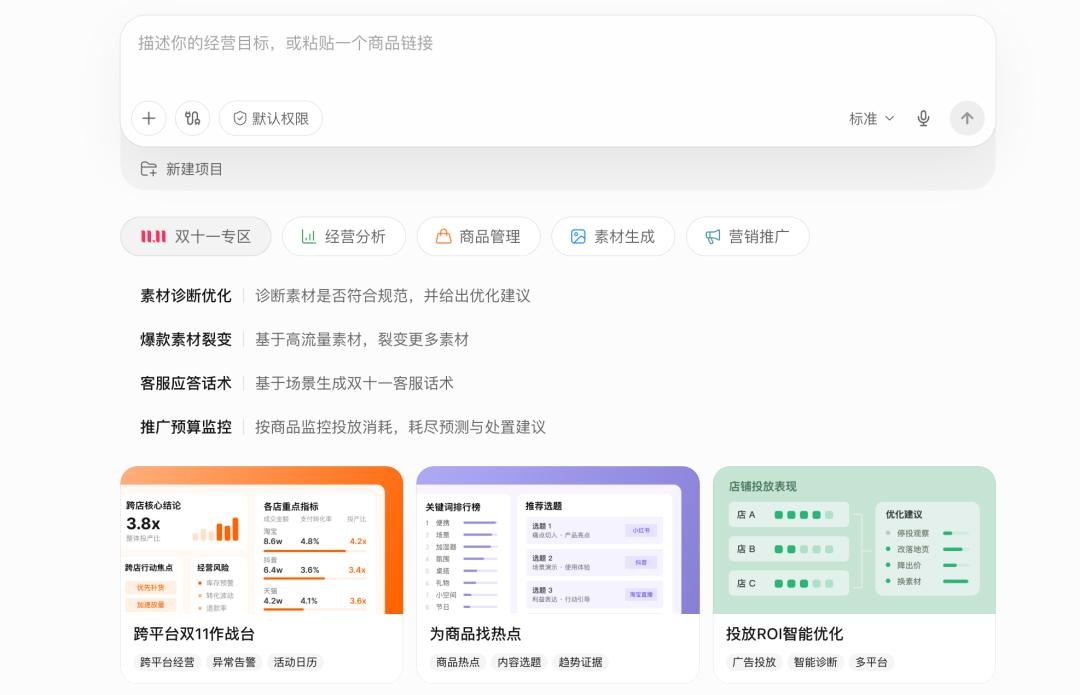
Limits stay human: price rules and coupon stacks need manual watch; hero images/PDPs stay guarded; all-AI “store visit” videos have been dinged as violations. Service and ads keep a hybrid—standard tickets to bots, disputes to people; only part of ad budget goes fully auto. Dumping a month of SKU data into Doubao once misaligned columns until dual-checked. Generation can be 3× faster; review load barely drops—end-to-end may not move. Headcount can shrink while hours shift to product, competitors, and after-sales: keeping lights on ≠ scaling the P&L.
Not short of goods—short of reasons to buy
Promo rules simplified (cross-store full-reduction exits, deposits → spot, official markdowns). Complex stacking inflated returns and hollow GMV; once volume softens, that cost shows. Stats: 2026 Q1–Q3 social retail ~+1.1% YoY, online retail ~+4.4%, slower than 2025’s ~+8.6% online full-year pace. Platform AI tools for merchants are almost all supply-side—images, copy, ads, patrols—making goods cheaper/faster. Near saturation, what is missing is why people buy more. Doubling ops speed does not mint demand.
Platforms bet elsewhere: AI shopping guides and chat entries. Taobao keeps shipping guide apps and Qwen–Taobao loops; JD launched an assistant; Douyin nests checkout into Doubao (QuestMobile: ~419M users). A Shanghai consumer survey: ~84.56% tried AI shopping, only ~16.06% felt precise matching. Merchant tool racks are full (Jingmai, Qianniu, Pinduoduo’s backend autopilot), yet “being seen” is still platform allocation—your creatives 3× faster does not auto-earn rank. Alimama claimed ~RMB 1B extra GMV from Wanxiang Dianjing in the opening window; many shops still lack attributable dashboards, so war-room numbers and merchant feel diverge.
Growth is also elsewhere: instant retail and outbound channels (JD Global, Temu, TikTok Shop…) matter; StarMap/Citi paint Double 11 as “building” / low-to-mid single-digit GMV. Douyin still expands via interest feed while its own shelf share rises—two diversion logics coexist. Who AI ultimately favors is unsettled. More product context: Qwen and AI News.
FAQ
Q: Where is AI used in Double 11? A: Both sides—merchant creatives/service/ads, and platform guides/chat entries. Tools are widespread; a winning consumer entry is not.
Q: Why doesn’t efficiency equal growth? A: AI mostly compresses supply work; demand lacks new purchase reasons, advantages homogenize, and validation/hybrid talent costs claw back savings.
Q: How should merchants use it? A: Automate repetitive ops and bulk art; keep pricing, hero assets, and disputes human; count review cost before claiming end-to-end gains.
相关文章