



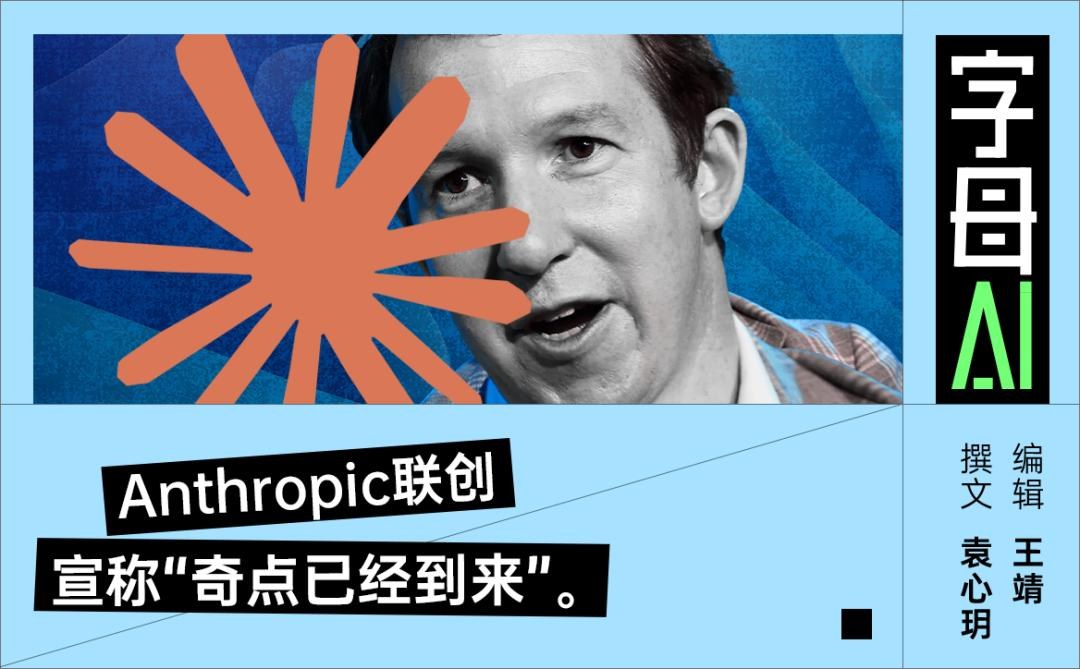
On October 17 in Bangkok, Anthropic co-founder Jack Clark told an IMF–World Bank audience that “the singularity has arrived,” sketching a world where one human scientist directs hundreds or thousands of AI researchers. In September, at 37, he landed on the Forbes 400 with a fortune put at about $15.5 billion. A decade earlier he was a Bloomberg tech reporter; in 2016 he quit for OpenAI, and in 2021 he left with Dario Amodei and others to start Anthropic.
How a literature graduate saw the exponential first
Clark grew up in Brighton, graduated in 2009 from the University of East Anglia in English literature and creative writing, then covered data centers and distributed systems at The Register and Bloomberg before shifting to AI around 2014. Former editor Alistair Barr recalls that in 2015 few editors wanted AI stories—Clark kept pitching them.
He spent roughly two years printing and reading papers, charting progress across vision, speech and games until the curves looked like the same exponential, and he noticed researchers almost always used Nvidia GPUs. Former OpenAI researcher Andrej Karpathy later said Clark was the rare reporter who actually read the papers and asked technical questions—reason enough to keep answering him.
Turning off the recorder for OpenAI
After interviewing Greg Brockman at a 2015 Canada conference, Clark asked how he could work for them. In summer 2016, on a San Francisco waterfront bench, he told Barr he was resigning for the not-yet-year-old OpenAI. Barr objected; peers emailed warnings. Barr’s 2025 essay admitted he was wrong—“I said it was a terrible decision. Now he’s an AI billionaire.”
At OpenAI, Clark worked strategy, communications and policy, later as policy director; he launched the Import AI newsletter in 2016 and helped start Stanford’s AI Index. He backed cautious releases such as staged GPT-2 access. According to a September 2026 Atlantic investigation, he also blocked a private GPT-3 trial for Kanye West. As internal fights multiplied, he found himself almost always aligned with Amodei.
Exit OpenAI, found Anthropic
Clark’s later line: staying meant half his time in arguments—better to leave and work full-time with people who shared the bet. At a December 2020 all-hands, Amodei announced that he and six colleagues were leaving; Clark typed “I love you all” before accounts and machines were cut. Hours later the seven were on another call about money, GPUs and a name—Sparrow Systems (from Bostrom’s sparrow parable) lost out when the domain was unavailable, so they chose Anthropic. The company launched in 2021 and is now among OpenAI’s sharpest rivals. Pair this arc with our recent note on Anthropic’s valuation and capex squeeze.
Past the rich list: still Import AI, still drawing lines
When 2025 funding news made billionaire status a story, Barr asked how it felt; Clark replied it “really [wasn’t his] style.” He still ships Import AI and has said he is scared of the technology he is helping build. In 2026 Anthropic clashed with the U.S. Defense Department over Claude: no mass domestic surveillance, no fully autonomous weapons without adequate human oversight; after a supply-chain risk designation, the company kept challenging the decision in court. In March Clark took charge of the new Anthropic Institute; on October 17 at the IMF he urged stricter rules and, if needed, a slower build. More coverage stays on News.
FAQ
Q: Is Jack Clark a research scientist by training? A: No. He studied English literature and creative writing, entered via journalism and paper-tracking, and at OpenAI/Anthropic has focused on policy, strategy and external communication.
Q: When did he leave OpenAI for Anthropic? A: December 2020 with Amodei and five others; Anthropic incorporated in 2021. The split tracked governance and release disagreements—he argued staying burned too much time on internal fights.
Q: Why call this an early AI bet that paid off? A: He joined OpenAI in 2016 before the consumer boom; Forbes 400 in September 2026 put his wealth near $15.5 billion, while he still presses for usage limits and regulation rather than treating wealth as the story.
相关文章