



At Fort Mason in San Francisco, OpenAI's developer conference lit up.
Just now, Sam Altman walked onto the DevDay stage and, in a full hour, dropped 20 major launches.

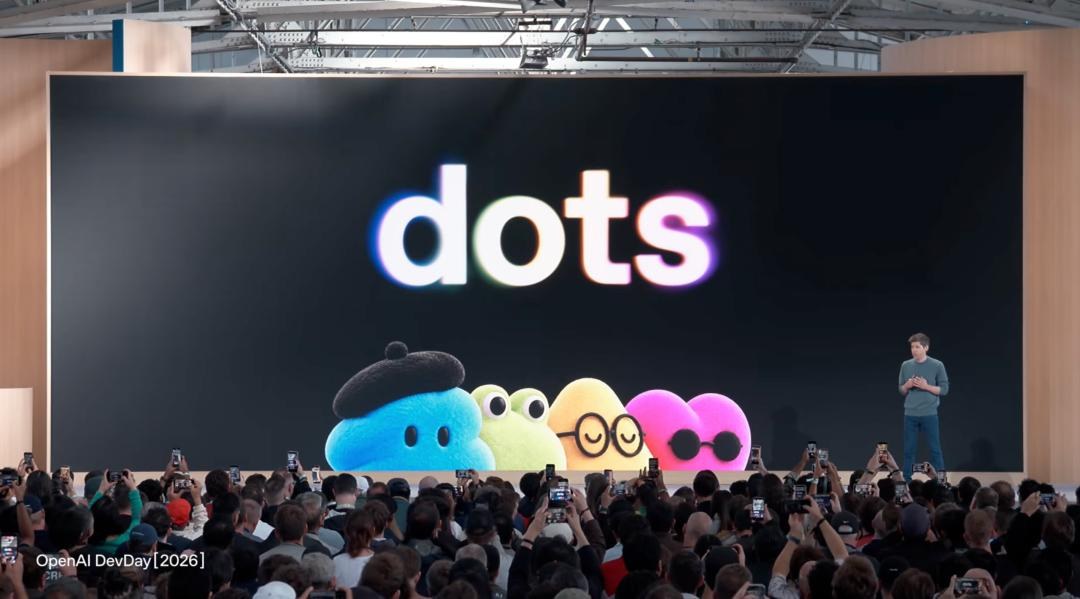
A new species—dots—is officially here: AI that's online 7×24.
Unlike ChatGPT, it's OpenAI's first always-on Agent with its own cloud computer, ready anytime to run code and watch projects for you.
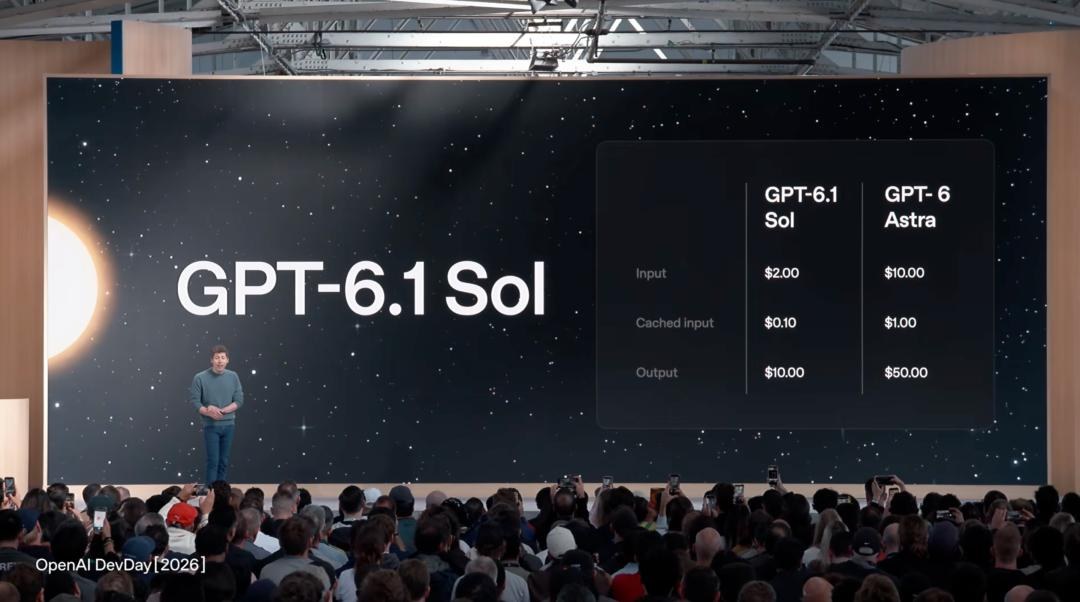
Even more striking: Altman unveiled the next flagship GPT-6.1 Sol—Astra-class reasoning and coding at roughly 80% lower price.
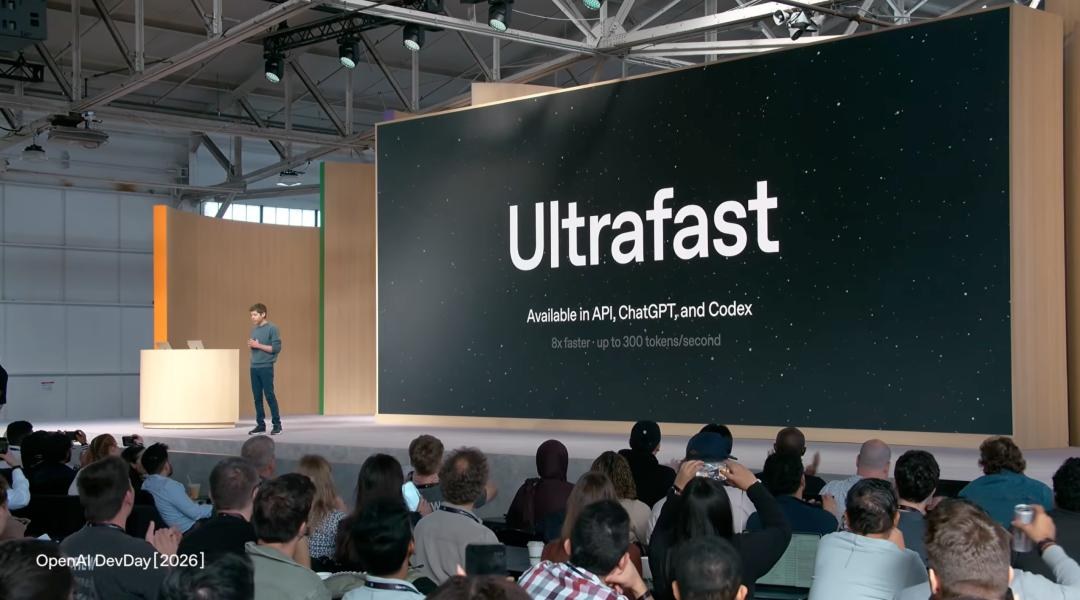
Ultrafast mode launched alongside it at a blistering ~300 tokens/s—8× the standard speed.

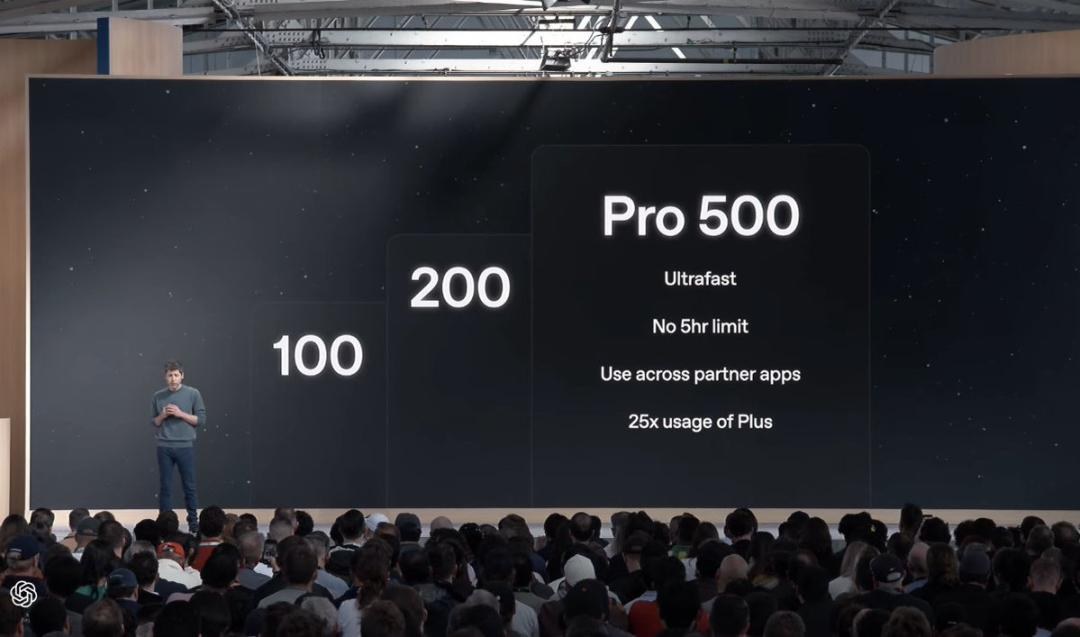
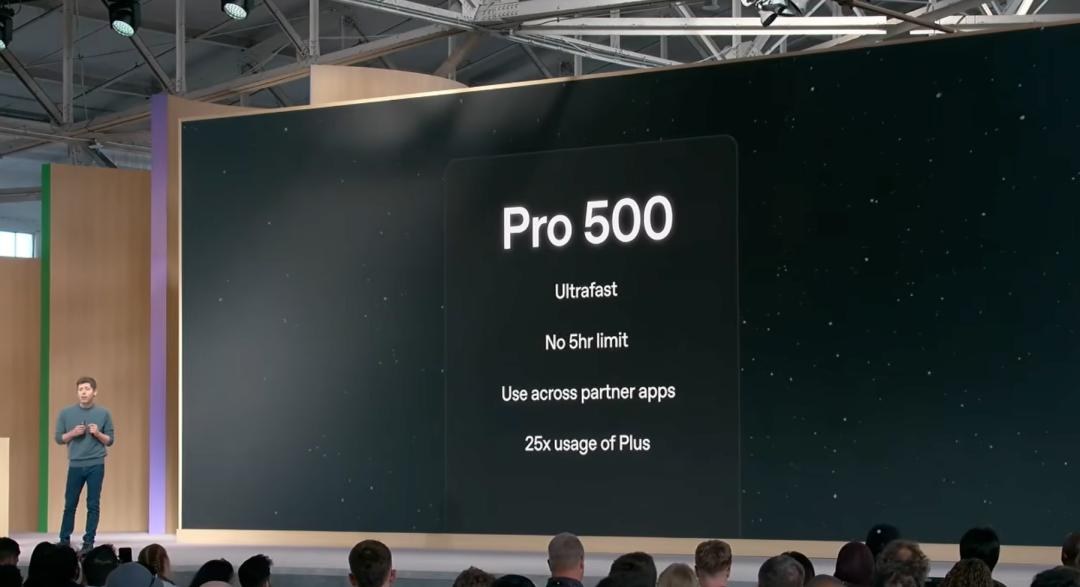
On stage, Altman reopened the $200 Pro plan and debuted a "premium tier"—Pro 500.
Usage is 25× ChatGPT Plus, with Ultrafast access and no 5-hour cap.
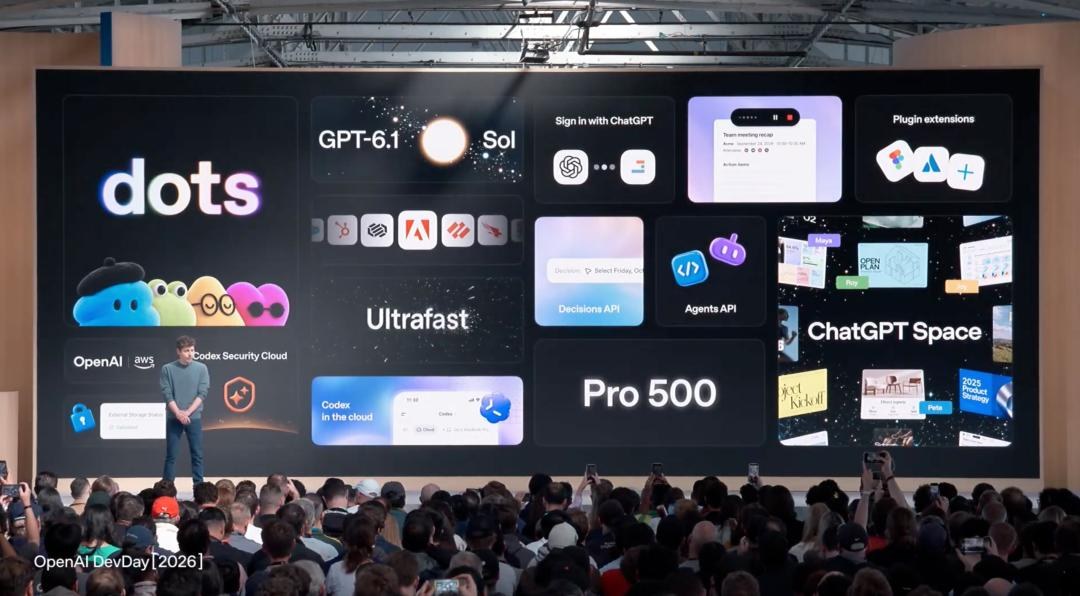
Beyond that: ChatGPT Space, Agents API, cloud Codex… enough news to leave the room gasping.
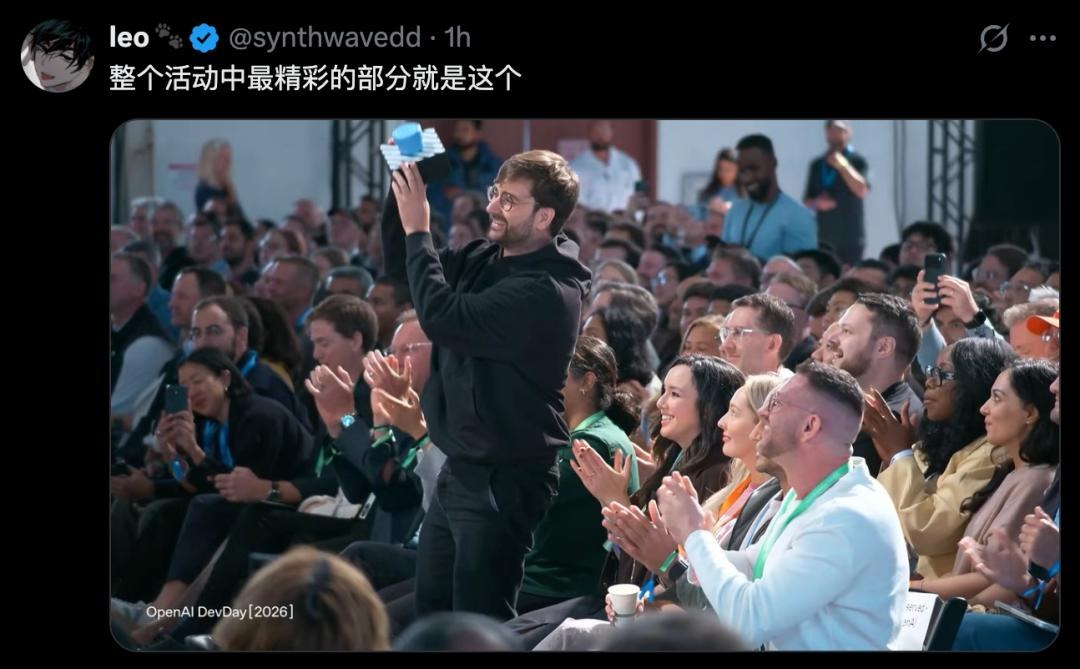
And at the very end, "godfather" Tibo brought out a reset button and one-clicked a restart for everyone on site.

Some netizens quipped that this was the best bit of the whole keynote.
Dots Arrives—OpenAI's First 7×24 Always-On AI
The star of this keynote is dots.
It's not another OpenAI chatbot, and not just a ChatGPT feature add-on.
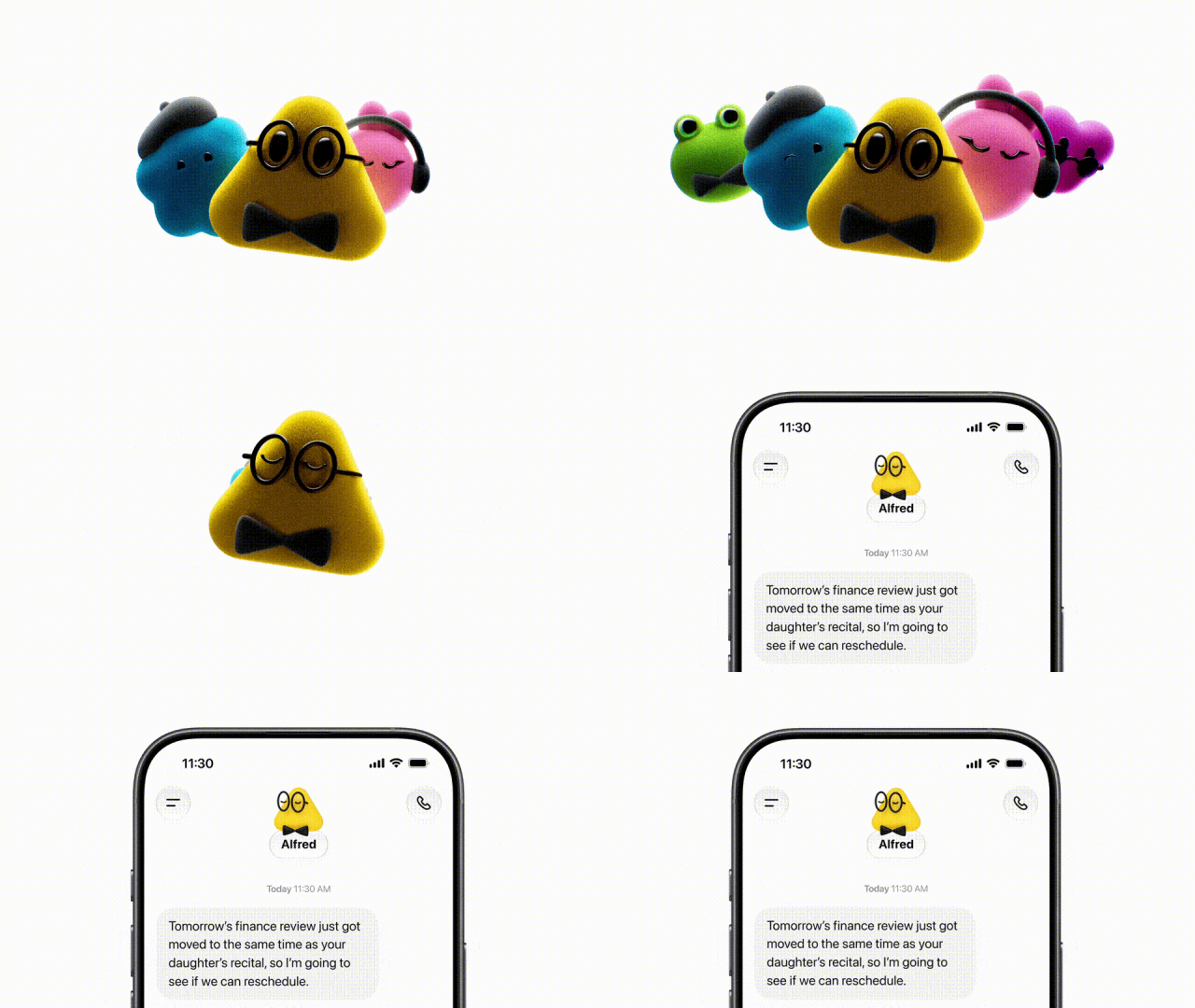
As earlier leaks suggested, dots is a round-the-clock 7×24 Agent powered by GPT-6 Astra.
It has its own cloud computer and browser, plugs into 4,000+ tools out of the box, and lands directly in Slack and Teams.
Give it a goal and it goes—no step-by-step coaching. Close the screen and dots still runs tasks in the background 24 hours a day.
You don't even need to open ChatGPT; dots can get to work anywhere.
First meet has a bit of ritual.
Open ChatGPT and your dot greets you: "Hi, I'm your dot—just checked into ChatGPT. From now on, bring the work to me."

On stage, an OpenAI researcher named theirs Alfred.
From the second it activated, Alfred took over the fragmented back-office work—
Automated site builds and go-lives
From approved designs, Alfred pushed site updates in the background alone, only popping up when a human decision was needed (e.g. swapping the first and third images)—then shipping live right after confirmation.
Cross-platform tracking and board decks
It monitored user-feedback data in Teams on its own, synced the board PPT waiting to be presented, and even pulled core metrics—
product usability climbing, YoY revenue up 51%.
Long-horizon engineering rewrites
From a Google Meet summary it caught "the app needs to migrate," auto-mapped the process, and drafted an architecture diagram.

And a real OpenAI internal case: an employee forgot to invoice a publisher. Their Dot noticed, prepared the invoice, and messaged: "Want me to send it?"
They confirmed—and it was done.
That's the logic shift under Dots: not a tool, a colleague.
You've hired a digital employee who never takes leave, never forgets, and stays online 24/7.
And it learns you over time—your preferences, your bar for "good."
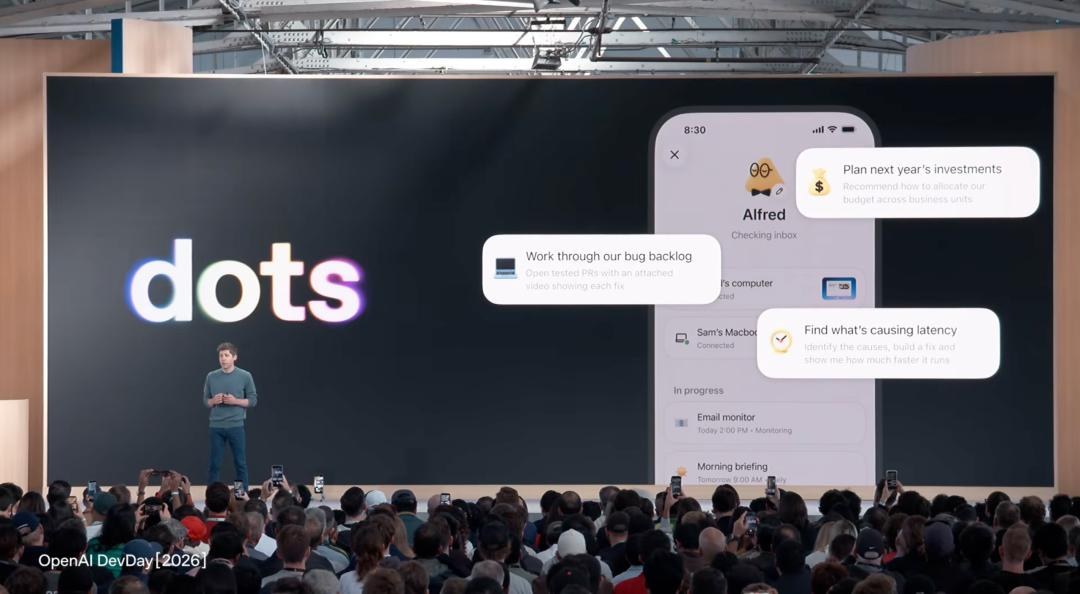
Altman didn't dodge safety. Each Dot runs on an isolated cloud computer; your personal machine and data stay sandboxed by default. When it uses saved passwords, those aren't exposed to the model.
When it's not on a task, it only does background "active research" with read-only access—no messages sent, nothing modified.
Altman said something worth sitting with: "You're not using a tool—you're building a team."
Starting today, Pro, Business Premium, and Enterprise users can create their first Dot; those chats don't burn ChatGPT usage quota.
### **ChatGPT Space—Workflows Rewired
If Dots are your digital employees, ChatGPT Space is the office for them and their human teammates.
This launch is telling. For a year, every Silicon Valley giant stuffed AI into docs—Google Docs + AI, Notion + AI, Microsoft Office + Copilot.
OpenAI flipped it: they built an AI-native collaboration space.

In Space, you collaborate on one page with coworkers and each person's Dot.
Write plans, research, generate charts, run analysis—right on the page.
Pull a Dot in like @mentioning a colleague: "Turn this into a bar chart." The chart appears, with live filters and data points.
More critically, Space stops Dot work from living only in one person's chat log. The whole team and all Dots share one knowledge base—project context doesn't break when someone rotates.
In Altman's words: "Your pages and files in Space live together, like a drive. But Space is alive."
GPT-6.1 Sol Arrives—Astra-Class Smarts at 1/5 the Price
Few expected a big new model at DevDay.
Then Altman dropped the next flagship GPT-6.1 Sol—and the room erupted.
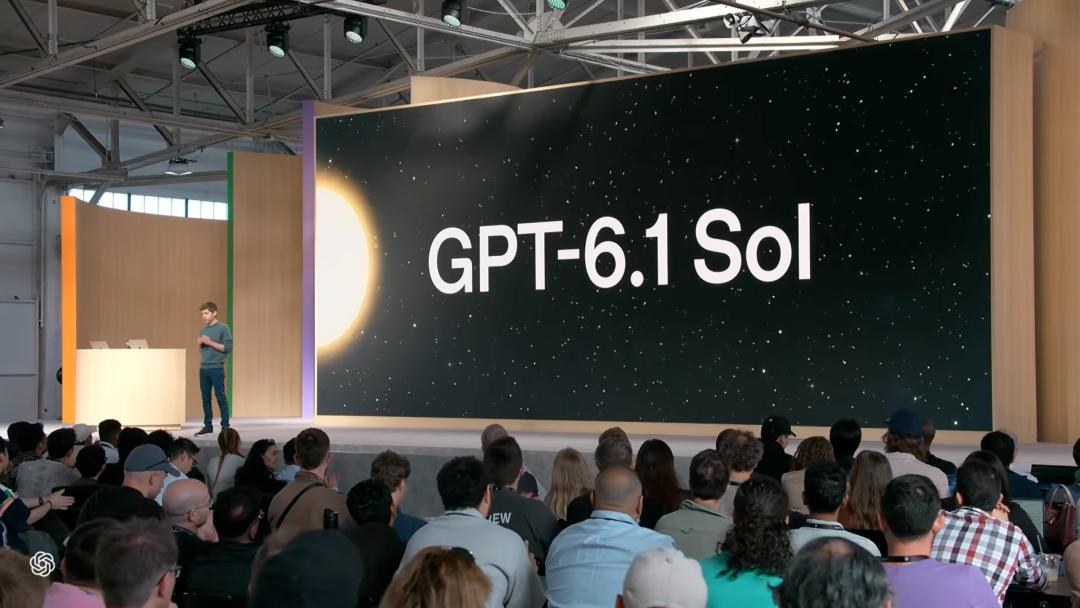
Barely a week after GPT-6 Sol, OpenAI shipped another major release.
GPT-6.1 Sol is a powerhouse: on software-engineering DeepSWE v1.1 it essentially ties Astra.
On long-horizon business automation AutomationBench and scientific reasoning Terminal-Bench Science, it beats Opus 5.5 outright.
On OSWorld 2.0 (long computer-use flows), 6.1 Sol trails Astra by only 2.1 points—at about one-seventh the cost.
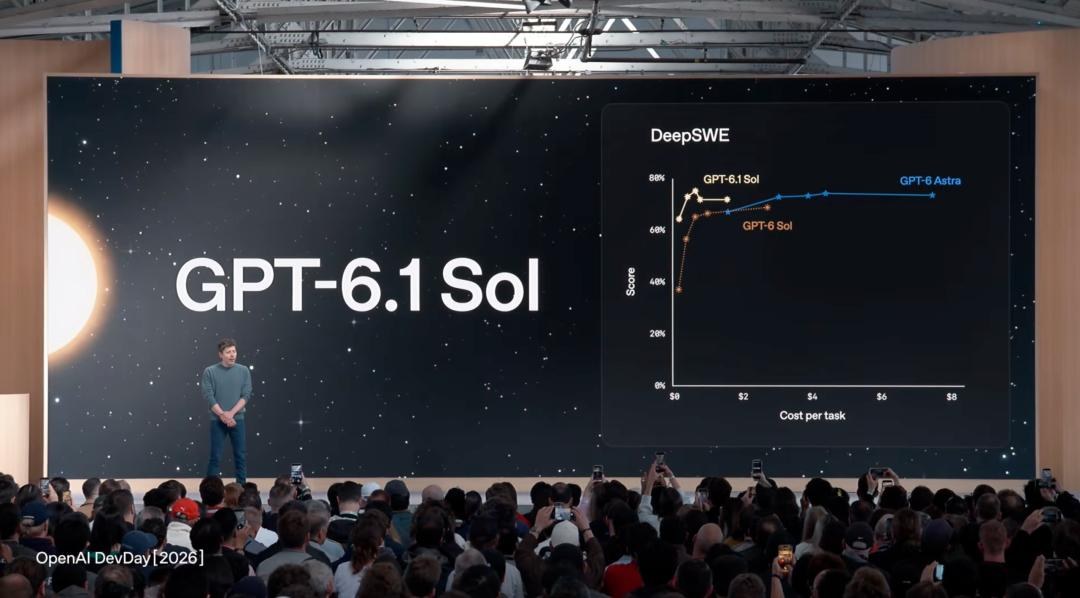
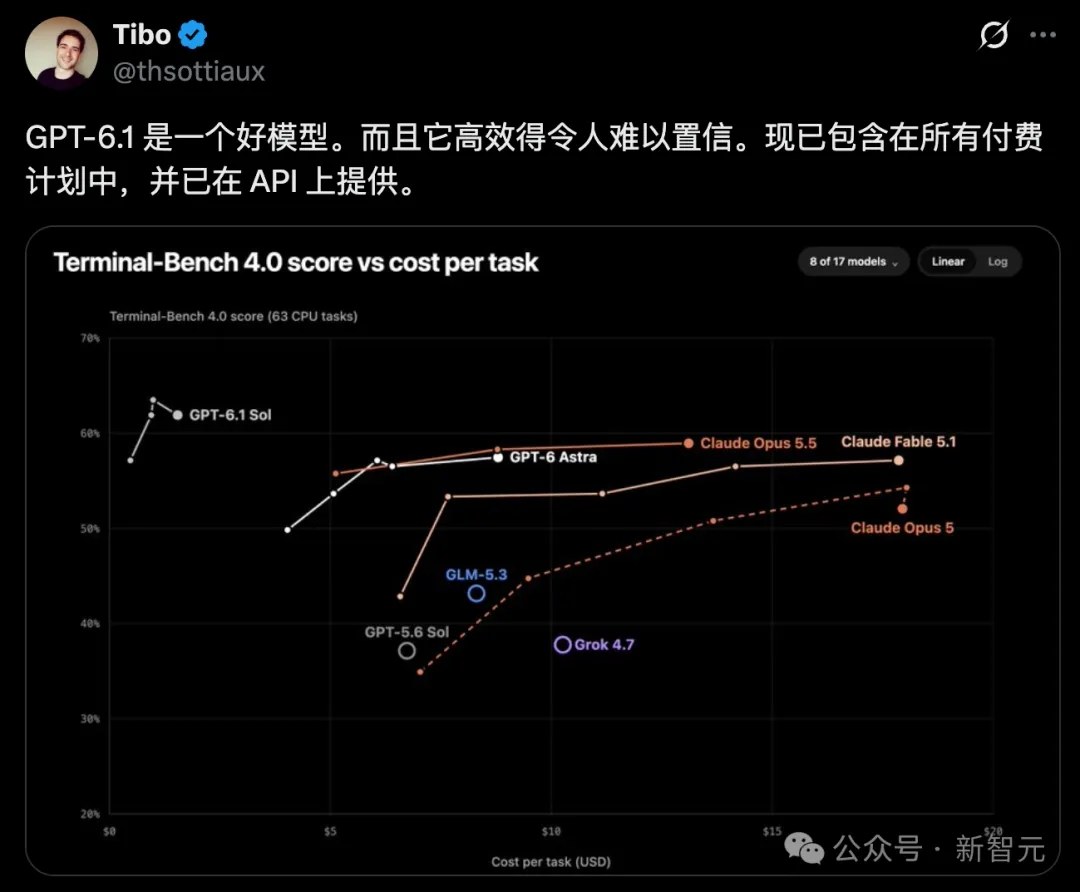
On price, GPT-6.1 Sol kicks the door open again.
$2 per million input tokens, $10 output. Versus Astra's $10 / $50—about one-fifth.
Even wilder: context cache at $0.10 per million tokens—up to 95% off standard input.
Altman also launched Ultrafast inference—8× standard mode, ~300 tokens per second.
In the live "build a rocket" demo, Ultrafast's rocket had already launched while standard mode was still assembling the model.
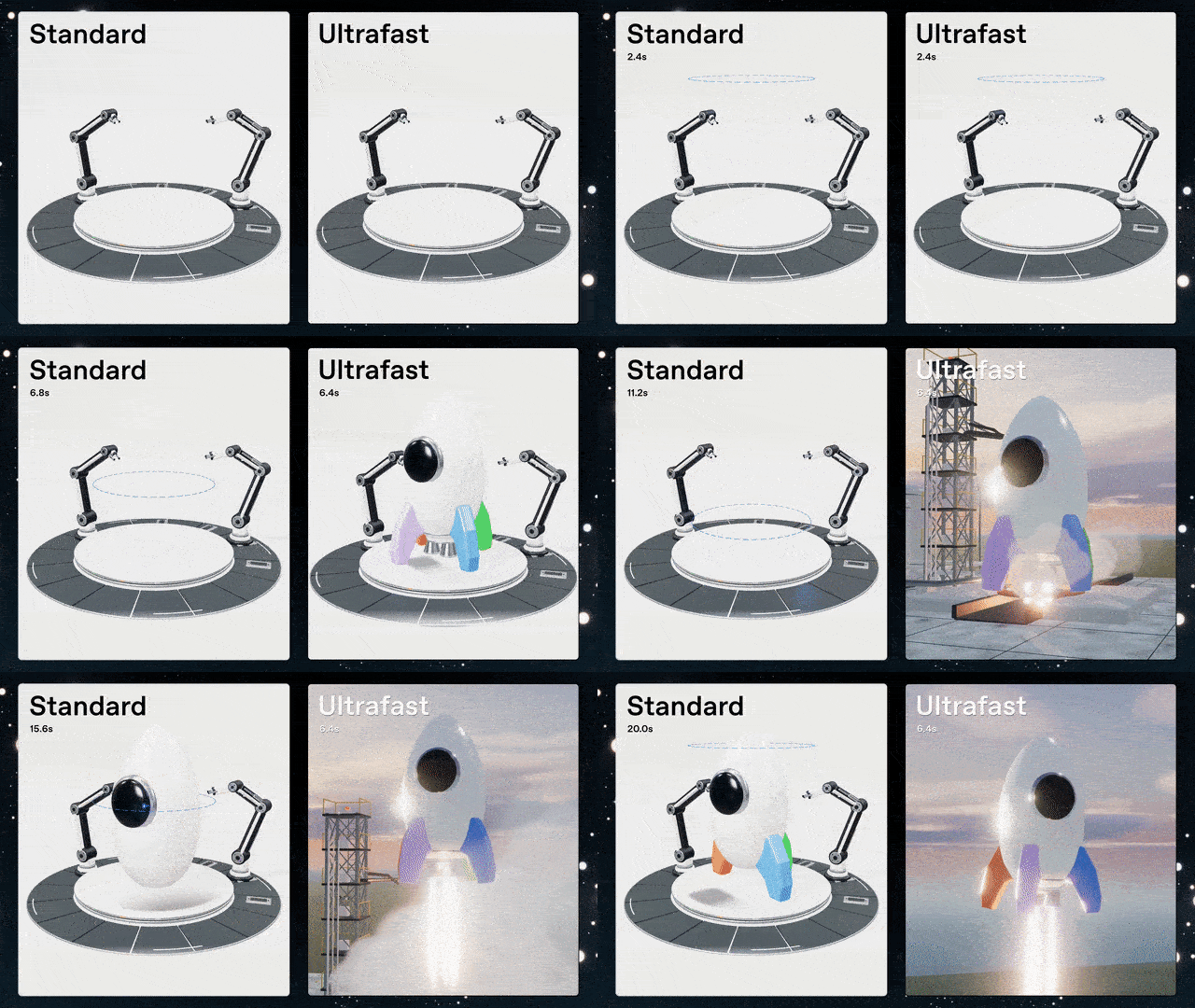
For now Ultrafast starts on Astra only; Sol support comes later.
To match that call volume, the paused Pro $200 tier is fully back.
OpenAI also added Pro 500—25× Plus quotas plus native Ultrafast—uncapping productivity.
Codex Moves to the Cloud**—**Code Without Guarding Your Laptop
DevDay is a developer stage, and Codex wasn't idle.
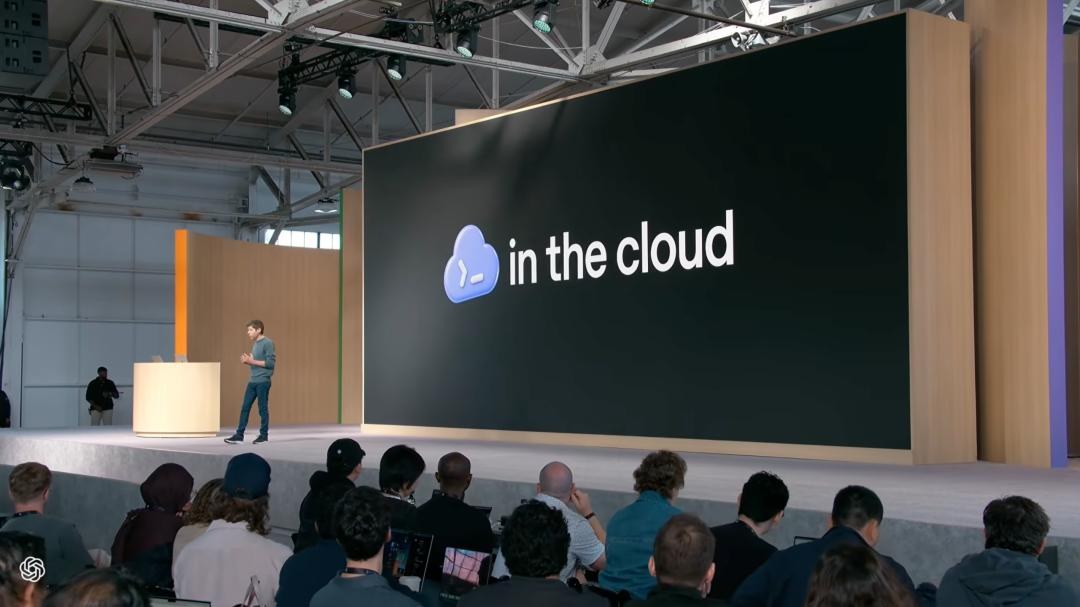
The big shift: Codex wholesale moves to the cloud.
Dev environments can be pre-provisioned and reused; permissions set once. You're out and about—phone in hand—and still steer it.
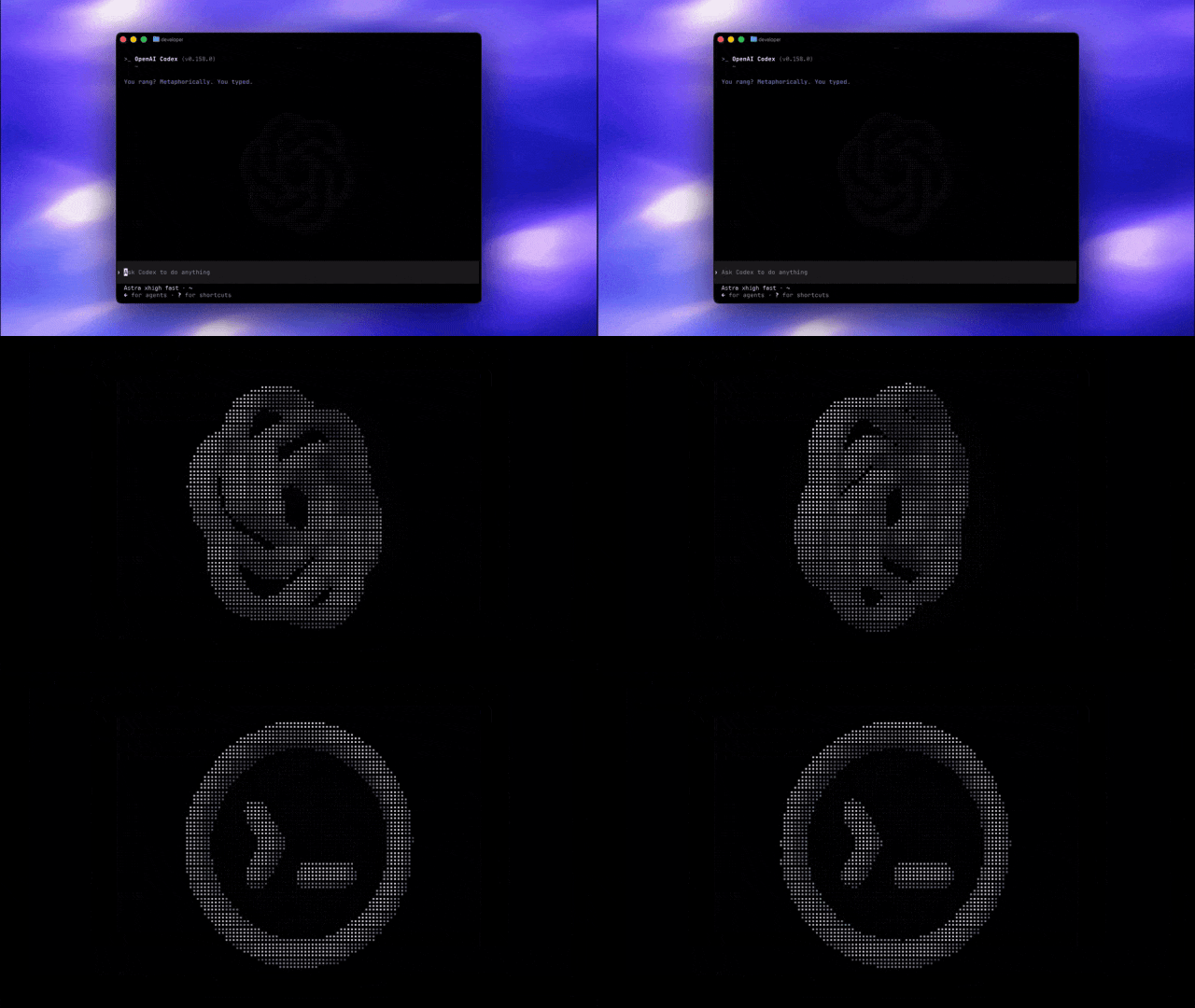
Codex CLI got a refresh too: speak commands by voice, change direction mid-flight.
The new /agents view watches several subtasks at once without chaos on long runs.
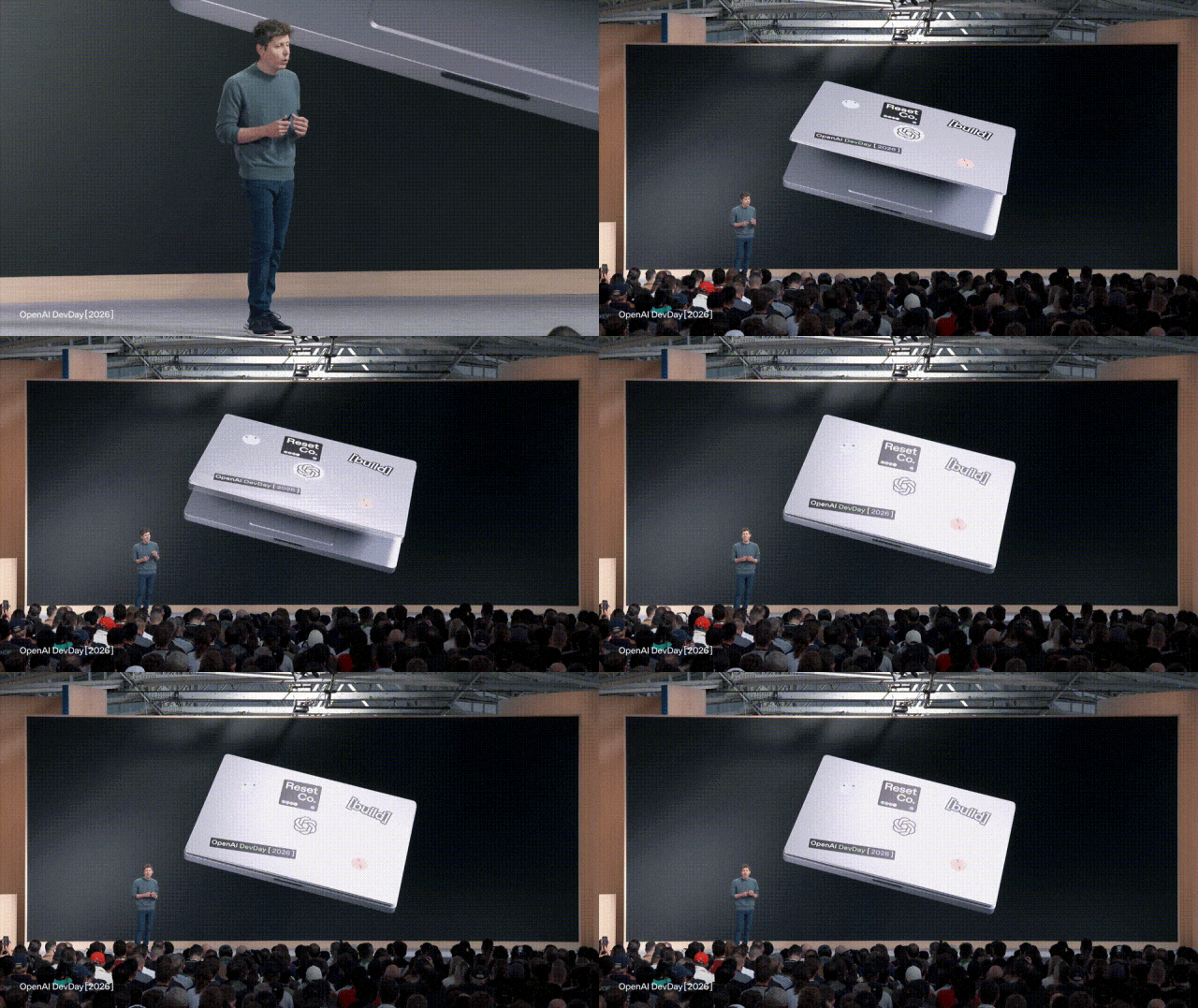
ChatGPT desktop adds code review.
While you're away, it auto-reviews changes and can push findings straight back to GitHub or GitLab.
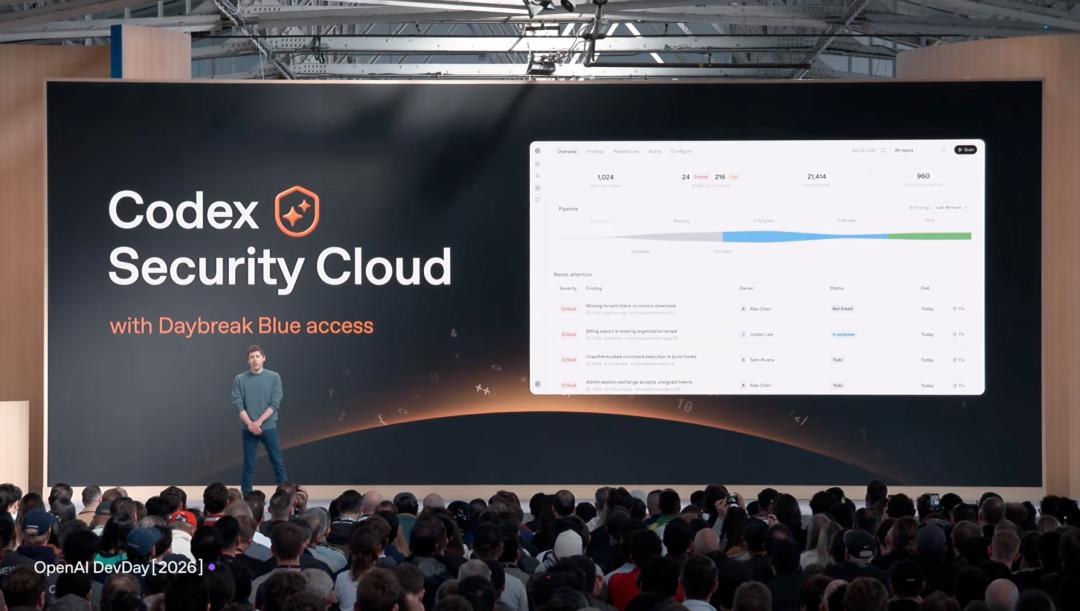
Codex Security Cloud hunts vulnerabilities.
It can scan a whole GitHub repo, review every new commit, dedupe findings, and prep fixes for you—backed by OpenAI's security-specialized model by default.
The API side moved too.
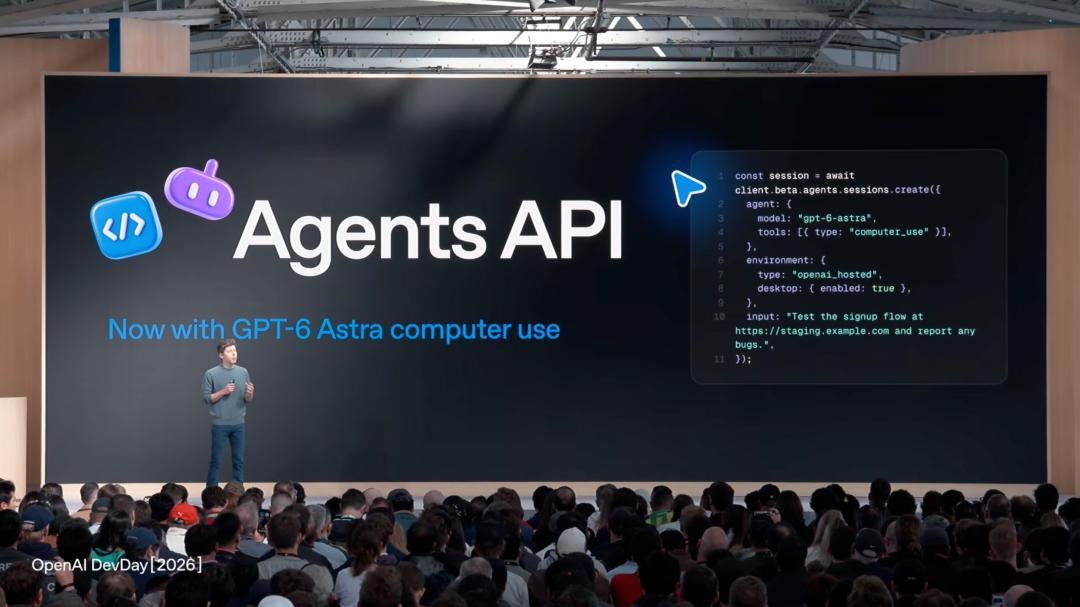
The stack under dots ships as the Agents API.
Computer use, multi-agent collaboration, tool search, context compression—developers can call them directly and essentially build their own dots.
Another new surface, Decisions API, is for fast picks among fixed options—e.g. which bucket an email belongs in, which button the agent should click next.
An early editor trial on computer-use replay got 76 of 78 choices right at 230 ms.
In another dialogue-classification set it tied rivals on accuracy but was a bit slower.
Tibo also flashed numbers: Responses API token traffic is up 100× vs. this day last year, with 99.9% availability.
Personal-Agent War—OpenAI Shows Its Full Hand
Any one of tonight's 20+ launches could be its own story.
Taken together, OpenAI did one thing: turn ChatGPT from a place you ask questions into a place that does the work for you.
Cheap Sol opens the intelligence tap; dots takes the jobs; Space and Pages give them desks; plugins wire in outside apps—and your subscription quota can even spend into Notion and Devin.
The hurry makes sense: rivals already pulled ahead.
Meta's Muse topped 3M downloads in three weeks—free with weekly caps, now pushing hard into small business. Google's Spark has long worked 7×24 in the cloud; SpaceXAI shipped Grok Bot.
Personal agents are the next entrance every giant wants.
What makes dots special is posture: before you ask, the result is already there. It doesn't ask "What do you need?"—it says "I finished it."
Altman closed: "Some compare AI to a new industrial revolution. I don't love that metaphor. Done right, it's more like a new Renaissance."
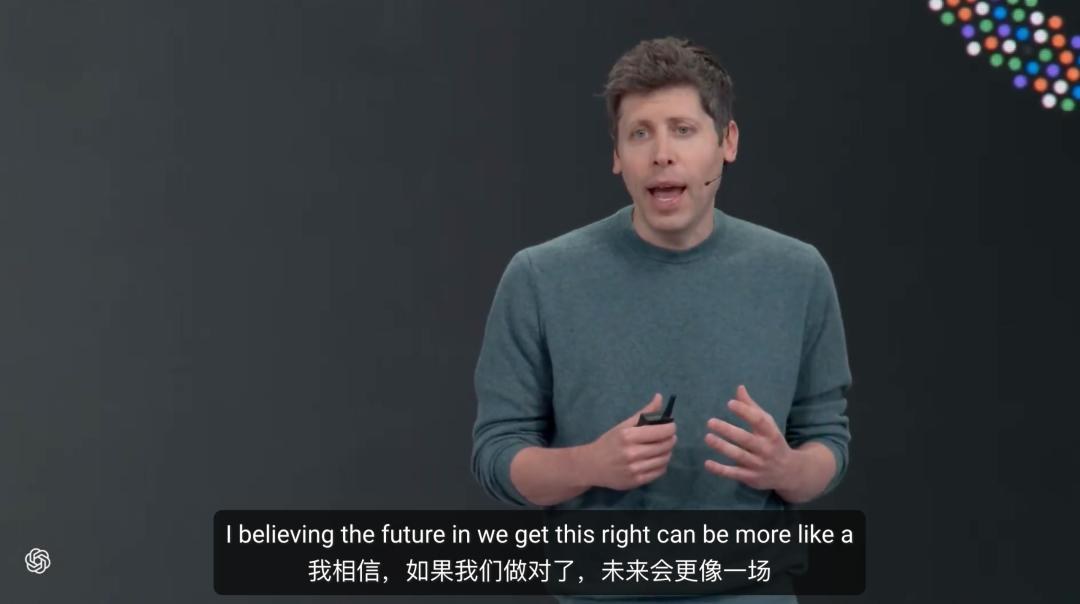
The heart of a Renaissance is more time for creative, meaningful work.
If dots really eats the boring, repetitive, attention-draining chores—what will you do with the time you get back?
This keynote sent a clear signal: AI is shifting from tool to colleague, from "you use it" to "it works for you."
The shift already happened. Starting today.
Your dots is waiting.
### References:
https://www.youtube.com/watch?v=Fls_onRviPM
https://openai.com/index/introducing-dots/
https://x.com/OpenAI/status/2104984505677430978?s=20
https://openai.com/index/introducing-gpt-6-1-sol
https://x.com/OpenAI/status/2104986129686741046?s=20
相关文章