



ABB and Intrinsic recently moved to cut the engineering cost of redeploying robots—ABB with an AI apparel-logistics sorting package, Intrinsic with open-source tooling and a machine tending reference. Drawing on iResearch’s *2026 China Industrial Embodied AI Industry Report*, a single validated workstation is only the start; scale hinges on reusable process packs, task templates, and post-go-live operations.
Why One Working Cell Is Not Enough
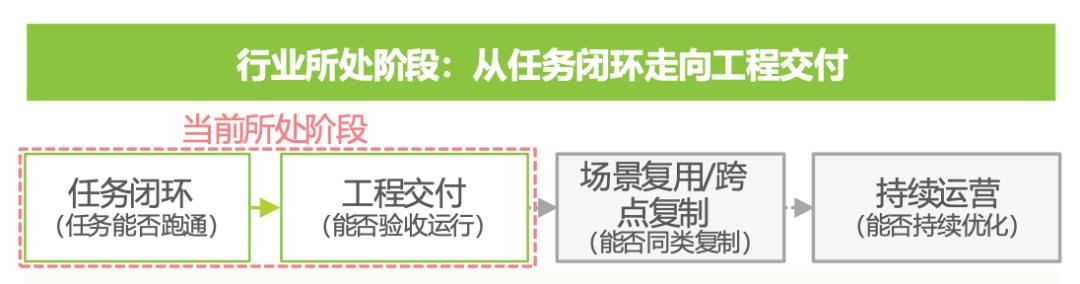
Industrial success means more than completing a motion: cycle time, quality, safety, result checks, exception handling, and handoffs to adjacent steps all matter. Clear-boundary jobs—fixed-station tending, rule-based pick-and-sort, in-plant transport—usually clear acceptance first because value is easier to measure.
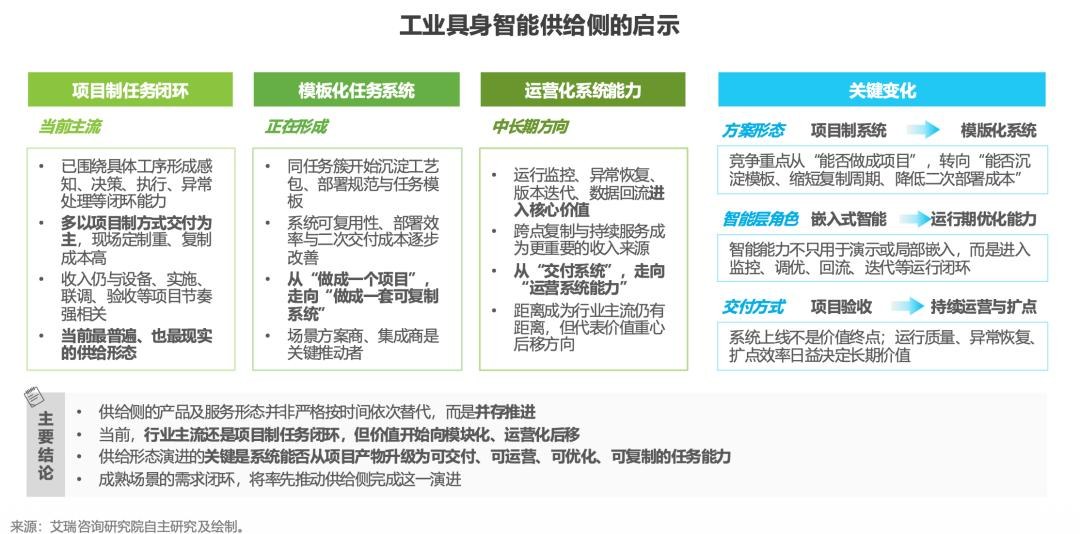
Move the same stack to a new plant, machine mix, or inbound process and heavy re-adaptation often returns. Supply today is still largely project-assembled (base, capability modules, scenario packs, integration). That gap between demo and second deployment is what separates industrial embodied AI from consumer robot showcases. For a related take on light-industry “data–model–skill” loops, see our Leon Robot coverage; for supply-side parts plays, see embodied AI component makers.
Two Paths to Less Redeploy Work
Per ABB, its Oct 15 AI package for apparel logistics folds pretrained vision, task tools, and fast retraining into sorting modules, cutting engineering and commissioning effort by up to about 75%, with model updates after go-live.
On Sep 22, Intrinsic opened core platform capabilities and a machine-tending reference so developers can reuse motion planning, grasp planning, simulation, and calibration instead of rebuilding the stack.
Different shapes—productized industry modules versus open references—same goal: carry verified skills forward and shrink what must be rebuilt on site. More industrial and robotics coverage is on our AI News channel.
From Project Lessons to Task Templates
Reusable assets typically include process know-how, task flows, skill calls, exception playbooks, and commissioning experience—packaged as process kits, task templates, and deployment norms, backed by sim/debug/runtime tools. Stable, bounded tasks template more easily; high variation needs ongoing validation.
A practical scale path is multi-site proof within the same task family before cross-line or cross-plant rolls. Templates are not universal: new equipment, process, and interfaces still need adaptation. Proof of value is shorter second-deployment cycles, fewer debug hours, lower re-delivery cost, and stable runs at other points.
After Delivery: Operations Decide Scale
As sites grow, value shifts to monitoring, recovery, on-site tuning, and versioning. Run data, failure samples, and human interventions should feed models, control policies, skill parameters, and templates. Project closed-loops still dominate; templating is forming; true ops platforms are not yet mainstream—and the three will coexist.
Judge scale with field and commercial signals together: success rate, cycle time, continuous uptime, recovery time, takeover rate; deploy cycle and second-deploy cost; repurchase and footprint expansion. Those beat a one-time acceptance pass as evidence the application holds.
FAQ
Q: What is the main bottleneck for industrial embodied AI at scale? A: Often not whether the first cell works, but how much can be reused on the next site, how much must be rebuilt on site, and whether the system stays stable enough to support expansion after go-live.
Q: How do ABB and Intrinsic differ? A: ABB productizes pretrained vision and retraining into apparel-logistics sorting modules to cut engineering load; Intrinsic opens core tools and a machine-tending reference so developers customize on an existing stack.
Q: How do you know a task template is valuable? A: Check whether second deployments show shorter cycles, fewer debug hours, and lower cost, and whether the same task family runs stably elsewhere—single-site acceptance alone is not enough.
相关文章