


There's a pretty absurd phenomenon in AI this year:
AI products are evolving faster than users can learn how to use them.
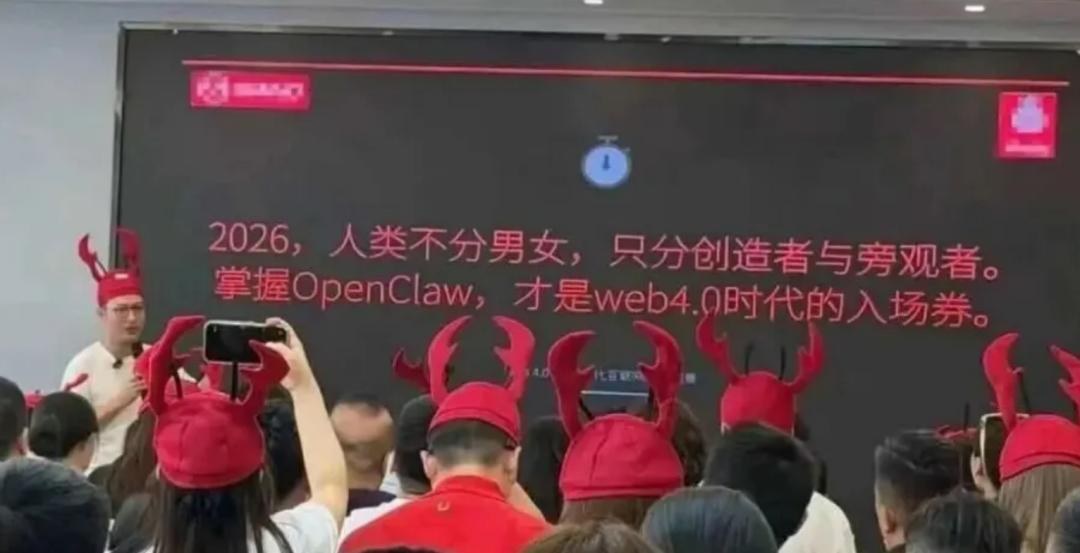
When OpenClaw went viral early this year, people were just starting to dig into Agents, Skills, and MCP—figuring out how to "raise a lobster" of their own. By late January, when OpenClaw got its official name, the project had already passed 100,000 GitHub stars and drawn 2 million visits in a week. That "raise a lobster" wave soon hit China, with desktop Agents like Tencent WorkBuddy exploding alongside it. For a while, everyone online seemed to be raising shrimp.
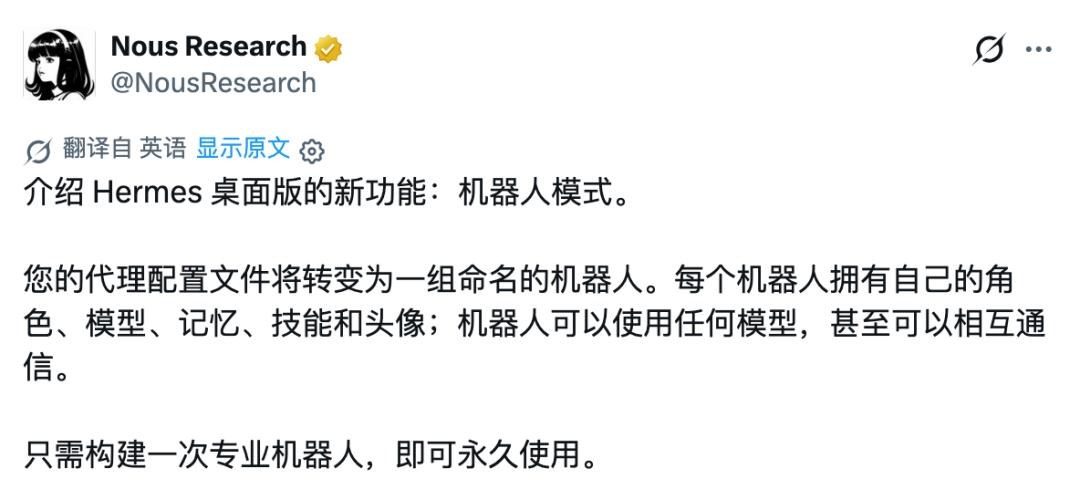
Many ordinary users probably still haven't figured out how to install the lobster, while the industry is already sprinting to the next stage. Products like Hermes Agent keep stacking long-term memory, Skills, and scheduled tasks onto Agents—and now even have Bot Mode: you can raise a lineup of Bots with names, avatars, and independent memory and skills. They can run fixed jobs and message each other or open group chats to discuss.
Users are still asking: "What's the difference between an Agent and ChatGPT, exactly?"
Product managers are already researching:
"One Agent isn't enough—should we hire a few more Agents for it?"
01. AI Doesn't Just Learn to Work—It Starts Getting Its Own Computer
Another very clear shift this year: Agents are starting to have their own computers.
Previously, "Agent" often meant a model calling APIs, browsers, MCP, and various tools. Then people realized that if you really want AI to finish a job from start to finish like a human, the simplest, bluntest approach is: give it a computer.
So cloud PCs, virtual desktops, and Computer Use capabilities started showing up densely. AI can open webpages, operate software, handle files, and fill spreadsheets on its own—a single task can run for hours or longer. Users don't need to stay glued to the chat box; some products can even toss the job into the cloud so it keeps going after you shut your laptop.
This step is actually pretty critical. We used to tell AI: "Look this up for me." Then it became: "Finish this for me." Now it's increasingly:
"From now on, this is your job."
Chinese products have been racing to catch up on this front for half a year. Doubao Work has been stuffing multi-Agent parallelism, computer control, and cloud PCs together, and in September added a "plan mode" better suited to long-running tasks. Qwen Office can already run scheduled tasks in the cloud—close the browser or even log out, and the job keeps going. WorkBuddy has automation too, handling daily reports, data cleanup, and other repetitive work on a schedule.
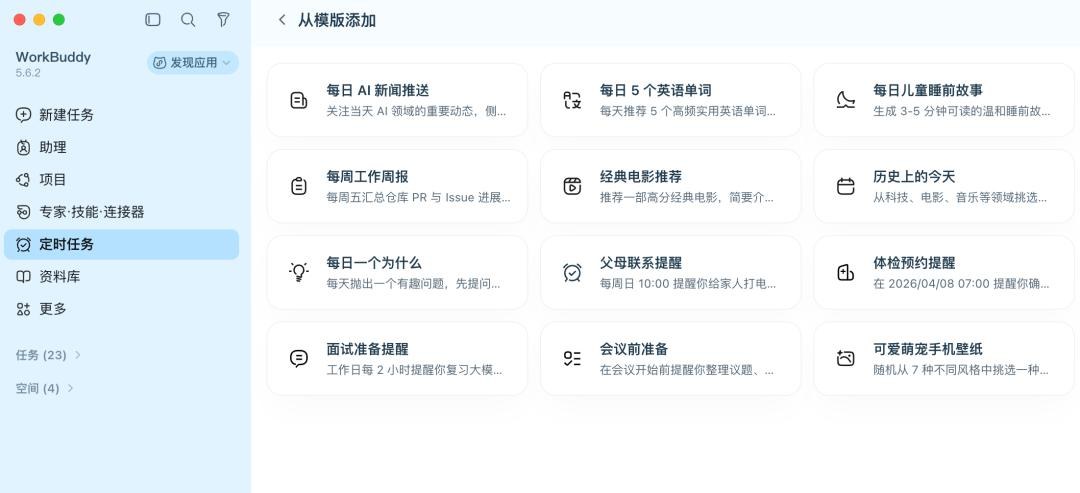
AI is looking more and more like the intern at the company.
Except this intern doesn't ask for weekends off, and never asks what time to leave.
02. After a Round of Experimentation, Big Tech Starts Tearing Down Walls Again
Once Agents multiply, big tech quickly hits a new problem:
Too many products.
Chat is chatting, Code is coding, Work is office work, Deep Research is research, and Agent is yet another entry point. Never mind ordinary users—even someone who watches AI products every day sometimes opens a big-tech client and has to think for a few seconds: where am I supposed to start today's task?
So mid-year another clear trend emerged: big tech started pulling capabilities they'd spun out back together again.
In July, OpenAI launched ChatGPT Work, putting long-running, multi-step tasks directly into ChatGPT. The official product structure is now clear: Chat for everyday conversation, Work for complex tasks and final deliverables, Codex for development. The three aren't fully merged, but they've been reorganized around ChatGPT as the main entrance—and Work can already run via Scheduled Tasks by time or trigger, even continuously monitoring changes.
Anthropic's recent move is even more typical. On September 16, it merged Claude Chat and Claude Cowork into a single Claude. You no longer have to decide "am I chatting or working"—just throw the request into the same conversation and Claude figures out how to handle it. Research, reports, spreadsheets, decks—capabilities that used to live in Cowork can now be called from ordinary chat. Claude Code still remains a separate coding agent for now, but inside Claude's main product, the Chat vs. Work boundary has basically been torn down.
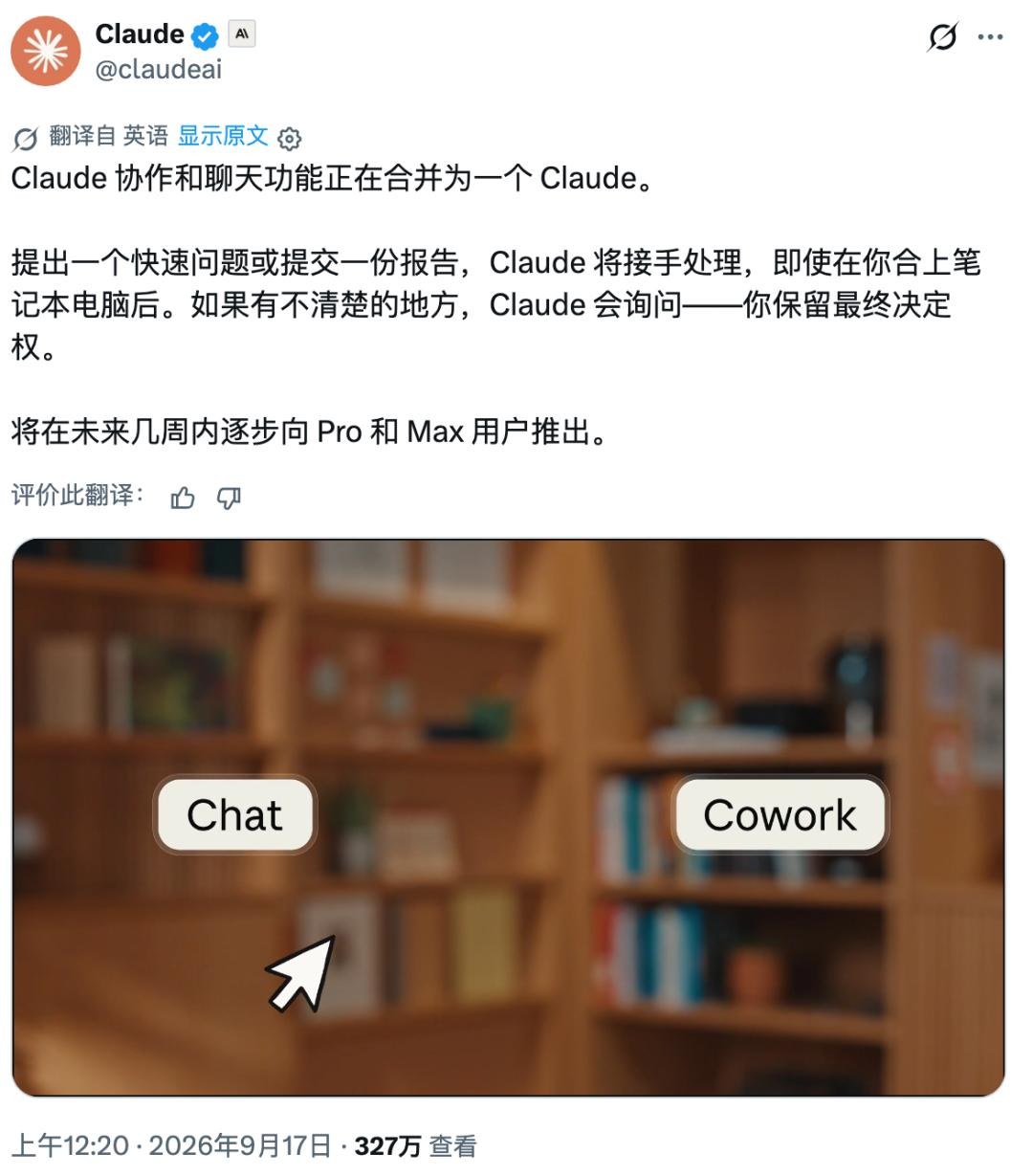
For a while this year, AI products felt a lot like real estate.
First they built like crazy: one tower for Chat, one for Code, one for Work, another for Agent. Then suddenly:
Users couldn't find the elevator.
So recently they've started tearing down walls, connecting spaces, and merging entrances.
Just when users finally felt they got it—"oh, so it'll just be one super AI that chats, works, and codes"—Grok Bot and Muse showed up.
03. Just When You Finally Get Agents, Here Comes the Personal AI Agent
In August, SpaceXAI launched Grok Bot.
The official definition is blunt: "your team of always-on agents"—a crew of AI colleagues that never go offline.
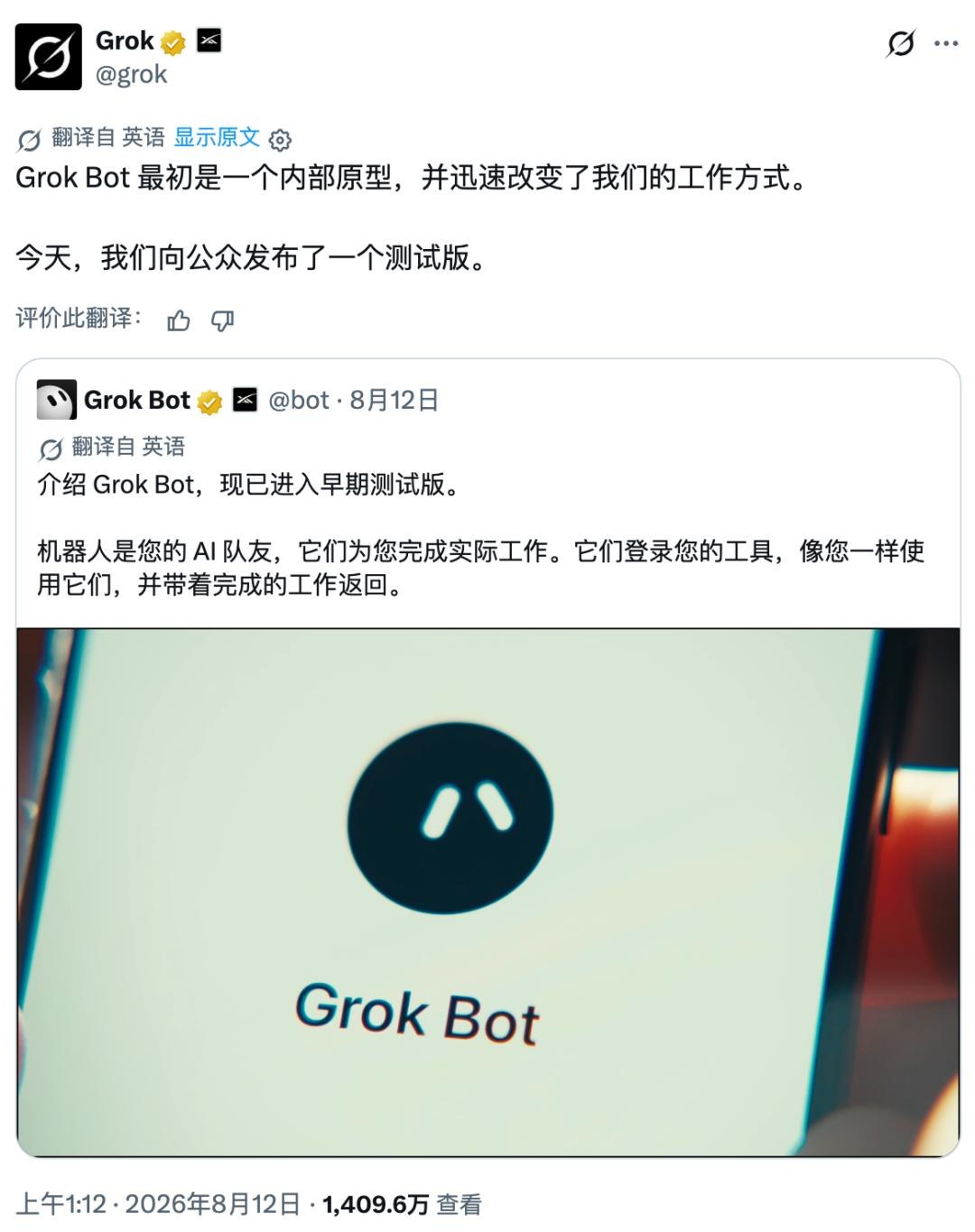
Each Bot has its own computer, can log into the software you normally use, work across apps, email, and tools, and stays online 24/7. You can raise a sales Bot, marketing Bot, ops Bot, even a Bug-fixing Bot. Hand it a task and you don't have to watch every step—it keeps going and only comes back when it really needs your confirmation.
This isn't the old "use AI when I have something to do" anymore. It feels more like:
The company just hired a few more employees.
Then on September 8, Meta launched Muse and even named the new category:
Personal AI Agent.
Muse gets a persistent Muse Secure VM—essentially Meta giving users a dedicated AI computer in the cloud. It can browse the web, handle email, book travel, shop, remember your long-term goals, and proactively suggest based on past context.
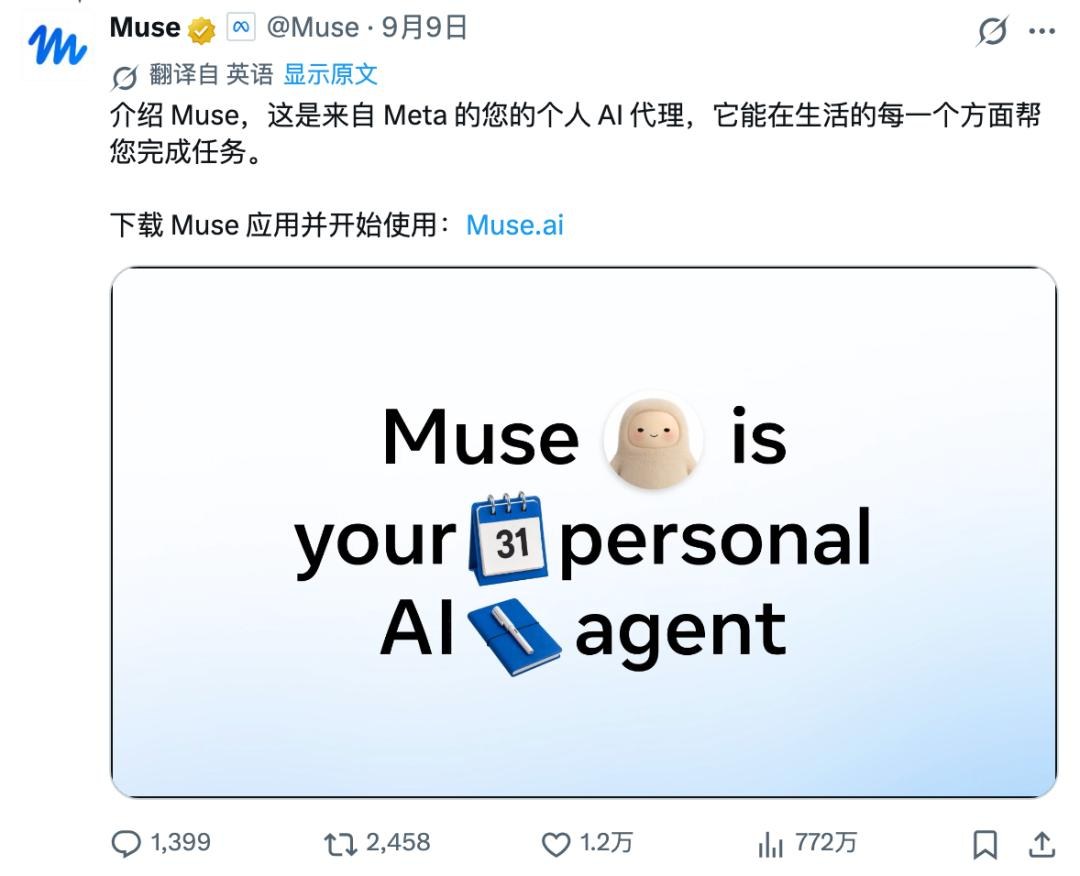
Grok Bot feels like:
"I hired a few AI colleagues."
Muse feels more like:
"There's always an AI butler by my side."
Early this year people were excitedly figuring out how to raise lobsters. Half a year later, AI is ready to follow you 24 hours a day.
That pace of evolution is a bit ruthless.
04. OpenAI Sees This and Thinks: They Changed the Track Again?
Which brings us to the leaks from the last couple of days.
Developers dug an unfamiliar name out of ChatGPT-related pages and configs:
「o」
Next to it, a very key line:
"o, your always-on assistant."
Your always-on AI assistant.
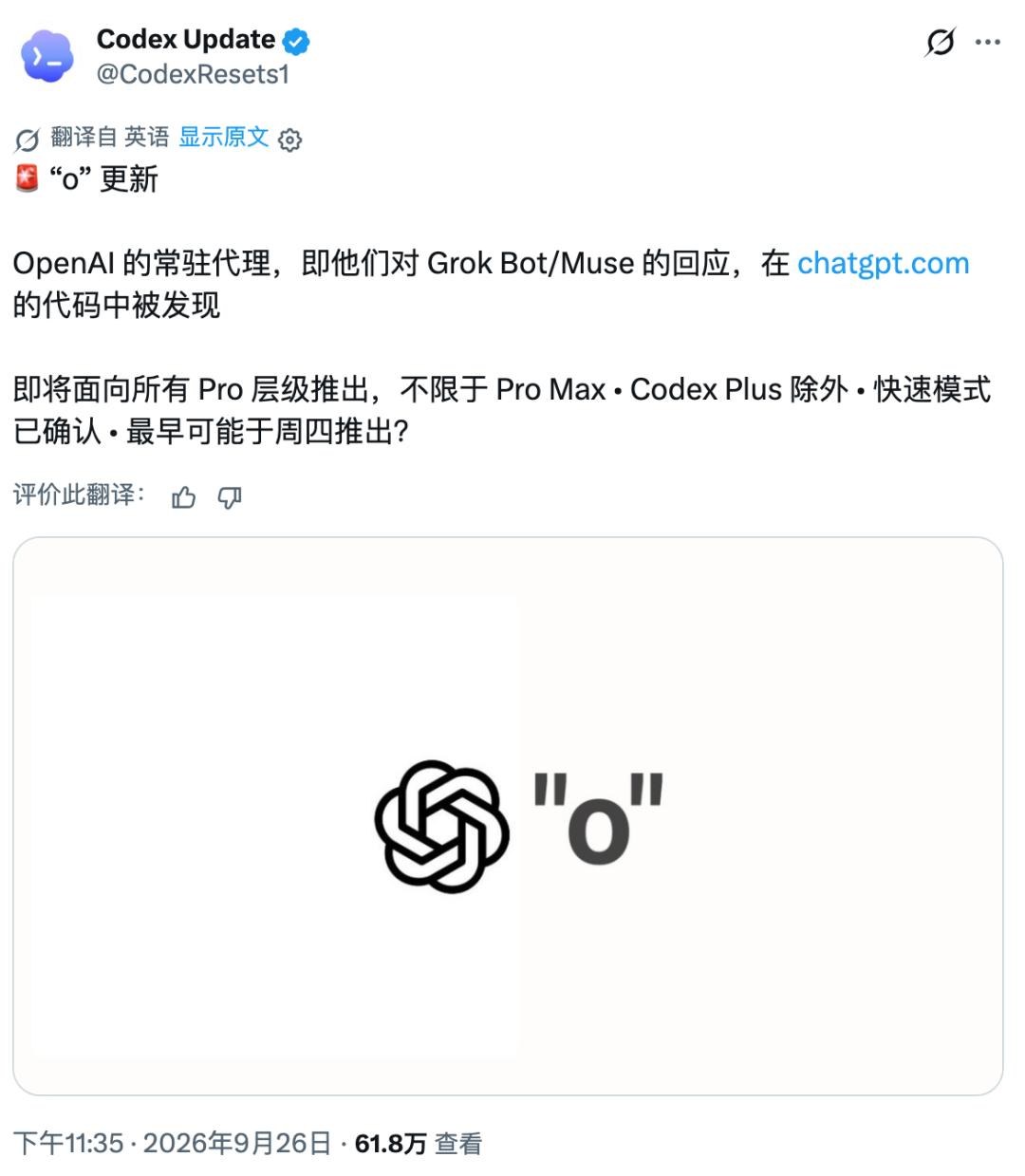
OpenAI hasn't officially announced anything yet, so what 「o」 will ultimately be called and what it can do are still uncertain. What's relatively clear is that screenshots show it appearing in ChatGPT Pro subscription info, and the name also shows up in related configs.
But given this year's whole product roadmap, I'm more inclined to think: it's probably not a new model, and may not become a standalone app on equal footing with ChatGPT—but rather the Always-on Agent capability OpenAI is preparing to bolt onto ChatGPT.
That actually makes a lot of sense.
OpenAI already has ChatGPT as a super entrance; there's no need to spin up another app for everyone to download again. ChatGPT has your chat history, Memory, files, and plugins; Work can already keep handling complex tasks; Scheduled Tasks can already run on a plan or trigger, or monitor changes. What's missing is pushing these pieces one step further so an AI can truly stay resident.
You may no longer need to open ChatGPT every morning and ask:
"What happened in AI last night?"
Months earlier you'd just tell it:
"From now on, watch for important AI industry updates for me, and come find me when something is worth writing about."
Then one morning ChatGPT shows up on its own:
"A company launched another new Agent last night—I think you'd care."
Thinking about that, I'm even a little worried.
Even the little slacking time of scrolling morning news for story ideas might get taken by AI.
And the timing is convenient: OpenAI DevDay 2026 is set for September 29. Whether this 「o」 shows up there—we'll know in a couple of days.
05. Chinese Big Tech Is Already at the Door
China hasn't been idle on this path either. Alibaba's Qwen Office can already keep tasks hanging in the cloud on a schedule; Doubao Work keeps adding cloud PC, multi-Agent, computer control, and long-running task capabilities; Tencent WorkBuddy is doing automation and periodic jobs too. Most domestic products still lean toward "work automatically at the appointed time," and there's still a step before Muse and Grok Bot's truly persistent presence—continuously observing the environment and deciding when to act—but everyone is clearly converging on the same direction.
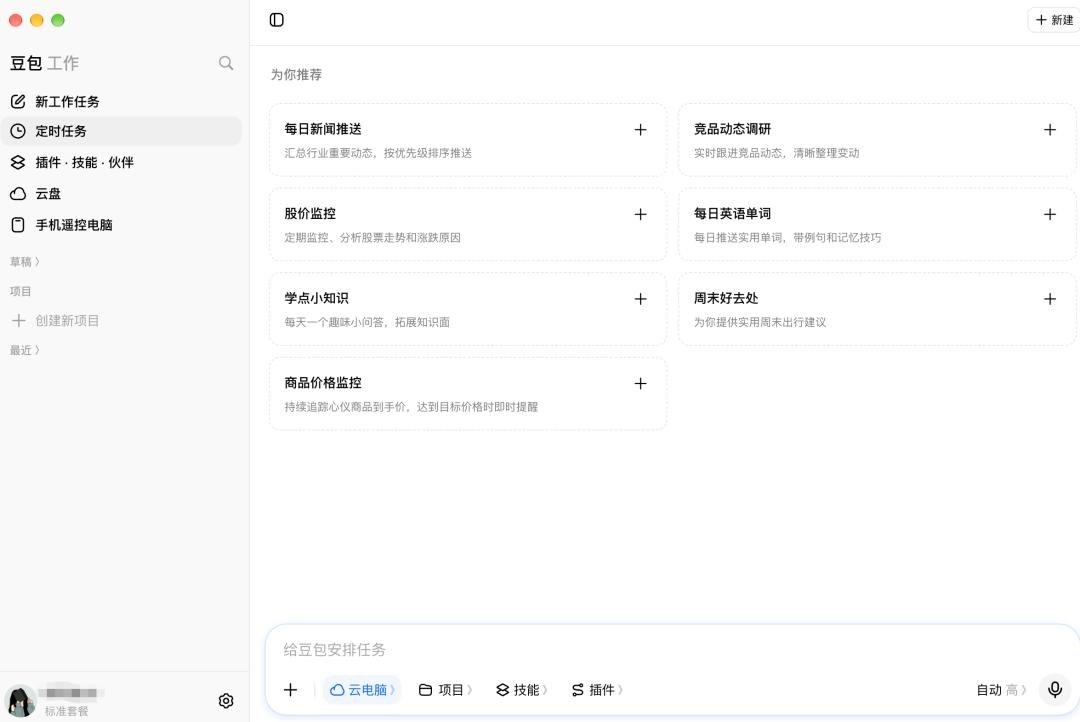
So what OpenAI is catching up to isn't just Grok Bot and Muse as two products.
Big tech at home and abroad is all figuring out how to move AI from "you tell it to work" to "this job is permanently yours."
06. Users: Hold On, I Haven't Even Learned OpenClaw Yet
Looking back at this half-year, it's genuinely surreal.
OpenClaw blew up early in the year and everyone started "raising lobsters"; before they'd figured that out, Hermes-like products let you raise a whole pack of Bots. Then Agents got long-term memory, Skills, scheduled tasks—and later even their own computers. Once people finally accepted "AI can work on its own," big tech decided Chat, Work, and Code were too scattered and started tearing walls down again.
Just when users felt they roughly got it, Grok Bot and Muse showed up talking about Always-on Agents and Personal AI Agents.
Now OpenAI is about to follow.
This year's biggest AI product bug may no longer be that AI isn't smart enough.
It's that product managers are running too fast.
Users just learned Chatbots, then the industry talked Copilot; just got Copilot, then came Agents; Agents weren't fully understood yet, then raise lobsters; lobsters just installed, then AI needs its own computer; you finally learn how to assign work to an Agent, and now comes the Personal AI Agent:
No need to assign every day—from now on, it's always there.
Sometimes I wonder whether AI big tech assumes users can also learn new products 24/7 like AI itself.
Clearly they can't.
But from OpenClaw and Hermes, to cloud PCs and multi-Agents, to Chat/Work convergence, and lately Grok Bot, Muse, and OpenAI's 「o」, the product roadmap really is getting clearer.
We used to open AI and ask:
"What else can you help me with?"
Next, what big tech wants users to habitually say may be:
"From now on, this is yours."
If that habit sticks, whether ChatGPT is still a "chatbot" won't matter much. You might not even open it every day—hand things over clearly, then go do your own work.
You clock out. It keeps working.
Except at this year's AI iteration speed…
By the time most users finally figure out how to use a Personal AI Agent, the next product form will probably already be here.
相关文章