



Zhidx reported on September 28 that an anonymous model called Space Bunny has been heating up online. Since launching on September 23 it has stayed No. 2 on the OpenCode usage chart, once ranked No. 1 on OpenRouter's usage chart, and netizens nicknamed it "Space Bunny" (太空兔).
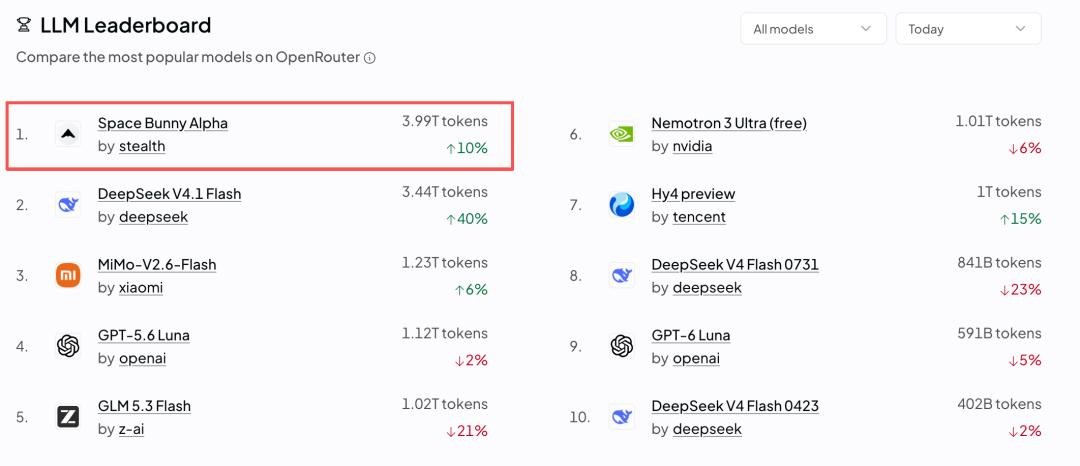
The model is free to use in OpenCode, with a 1M context window and multimodal ability, and during its anonymous period it does not retain any user data. So far the OpenCode announcement post has passed a million views.

From developer tests, this model is likely also a Flash-class model. Most users say "Space Bunny" is very fast and especially strong at 3D output.
One developer typed a very simple prompt, and Space Bunny spent about forty minutes building a mini *Minecraft*—you can break and place blocks and switch items via a hotbar.
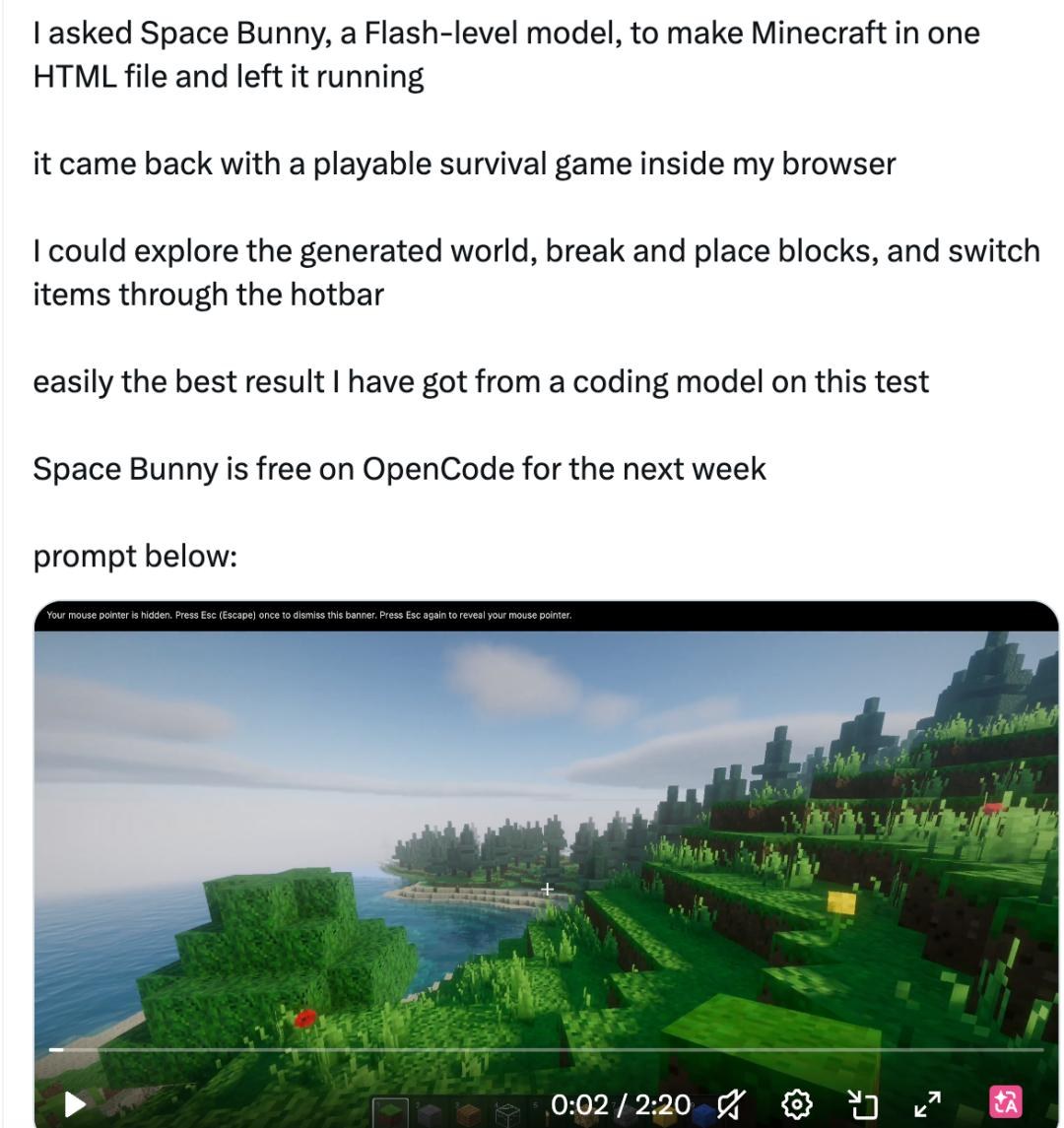
That said, the developer noted the test was not one-shot—they revised many times to get that result. So this "Space Bunny" test doesn't fully represent the model's raw level.

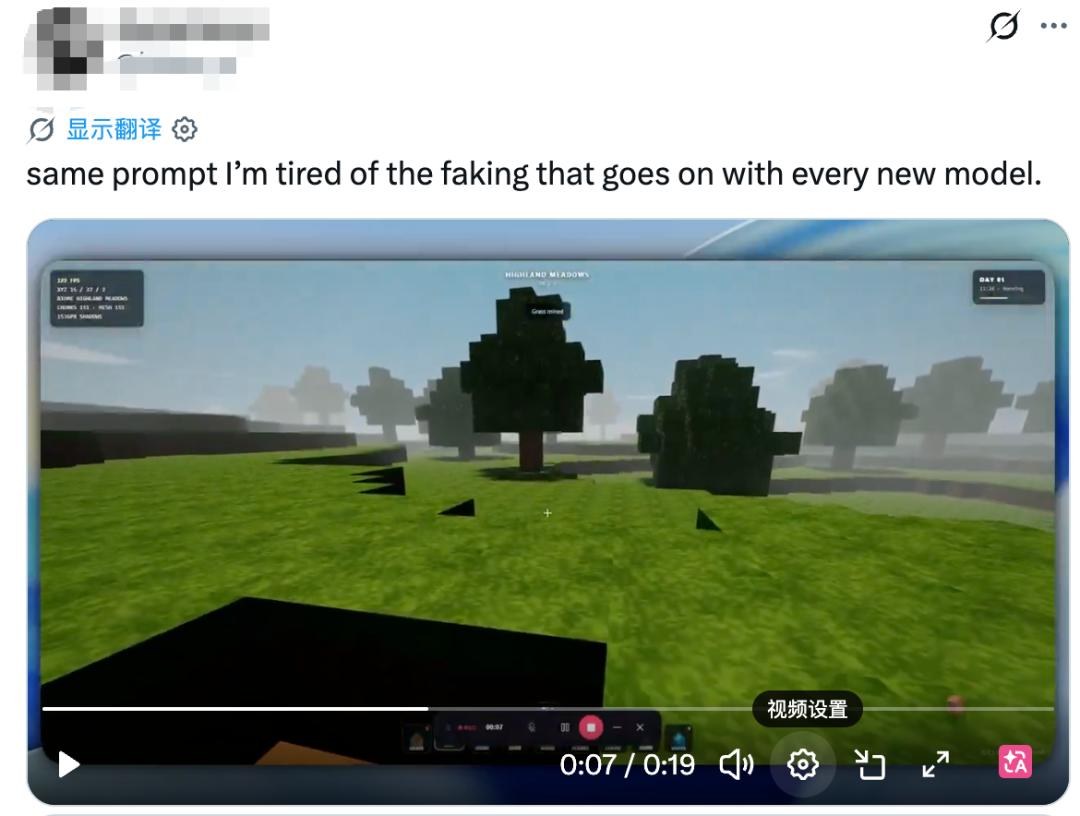
Other developers in the community said the model isn't that great, used the same prompt as the post above, and got results that differed quite a bit.
Zhidx collected many interesting developer cases and tested the rabbit ourselves via OpenCode to see how it actually performs.
01. Rocket Launch and Voxel Garden—Closing In on Astra and Opus 5
First, a comparison: a user pitted Claude Opus 5, GPT-6 Sol, and Gemini 3.8 Flash against Space Bunny, building a rocket-launch scene at the highest thinking level.
They said Space Bunny took only three minutes, and the final look could stand next to Opus 5, clearly crushing the other two—and leading by a mile on speed.
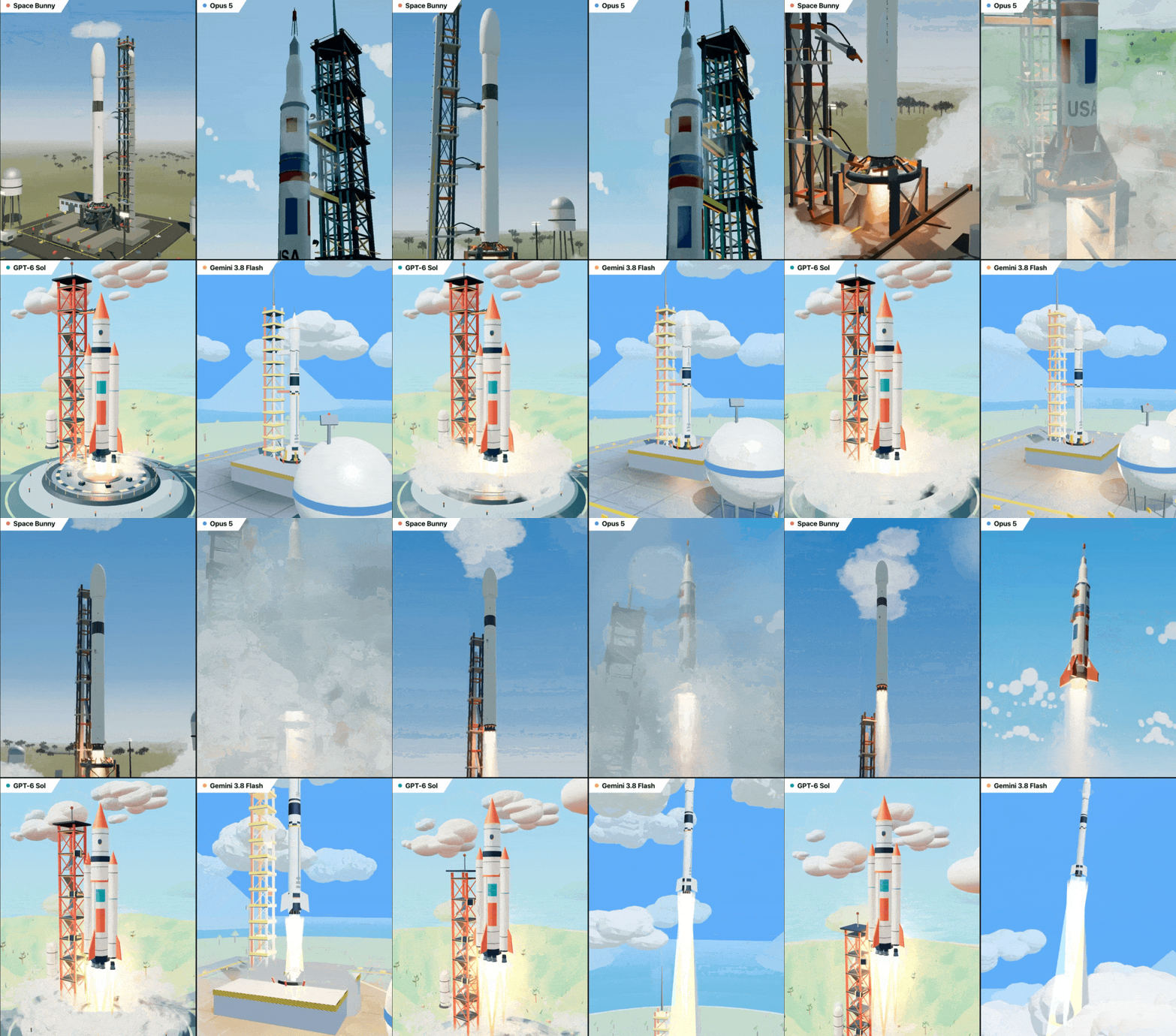
On quality, Space Bunny's rocket-launch animation has realistic rocket colors, clouds, and flames; the lift-off is fairly smooth. Some steam coverage and support-frame connections are loose, but overall it's solid.
In another post with 100,000 viewers, a developer compared GPT-6 Astra and Space Bunny with the same prompt, one-shot generation.
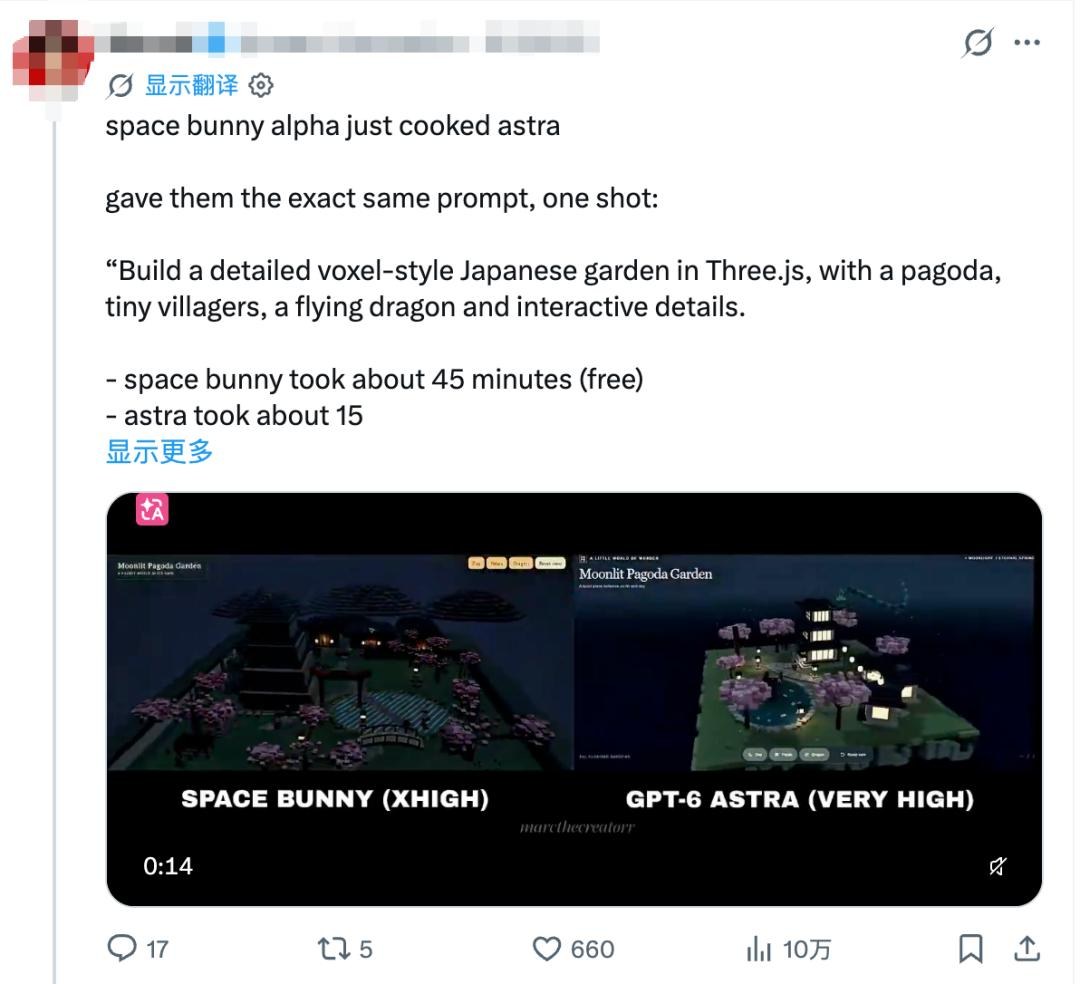
Below is GPT-6 Astra's result: as a top-tier model, its voxel garden texture is hard to fault—pavilions and towers sit in harmony, fish and flying dragons feel natural.
When switching to night mode manually, towers and streetlamps light up; day/night transitions are smooth, and lighting follows real-world logic.

Surprisingly, Space Bunny's output is also very good—from a distance the gap isn't obvious.
Open Space Bunny's voxel garden and the fish and falling petals look decent; streetlamps light up at night, and the overall layout is harmonious.
Versus GPT-6 Astra, though, Space Bunny clearly shows weaker peach trees, an unnatural pond, missing doors/windows and gate details on the tower, plus issues on the dragon and other bits.
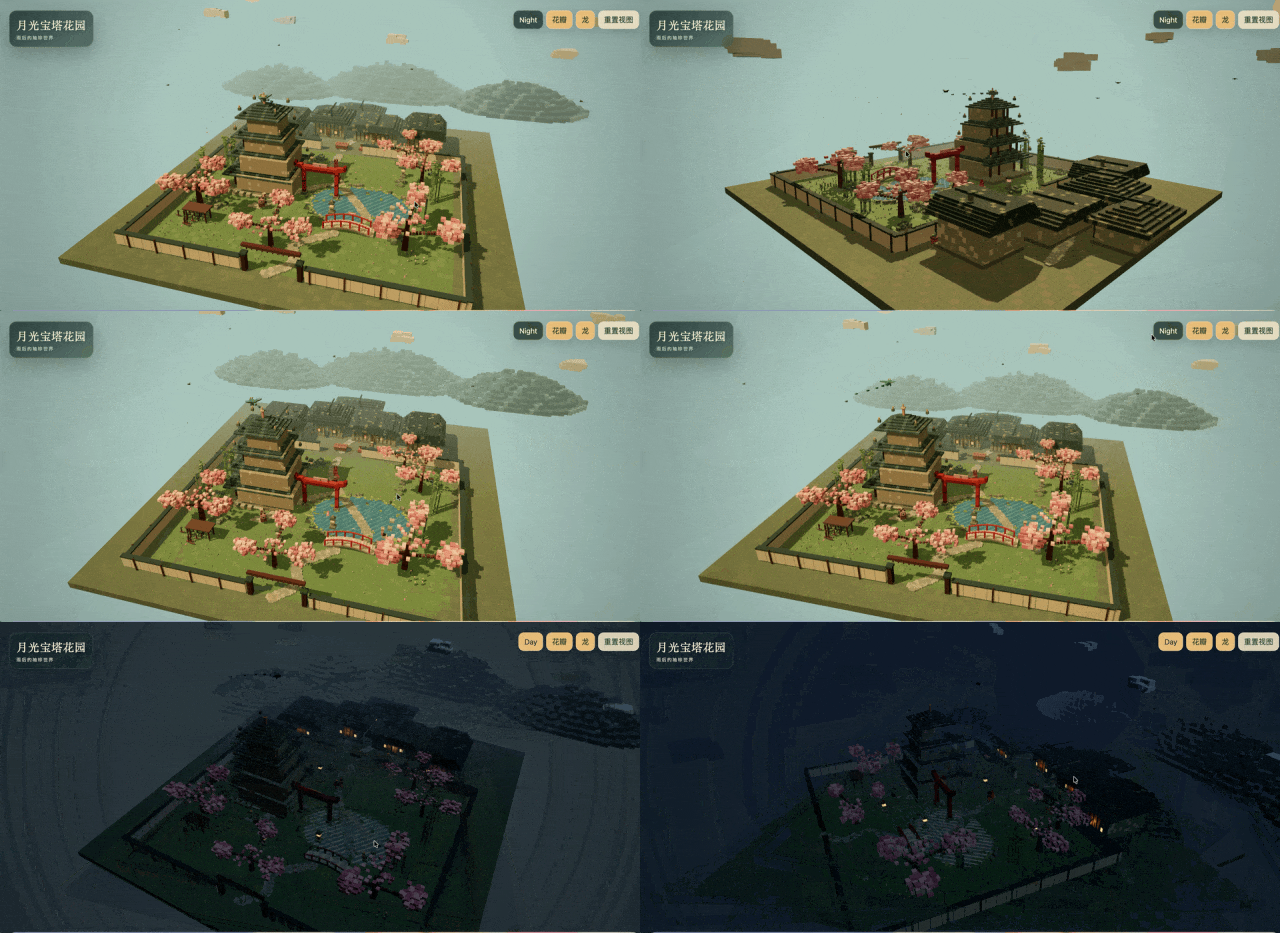
Even with the quality gap, it's free for now, and as a Flash-tier model it shouldn't be pricey later—as one user put it, hard to choose between the works, but Space Bunny is free.

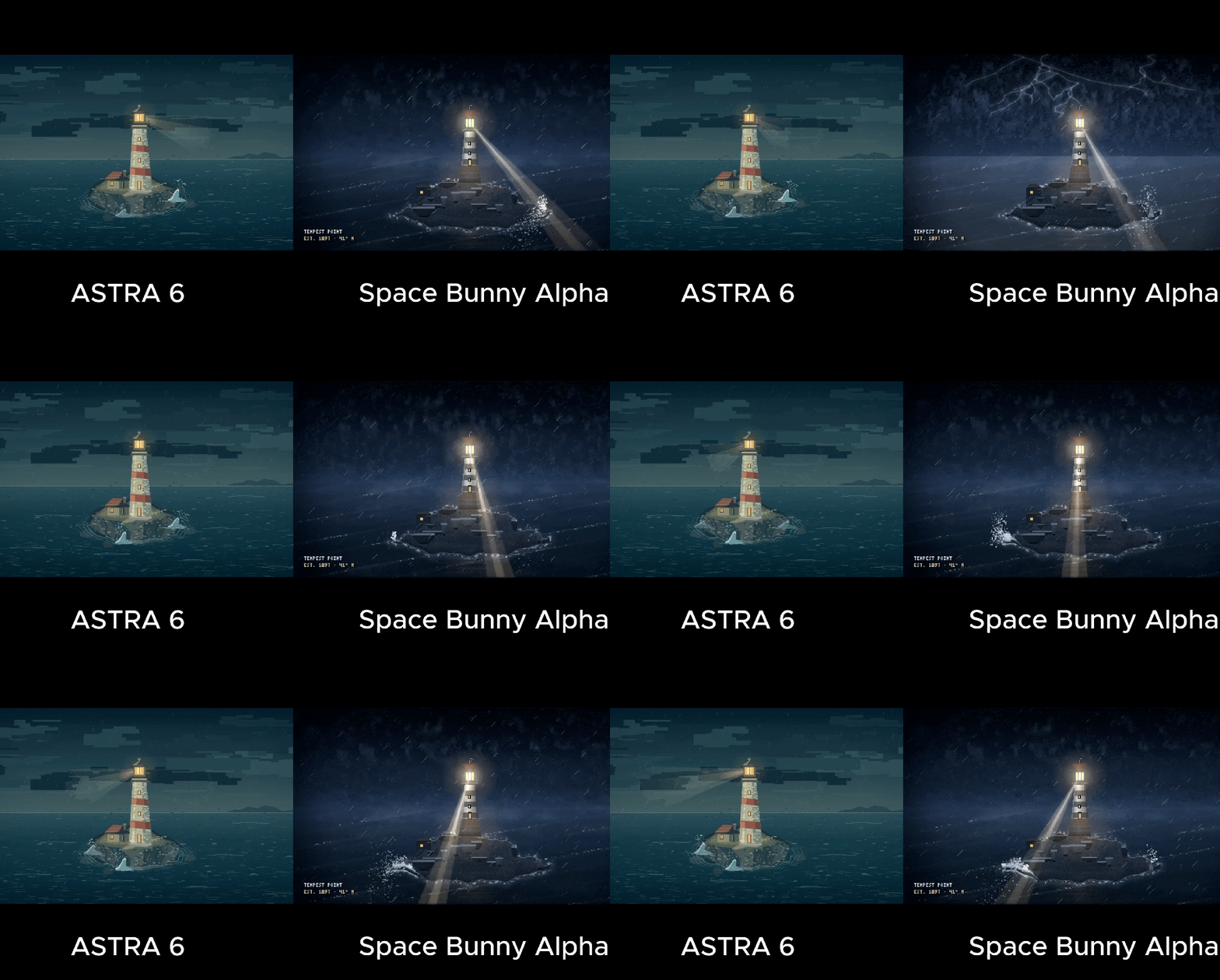
Another user also compared against GPT-6 Astra with the same prompt for a lighthouse-in-storm animation.
Results: Space Bunny has more atmosphere; Astra's waves and lighthouse obey physics a bit better—but neither result is jaw-dropping. Prompt:
> On a small rocky island, build a refined animated pixel-art lighthouse storm scene. Not a full game—a beautiful atmospheric pixel-art showcase. Include: lighthouse as main focus; dark ocean around the island; waves hitting rocks; diagonal rain; moving storm clouds; rotating lighthouse beam; occasional lightning flashing the whole scene; warm lighthouse glow vs. cold storm. Style: cinematic pixel art; moody, beautiful, clean; like a high-end animated pixel-art diorama; detailed but not cluttered; suited to a short showcase video. Fixed camera, clear view of the whole island. Focus on atmosphere, animation, lighting, and polish. No unnecessary game systems or complex mechanics.
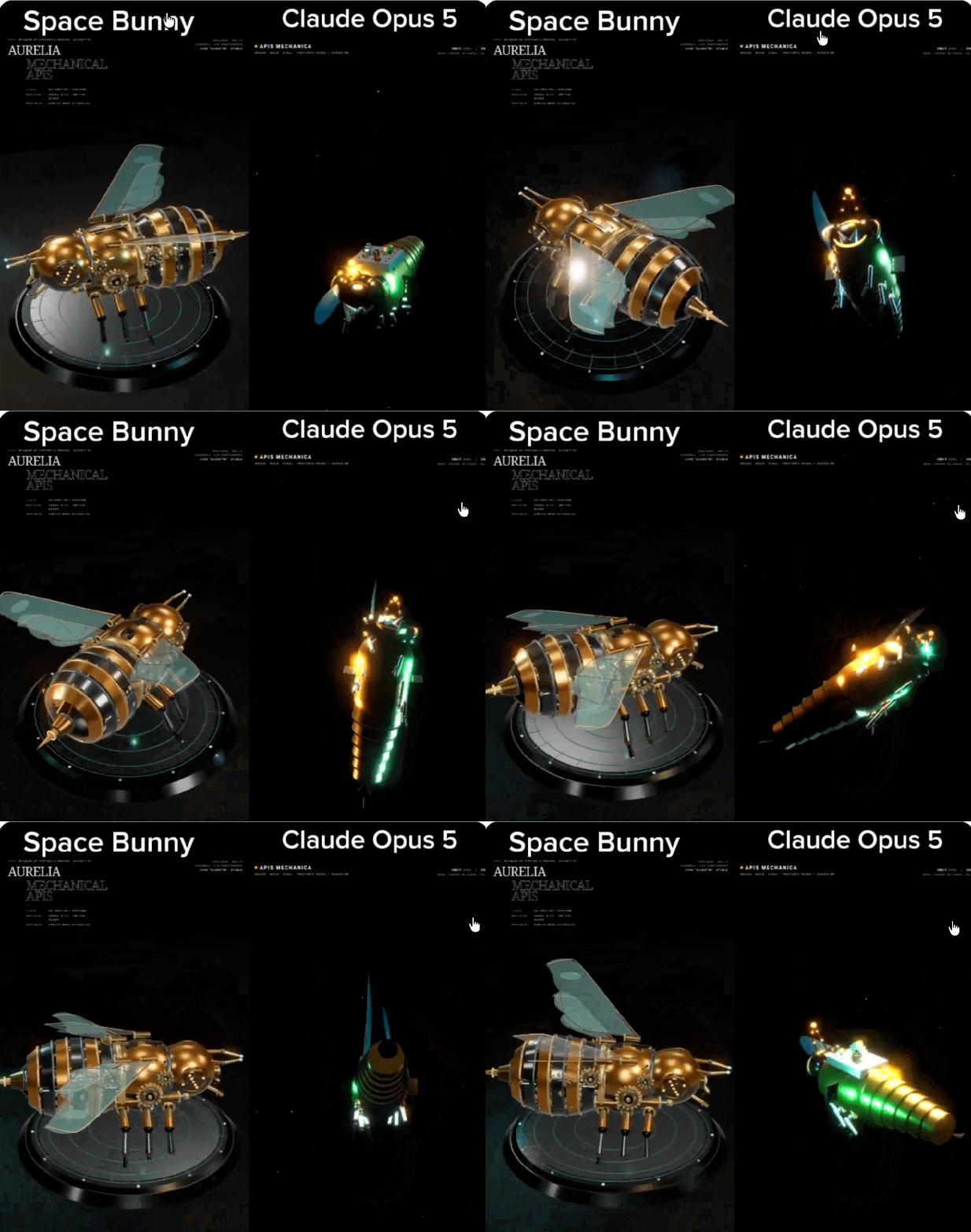
Someone also stress-tested Space Bunny's coding and 3D understanding with a complex Three.js project vs. Opus 5:
> Build a refined interactive mechanical bee with Three.js. Create the bee entirely with 3D geometry and materials—detailed mechanical parts, metal body panels, gears, pistons, wires, transparent wings, glowing accents, and articulated legs. Add realistic wing motion and subtle mechanical animation. Dark background, cinematic lighting, shadows, reflections, and a high-gloss futuristic aesthetic. Make the bee respond to mouse movement and allow orbital browsing. Build everything in a single polished Three.js page.
Honestly, Space Bunny's bee beats Opus 5—both mechanical precision and materials look stronger.
02. One Prompt Builds an HTML Black Hole—Frontend Design Hits Hard
Among all cases, Space Bunny's frontend design is the most stunning. First, a flashy one:
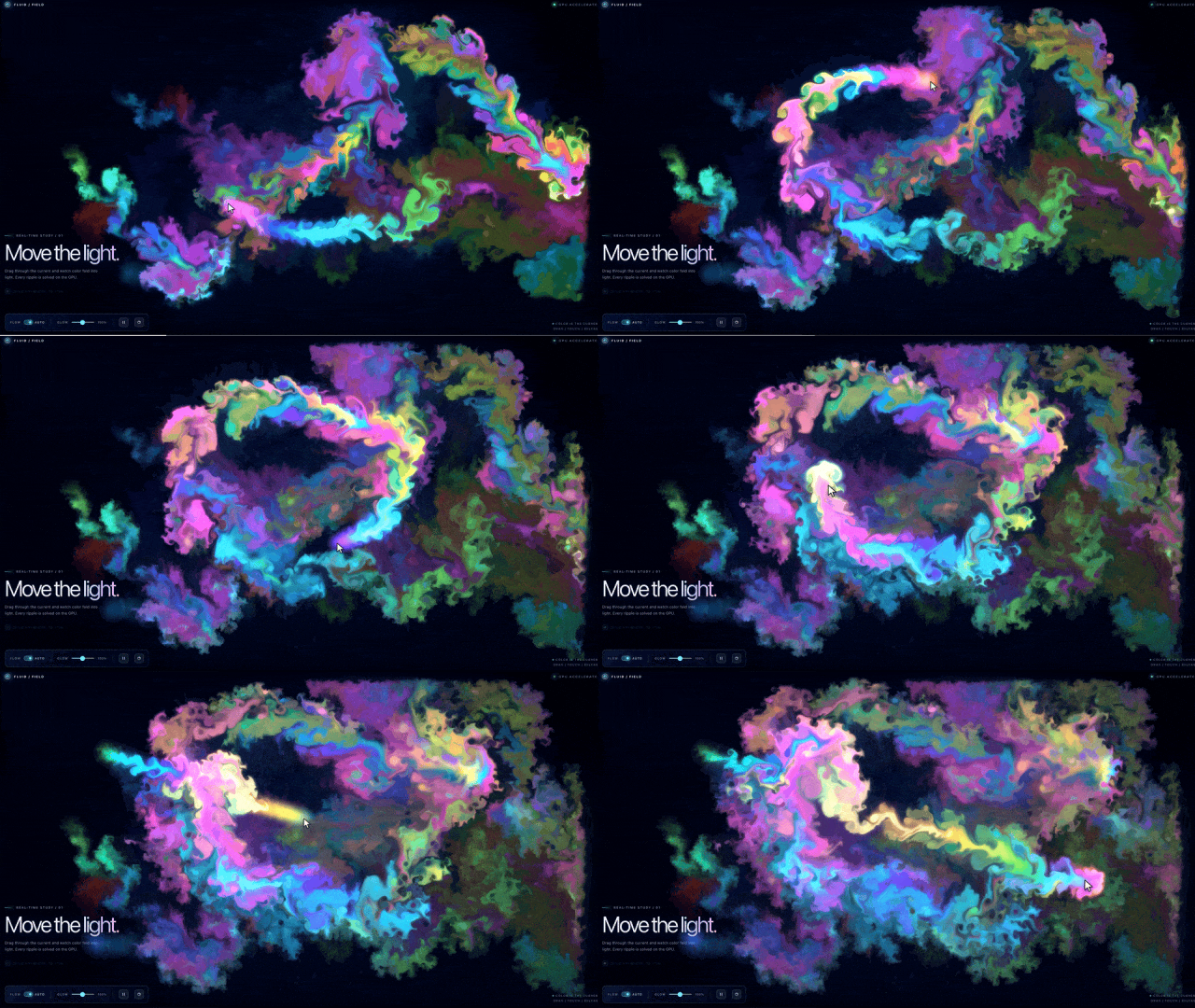
A developer had Space Bunny build a GPU fluid sim. Prompt:
> In a single HTML file, build a GPU-accelerated fluid simulation from scratch with WebGL, no external libraries. Dragging mouse or finger pushes colored dye, with a soft glow.
Space Bunny one-shot 1,564 lines of code—no hand-written lines, no third-party libs.
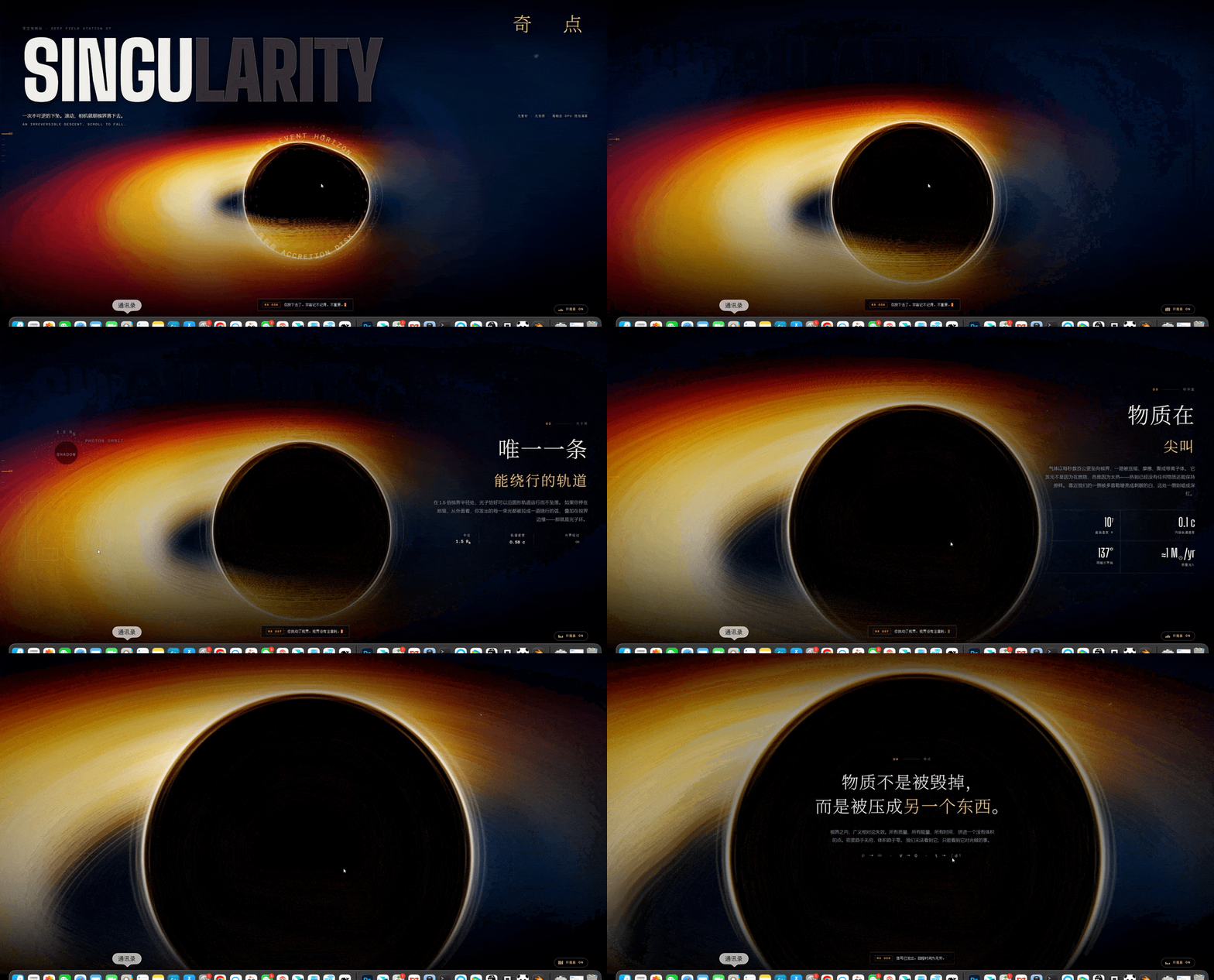
The next case is striking: a black-hole showcase page where the hole reacts to clicks, then naturally transitions to the next page.
Throughout, the black hole elastically stretches and expands by stage—strong visual impact.
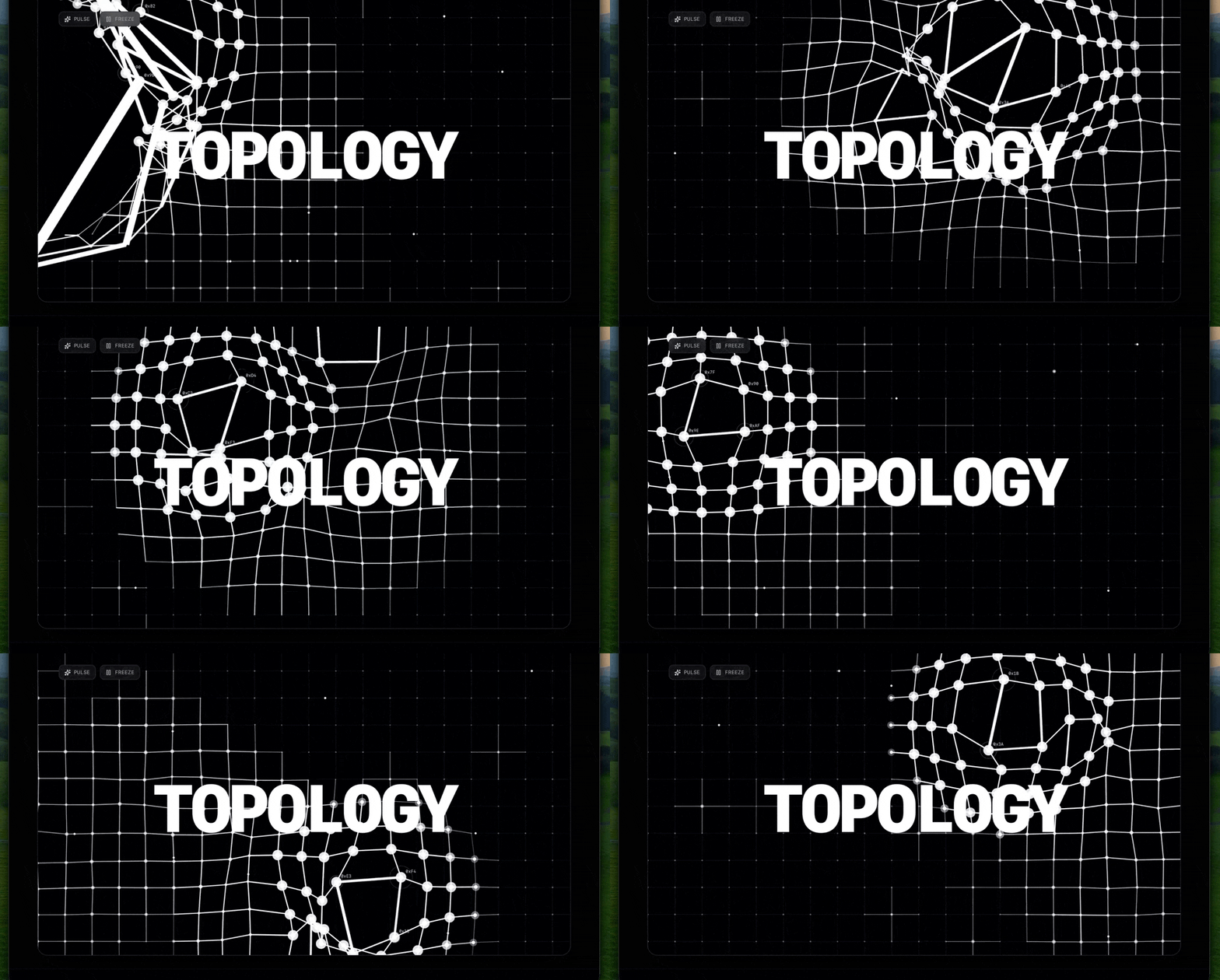
Motion design praise for Space Bunny is almost universal. One page took the developer just minutes—mouse-follow is silky, springy wobbles feel lifelike.
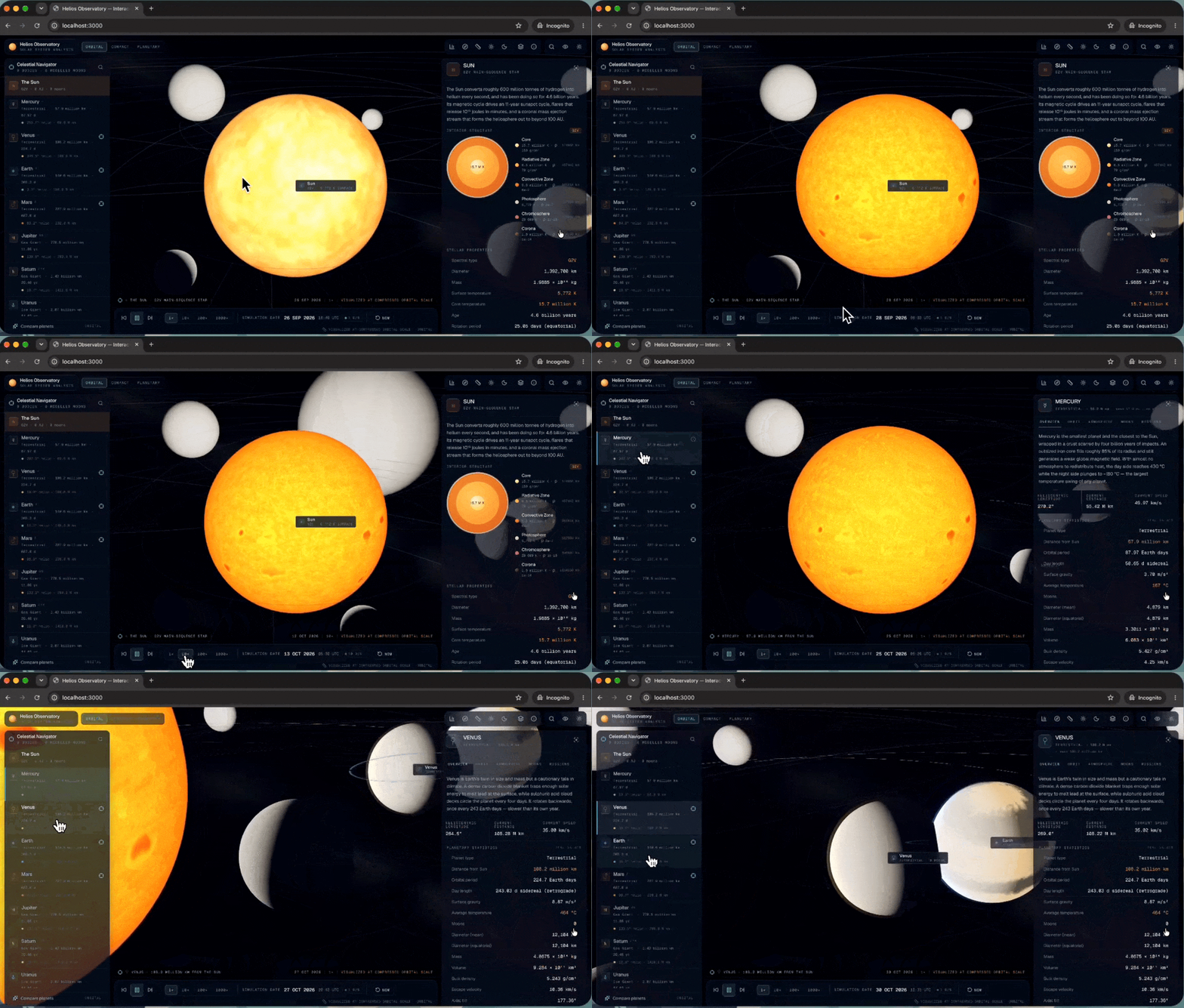
Another built a solar-system observatory: watch planet orbits, solar illumination range, and the Moon around Earth—interaction is smooth.
03. Hands-On Flight Sim—Some Surprises, Some Crashes
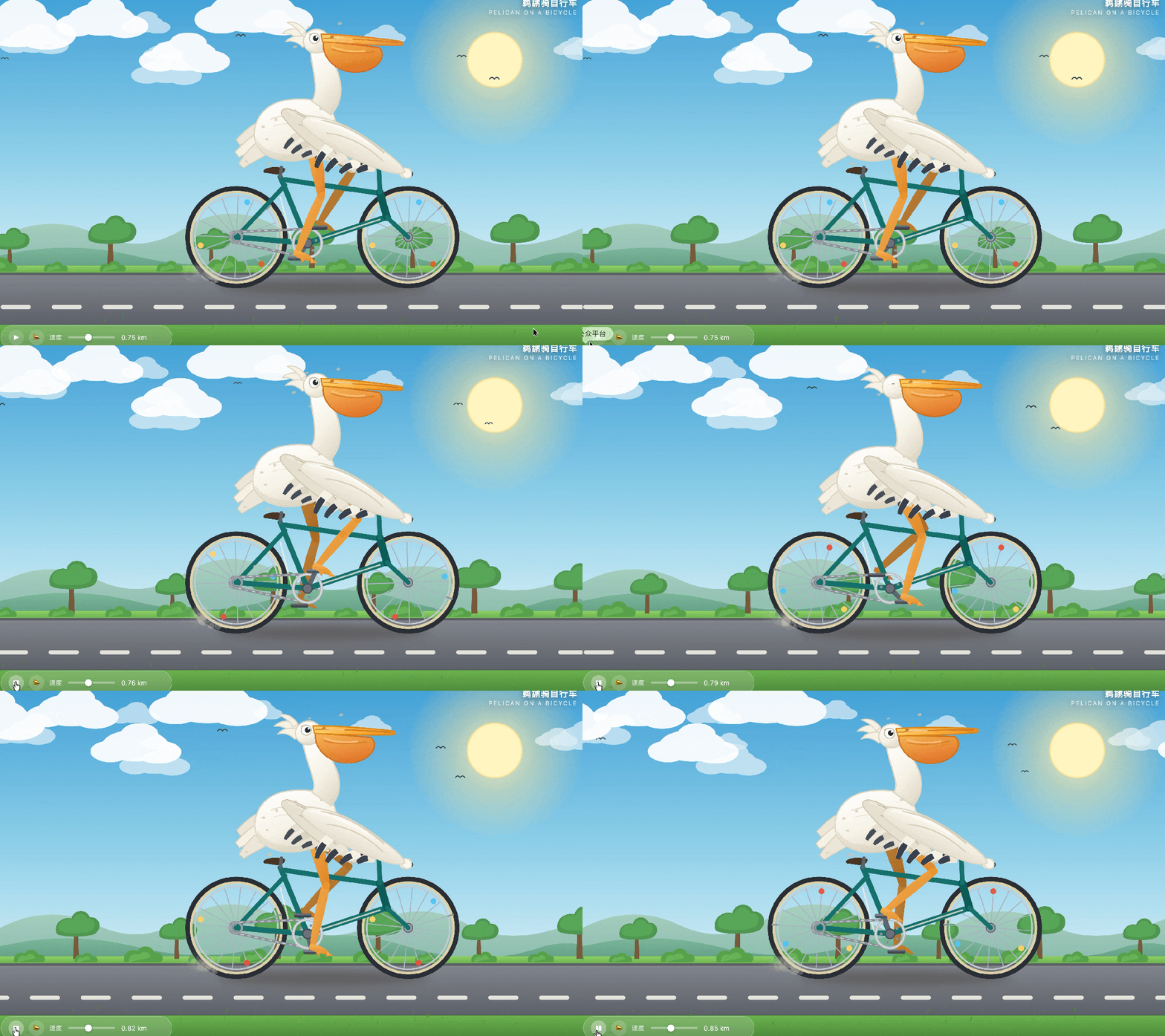
We tested Space Bunny in OpenCode. First, the classic pelican-on-a-bike. Prompt:
> Create an HTML page with SVG: a 2D animation of a pelican riding a bicycle. No tests needed, no limits.
The ride looks quite good—full pelican body, decent riding pose, legs match the bike path. Only ding: the butt isn't on the seat. Overall still very strong.
Next we asked for a flight sim—high bar for feel, and we specified art style:
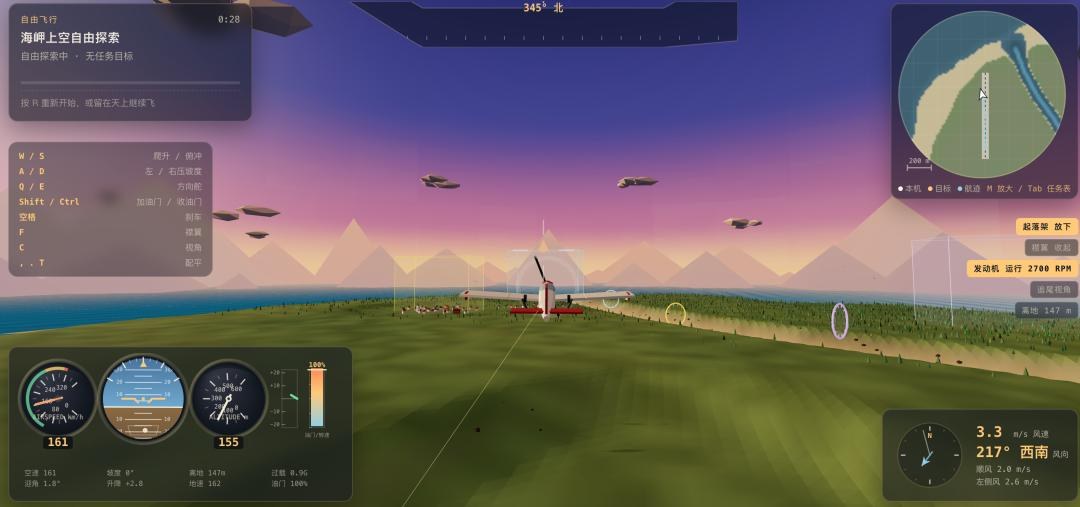
> Build a low-poly third-person flight sim that opens in the browser. The player flies a small prop plane over an open map of hills, rivers, forests, villages, a lighthouse, and an airport. Speed up, slow down, turn, climb, dive—with clear inertia and realism. Place mission goals: fly through river rings, circle the lighthouse, cross zones, then land safely.
> After missions, show route, speed, heading, altitude, and completion. Clean low-poly art, soft dusk sky, distant mountains, coastline, small towns—indie-game calm. HUD: current mission, trail, speed, altitude, heading, throttle, wind. Camera behind the plane, following turns. Full loop: takeoff, fly, hit targets, land—actually playable, not a preset clip.
The game was genuinely fun, though not absurdly fast to build—94 minutes. Acceleration and takeoff feel light; aerial rolls are expansive. Fine angle control still has issues, but nothing fatal.
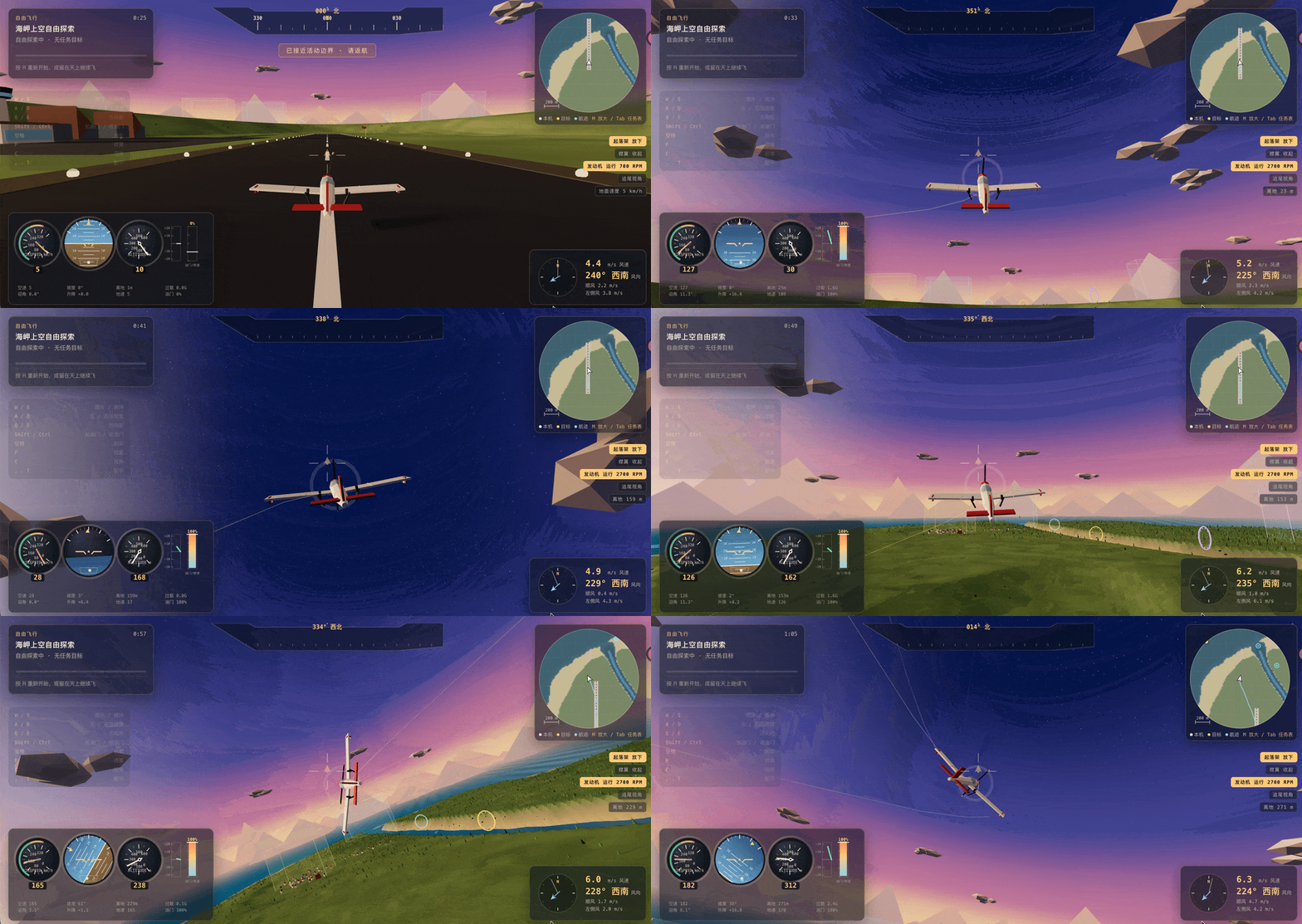
Environment-wise it matched our ask—sunset, mountains, rivers max out the mood.
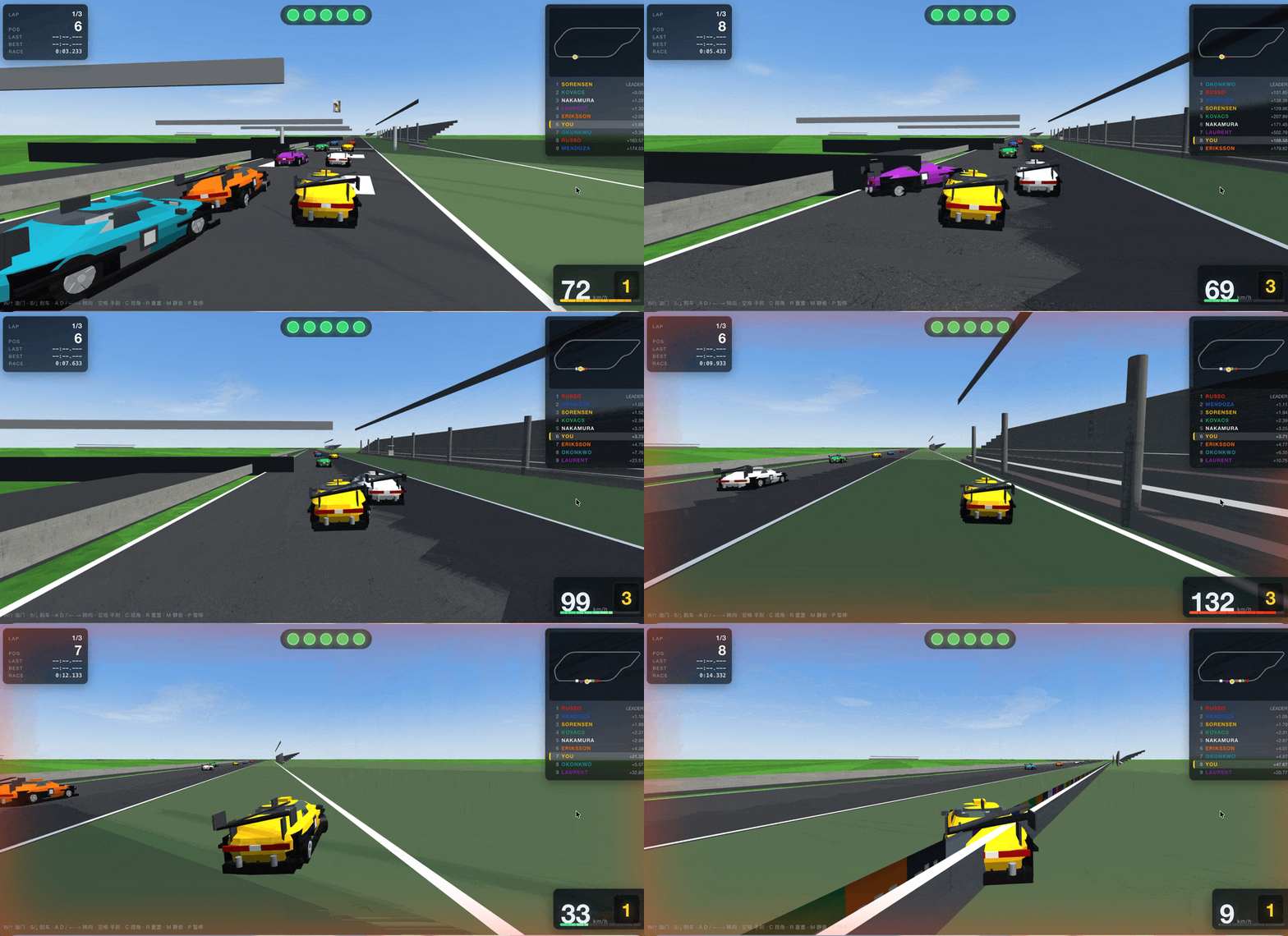
Next was a racing game I like to use as a test—and Space Bunny kind of "crashed": after many rounds of fixes, cars still clipped through geometry and left/right controls were reversed.
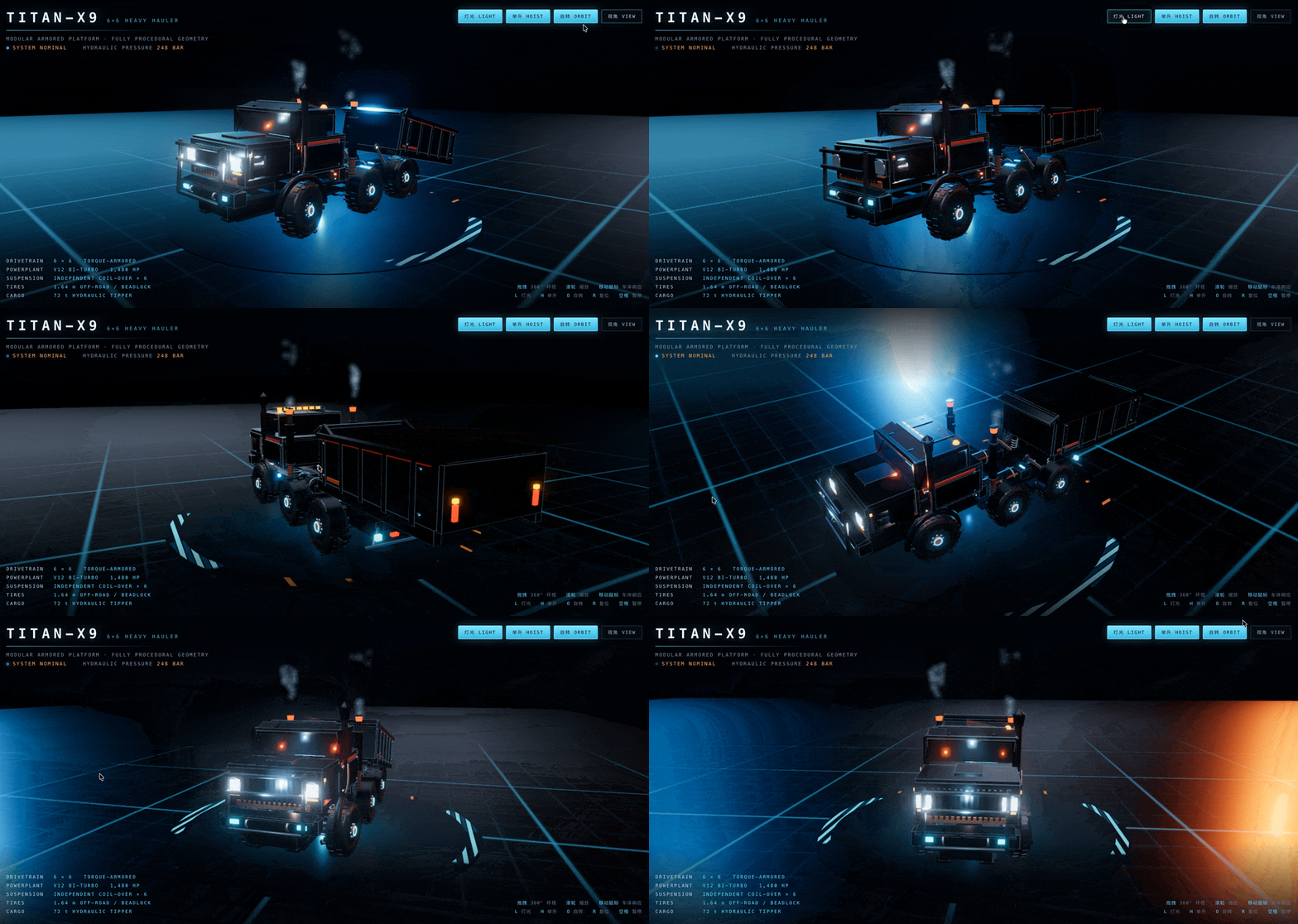
Then we mirrored the bee modeling case with a truck prompt to see real 3D chops:
> Build a refined futuristic mechanical heavy truck with Three.js. Full 3D geometry and materials—detailed mechanics, metal panels, cabin, huge off-road tires, hubs, suspension, driveshaft, engine parts, radiator, hydraulic pistons, exhausts, wires and hoses. Hard, complex industrial design with armor, cut lines, modular parts, real heavy-engineering proportions.
> Four or six wheels with independent suspension and real rolling animation; subtle motion on pistons, shaft, and some parts. Metal, brushed metal, rubber, glass, a bit of emissive—headlights, dash lights, mechanical ports. Dark background, cinematic light, soft shadows, env reflections, highlights—high-end future industrial look. Slow tire spin, suspension and part animation. Respond to mouse; 360° orbit, zoom, rotate. Build the full interactive 3D showcase in one polished Three.js page.
It beat expectations: 85 minutes, and the truck looks flashy—almost like a dark Optimus Prime. Tires, bed, and jets feel real, while the style stays futuristic as prompted.
04. Closing: Another Anonymous Model—Whose Is It?
Across our tests, Space Bunny's 3D ability left a strong impression, but many detail issues remain—and with call volume surging, speed wasn't as fast as expected.
Since launch, debate over who owns this anonymous model hasn't stopped. Many link "Space Bunny" to moon landings and guess it's Moonshot's new Kimi; others, seeing similar game-dev quirks, guess a new MiniMax model.
None of that is confirmed. Whose flower it falls to—stay tuned.
相关文章